We went out of posting order because we just had to talk about Machu Picchu, but we had two interesting and enjoyable days in the Sacred Valley before arriving at Machu Picchu.
We started in the cute town of Chinchero. Beyond its Incan and colonial sites, it’s well known because it’s the place where local women have preserved and still practice the traditional method of dying wool.
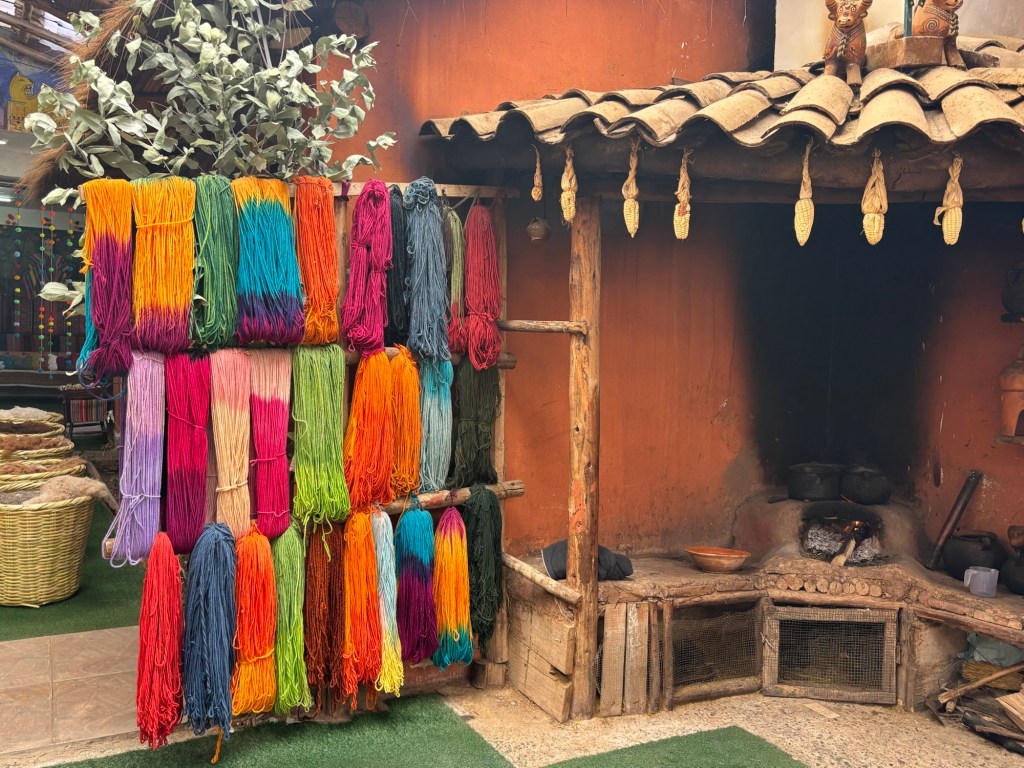
Sometimes these demonstrations feel too touristy, but I was fascinated with the process. They use all natural materials, one being a beetle that grows on a cactus. They smash the beetle, and it produces a vibrant red. If they add salt to it, it produces another shade. They can create 24 colors from this beetle using different additives. I was so taken by the process I bought a poncho.
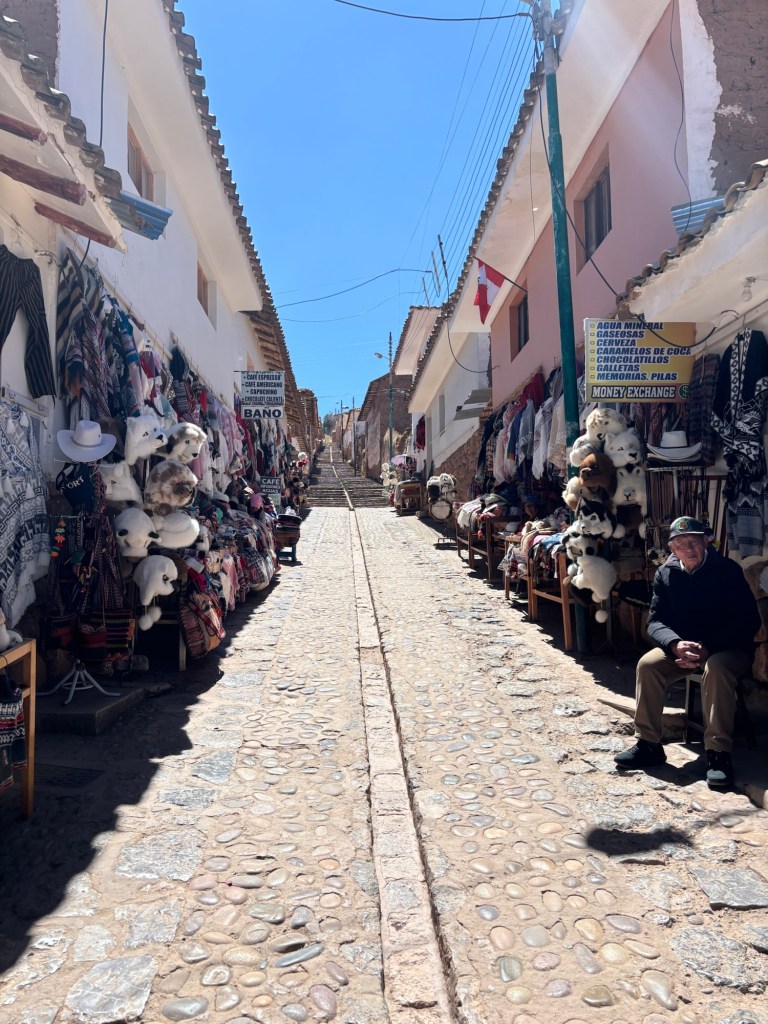
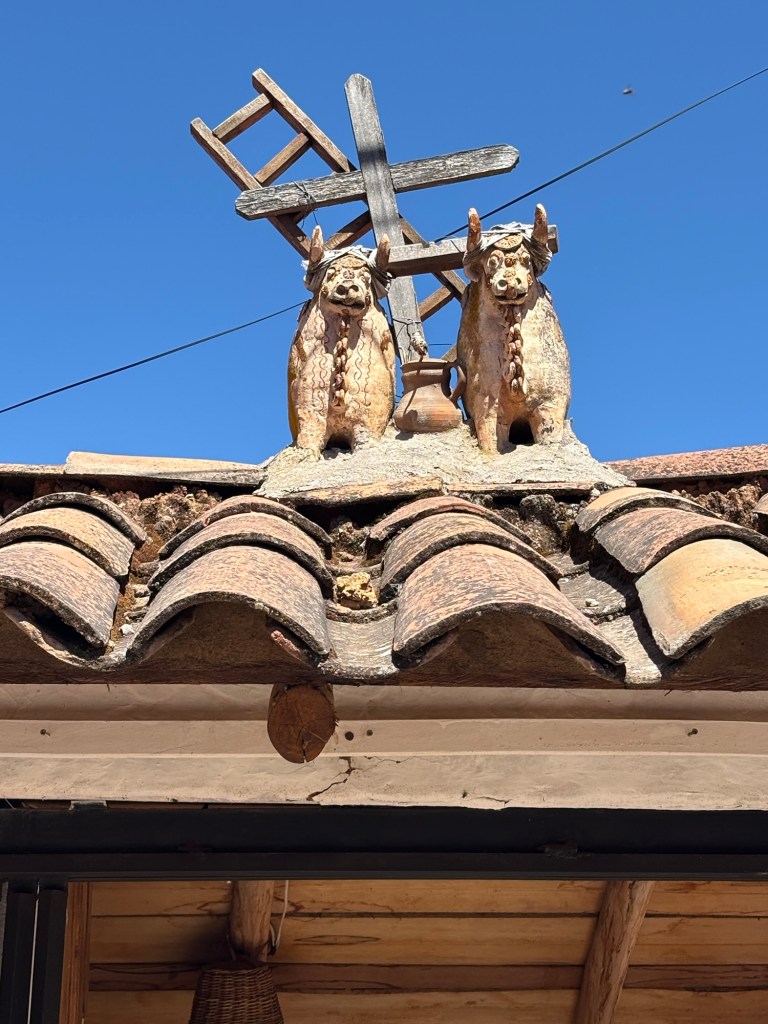
The town square has a Spanish colonial church, partly composed of bricks taken from Incan buildings. We would see this in other places. It’s one reason many of the Incan buildings are in ruins, another factor being weather and also the fact that the Incas purposely destroyed some of their towns before the Spanish could take them.
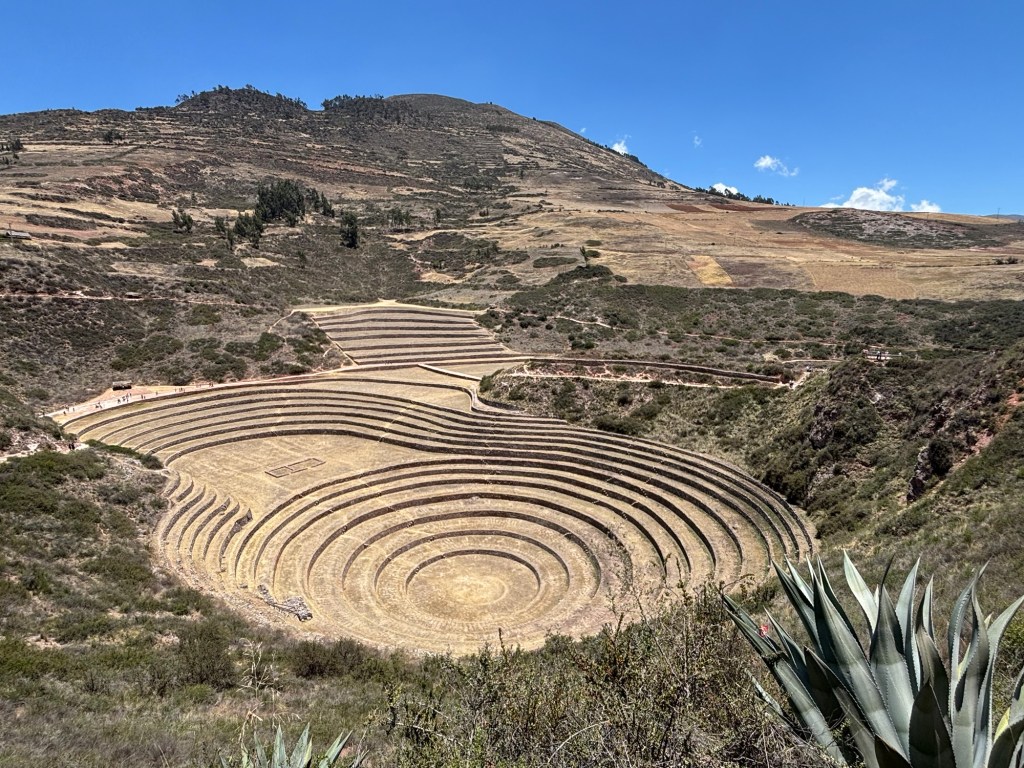
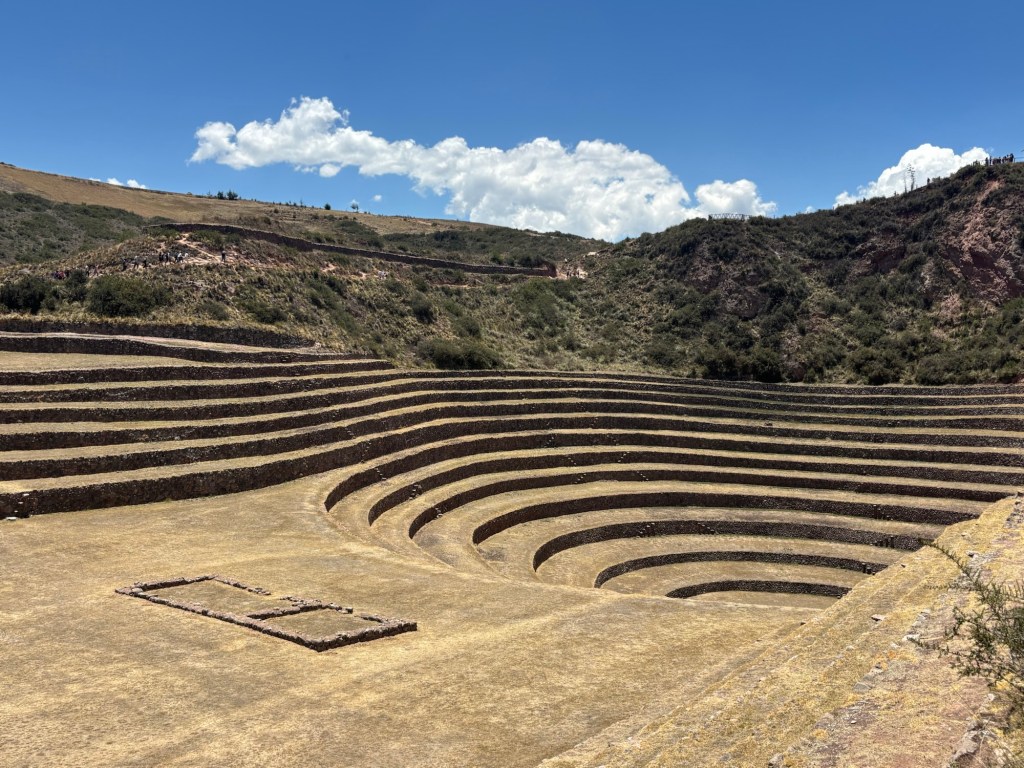
Then it was on to the terraces at Moray. These are fascinating for two reasons. The first is the mystery as to how three large craters were created. One theory is that a meteor hit the ground and bounced into three places.
The Incas built terraces in the multiple levels of each crater so they could test crops in different growing conditions and also guarantee food throughout the year. There is a 59 degree Fahrenheit difference between the lowest and highest levels, creating 20 different microclimates.
As I learn more about the Inca civilization I become more and more impressed. And also sad that they were overcome by the Spanish.
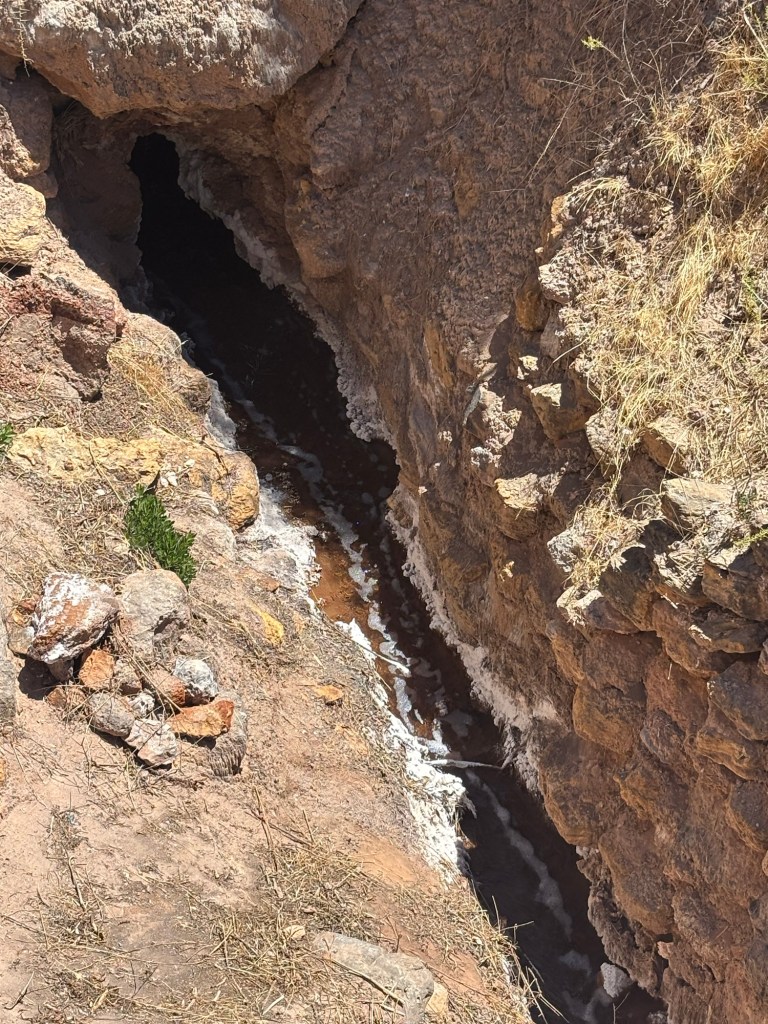
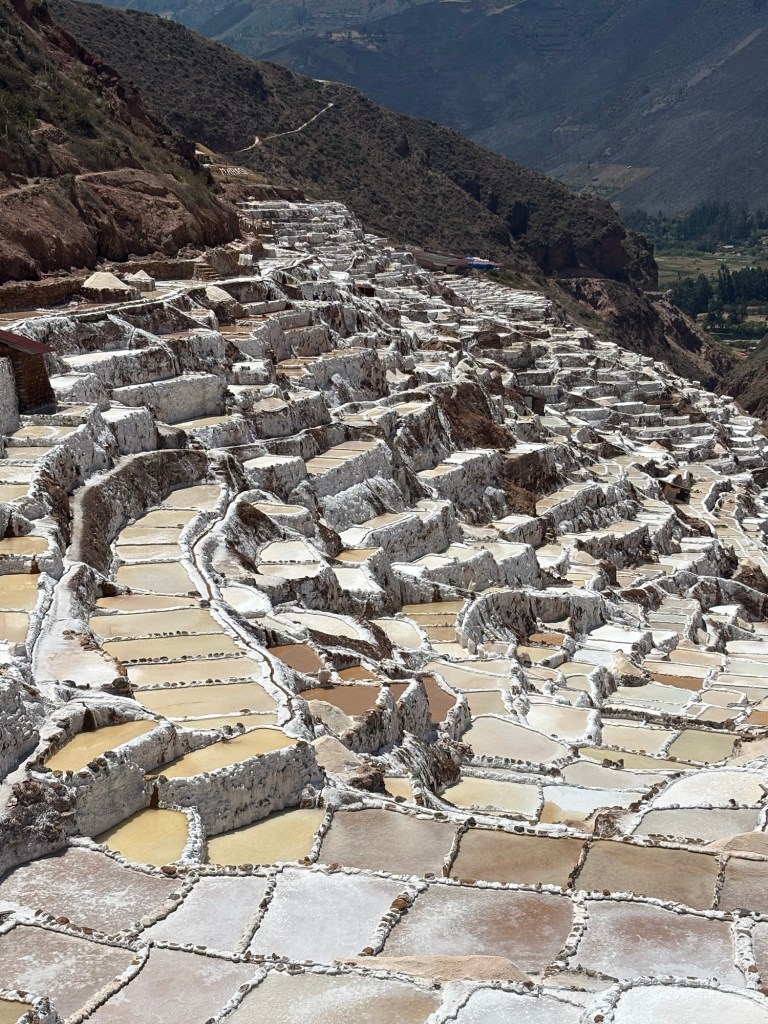
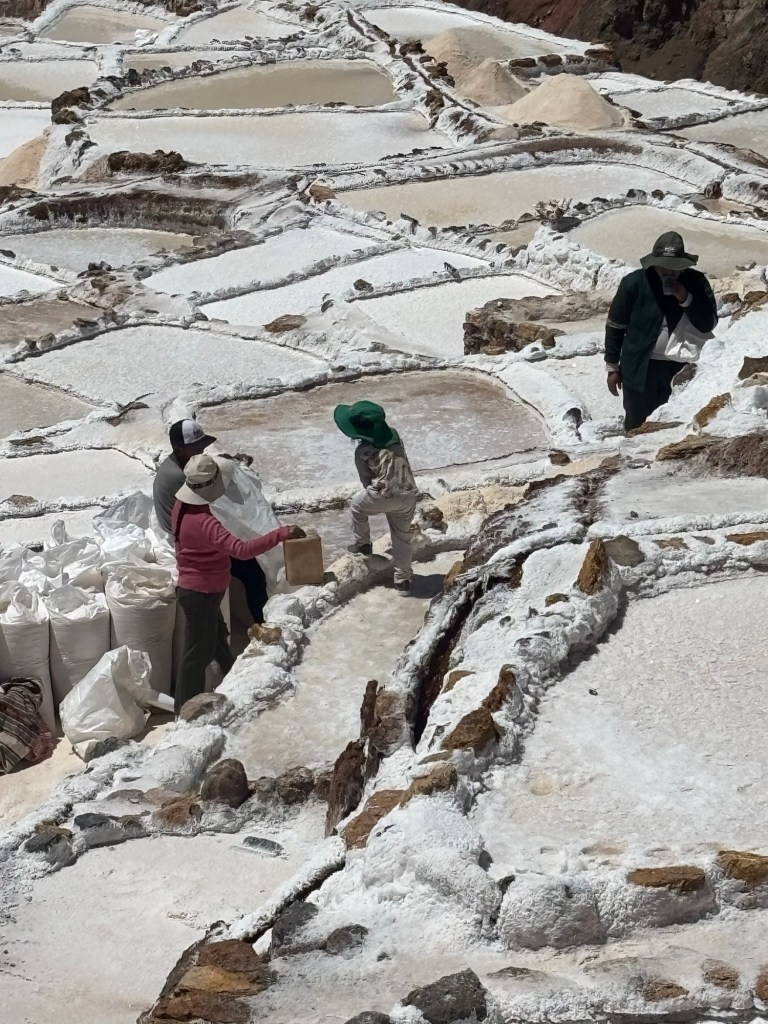
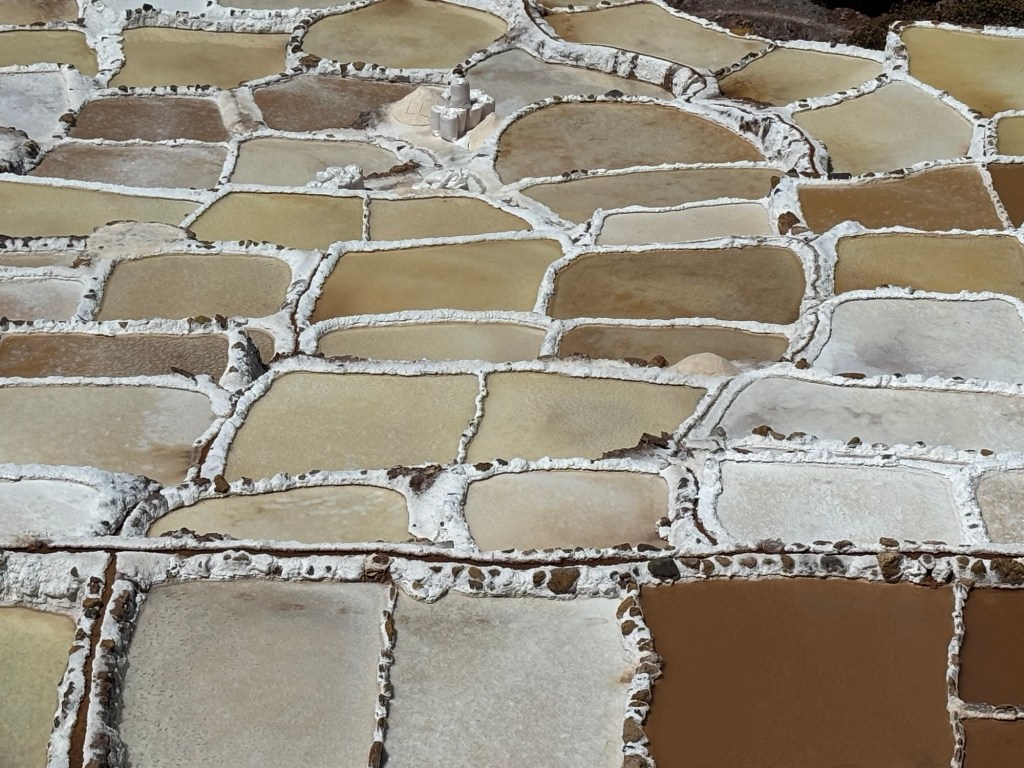
The last visit of the day was to the salt mines of Maras. The ponds are fed by a natural spring, the origins of which are still a mystery. This tiny stream feeds about 5,000 individual salt ponds. (There isn’t an exact number.)
The Incas did harvest these ponds, but the number has grown exponentially over the years. Many Peruvians work the ponds to harvest salt, an absolutely back breaking endeavor.
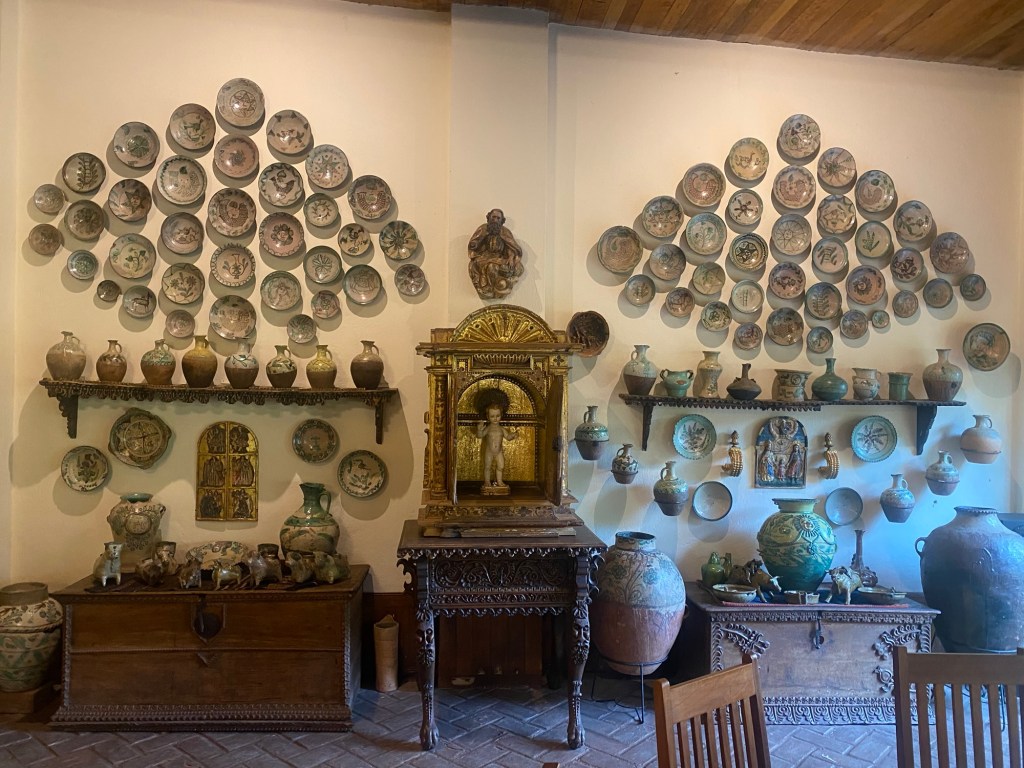
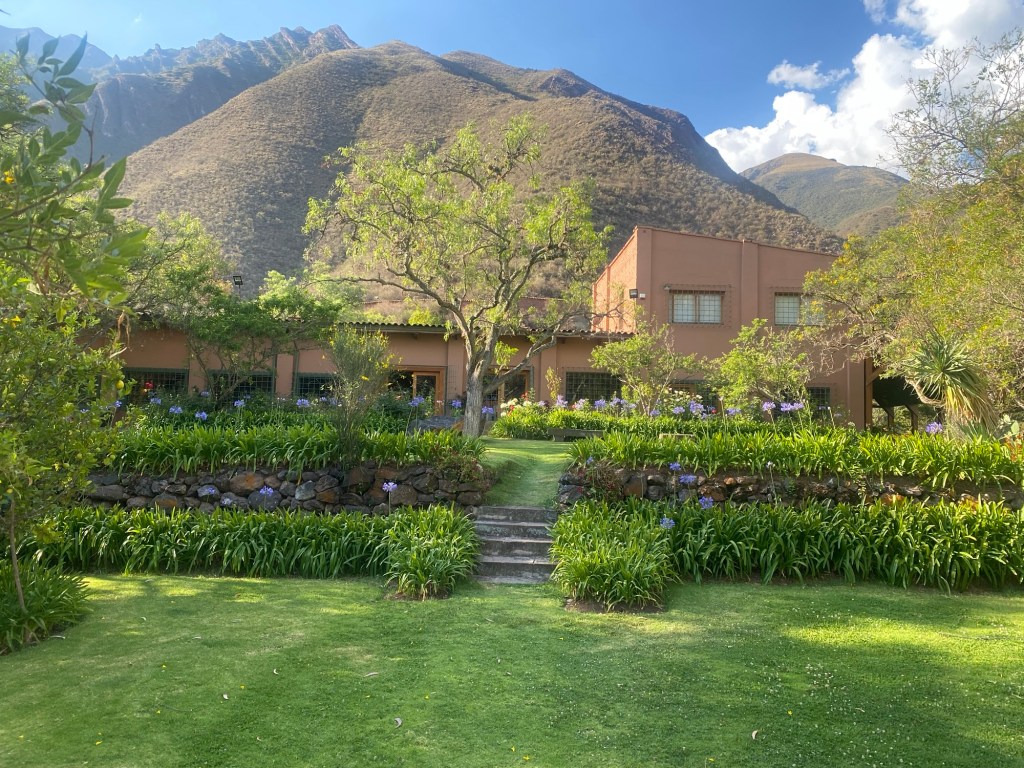
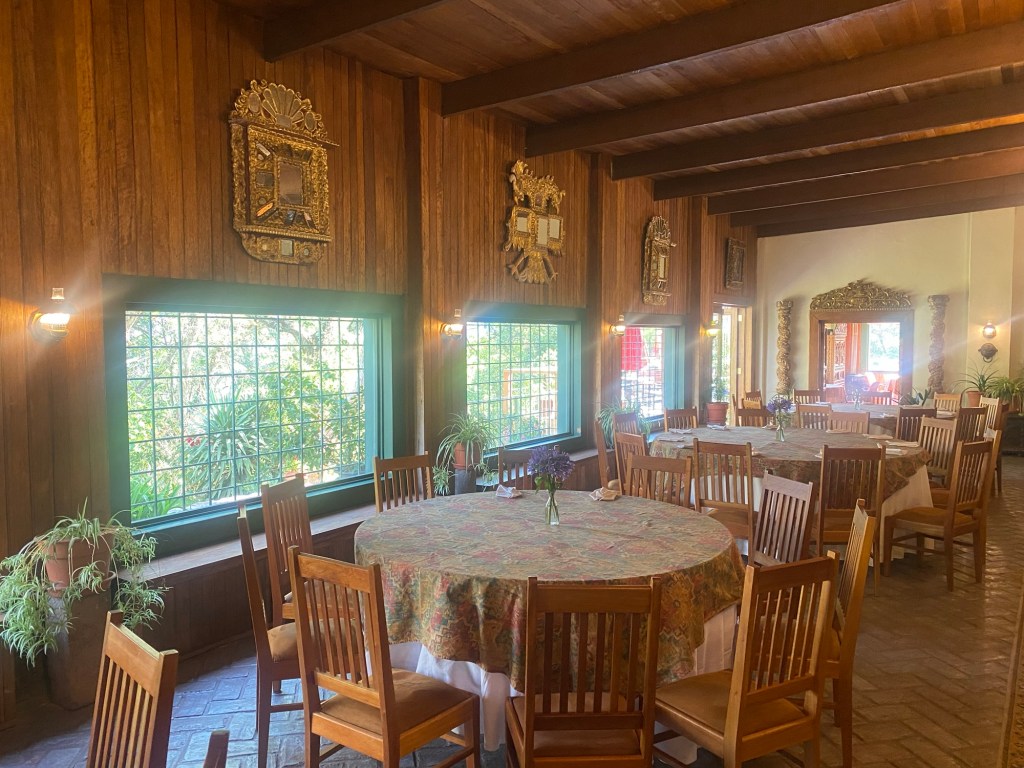
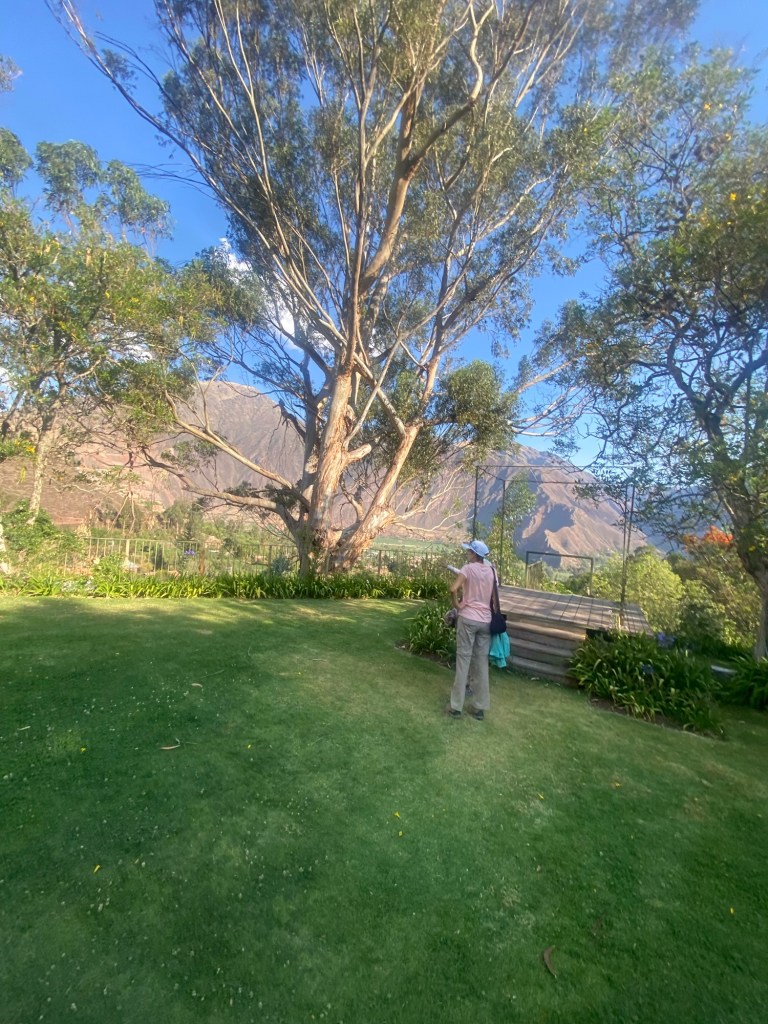
After watching all that hard work, we headed to another hacienda for lunch. Like the first hacienda, this one is family-owned and supplements their agricultural business by hosting tour groups. Our lunch was delicious, and the grounds were beautiful.


It would seem the Inca’s were much more evolved than anyone else in their time in history
LikeLike
I admire the women making colorful wool
LikeLike