My main goals for visiting Metz (pronounced “mess” by the French, “mets” by the Germans) were to see the Centre Pompidou and the cathedral with stained glass windows by Chagall. But our intrepid tour guide in Verdun highly recommended that we take a guided tour, so he hooked us up with Pierre.
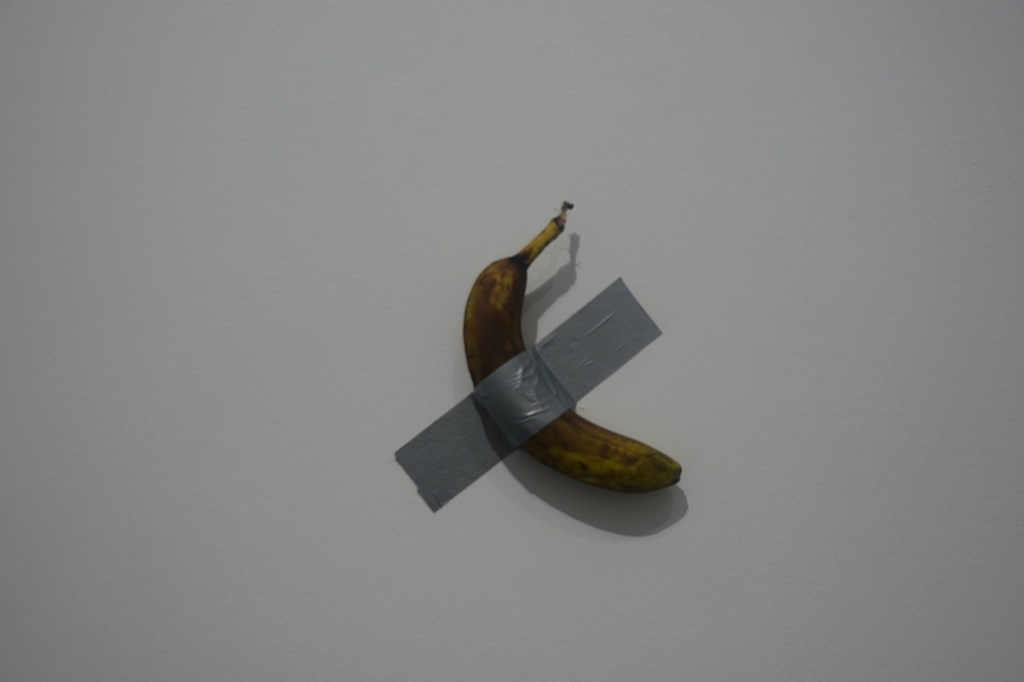
The Centre Pompidou is very close to the train station, so we started there on our own. Known for its bold architecture as well as its collection, the museum has the usual slate of sometimes thought-provoking, sometimes strange modern art, most notably many works by Maurizio Cattelan, of the duct-taped banana fame. (Cattelan got worldwide attention when this work sold for $6.2 million. There’s a lot of commentary about its meaning, but I found many of his other pieces really interesting. He has a long history of making provocative art.)
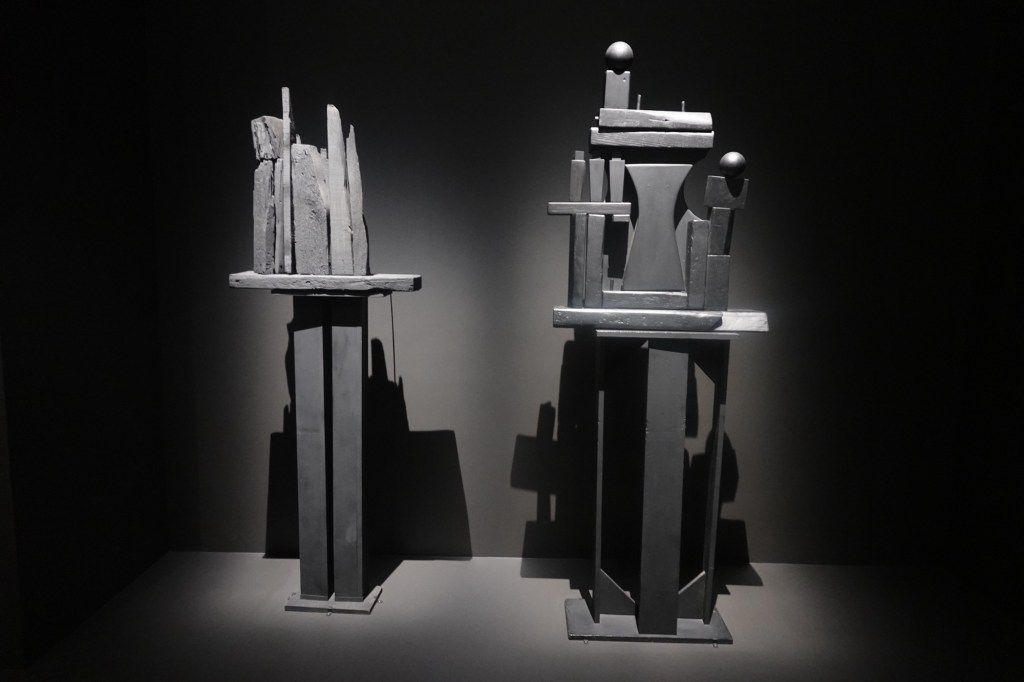
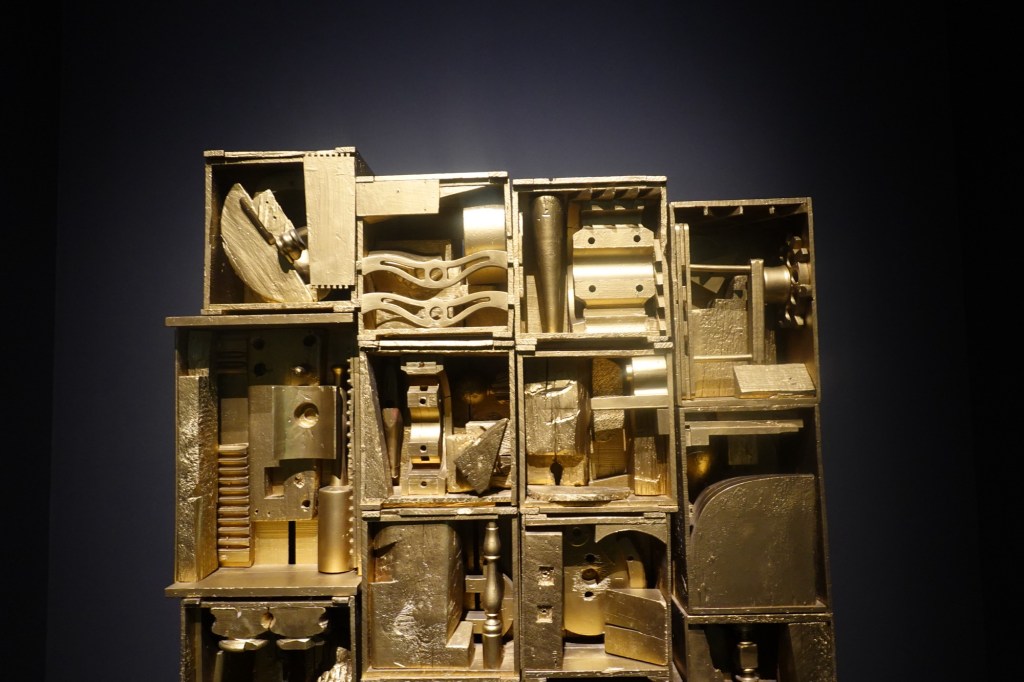
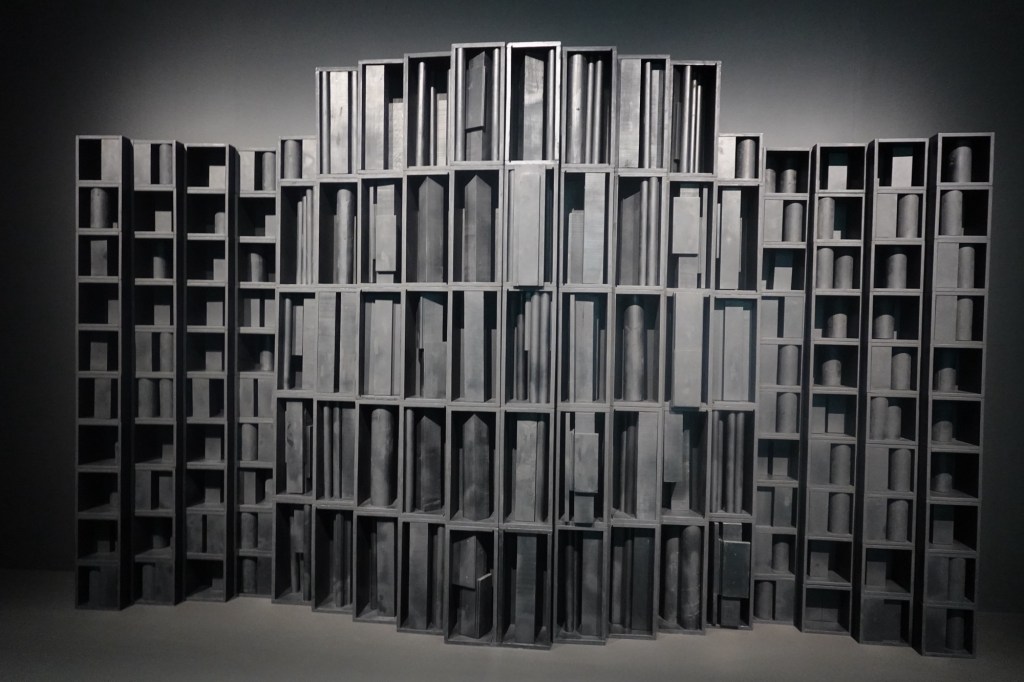
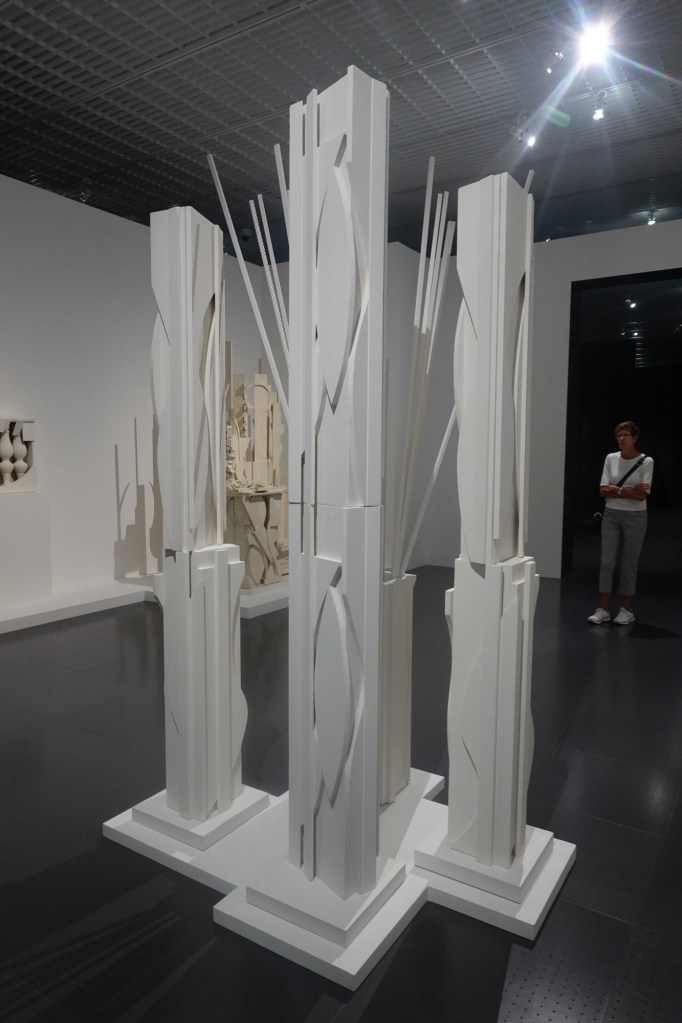
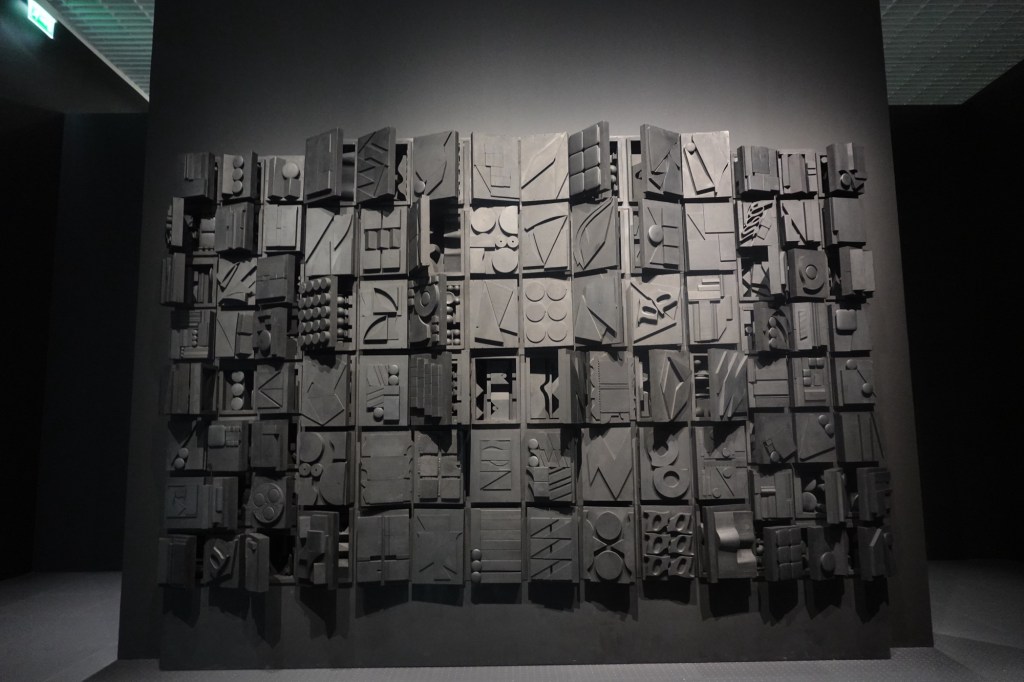
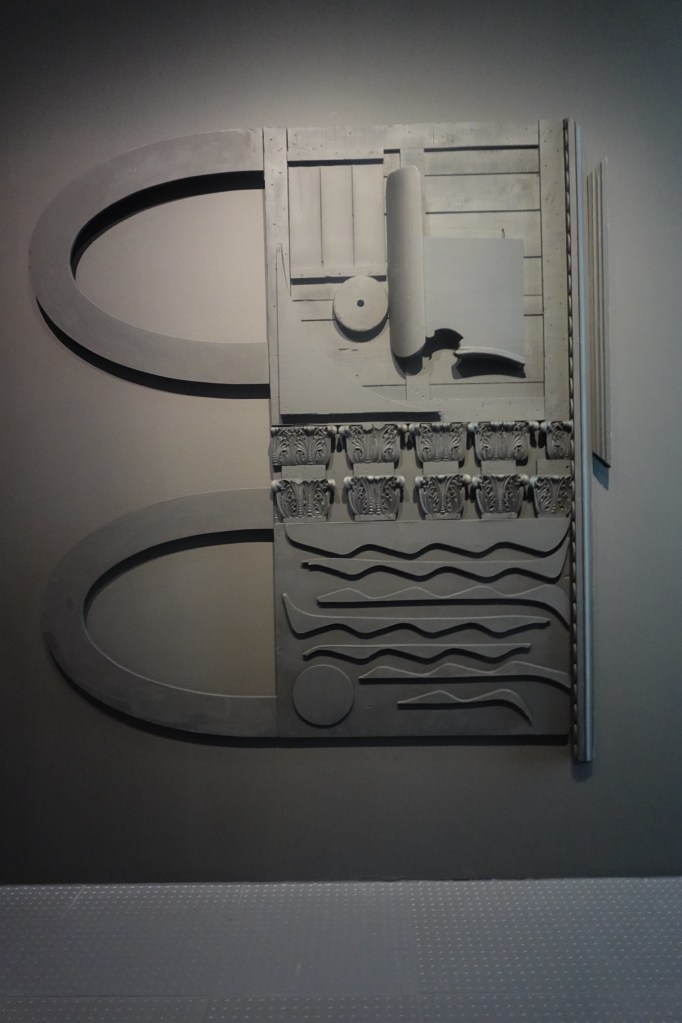
Luckily, we were smart enough to skip some galleries to give us time for a Louise Nevelson retrospective entitled “Mrs. N’s Palace.” I knew Nevelson was an American sculptor (born in Ukraine), but I didn’t know much about her work. Both Jim and I found the exhibition impactful. Since it was a retrospective, there were rooms filled with her monumental sculptures as well as video, painting and engravings. Nevelson wanted to display her works in a total environment that was experienced by all the senses. We were lucky to have our first real taste of Nevelson in just such an environment.
After a pizza lunch (not Trenton, New Jersey tomato pie but not bad), we met our guide Pierre. We started at Cathedrale St-Etienne. My first impression from the outside was that it looked like a mishmash of styles. Pierre confirmed that impression. Construction of the cathedral began in the 1220’s and was completed three centuries later. In the 18th century, the French added neo-classical elements, then when the Germans took over the city they added a Gothic element. A fire in 1877 destroyed the roof and resulted in two more reconstructions. That’s a lot of styles for one building!
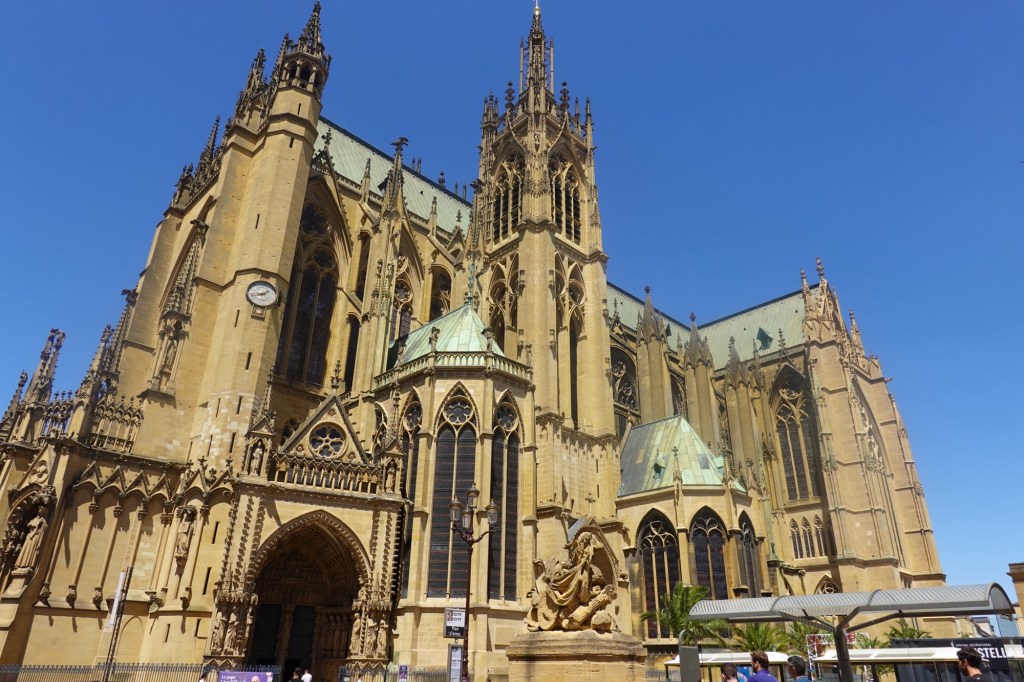
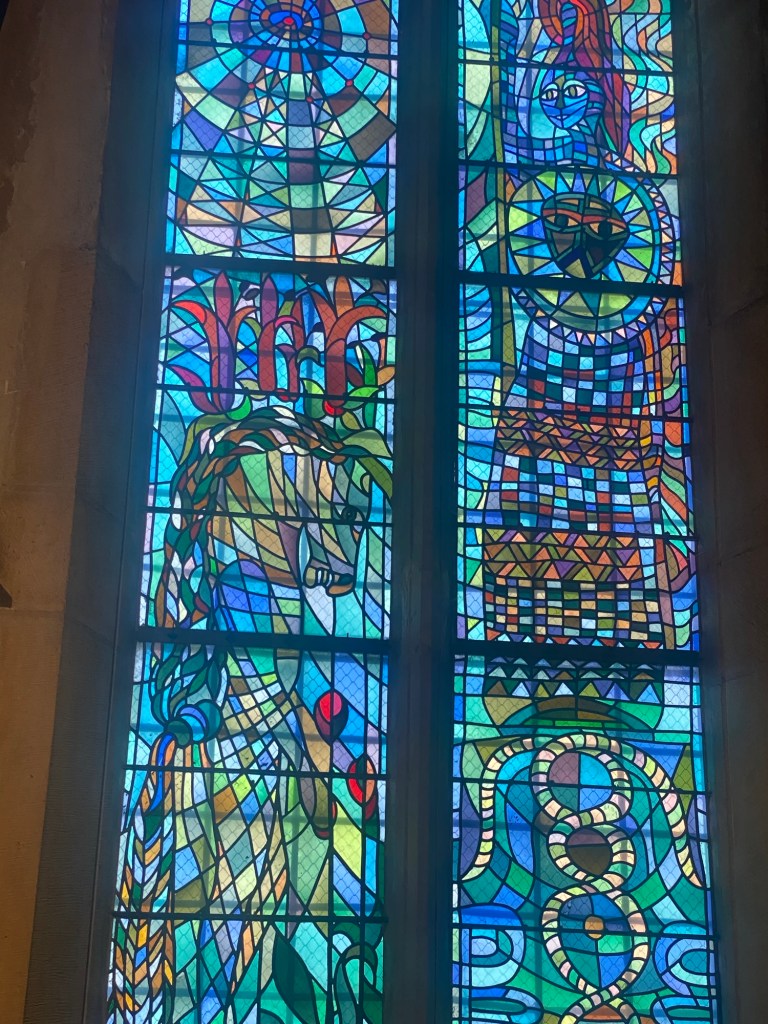
But the cathedral is known as “The Good Lord’s Lantern” because of its 70,000 square feet of stained glass. Metz Cathedral has the third-highest nave of cathedrals in France (41.41 meters/135.9 ft), after the cathedrals of Amiens and Beauvais. And it’s indeed beautiful. In addition to the Chagall panels that I wanted to see, there are windows by other French artists and most recently added, a gorgeous panel by the Korean artist Kimsooja.
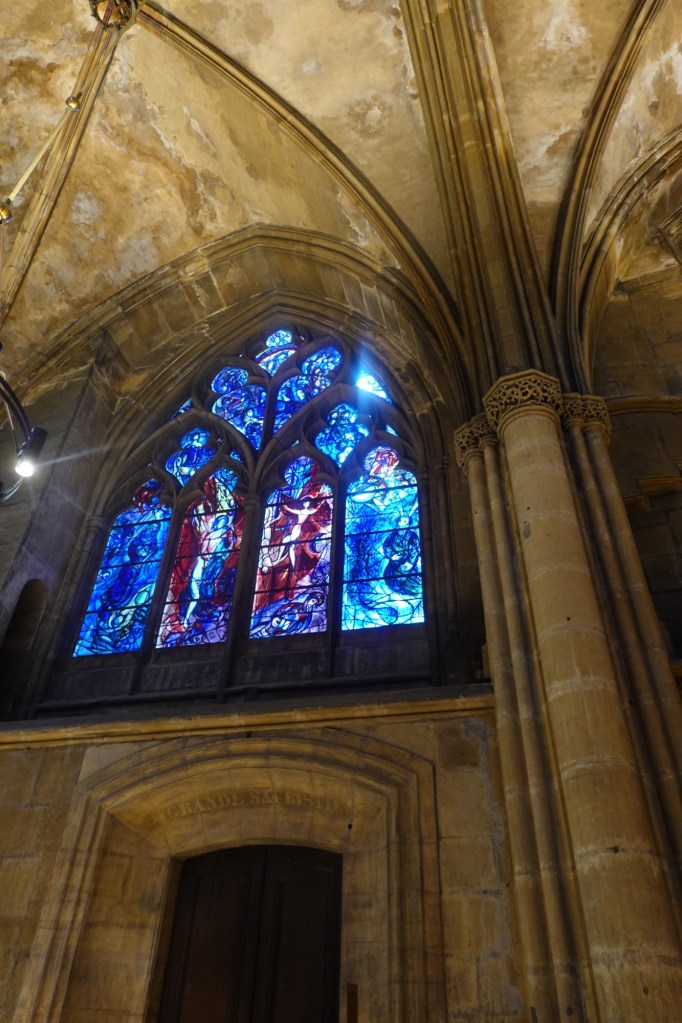
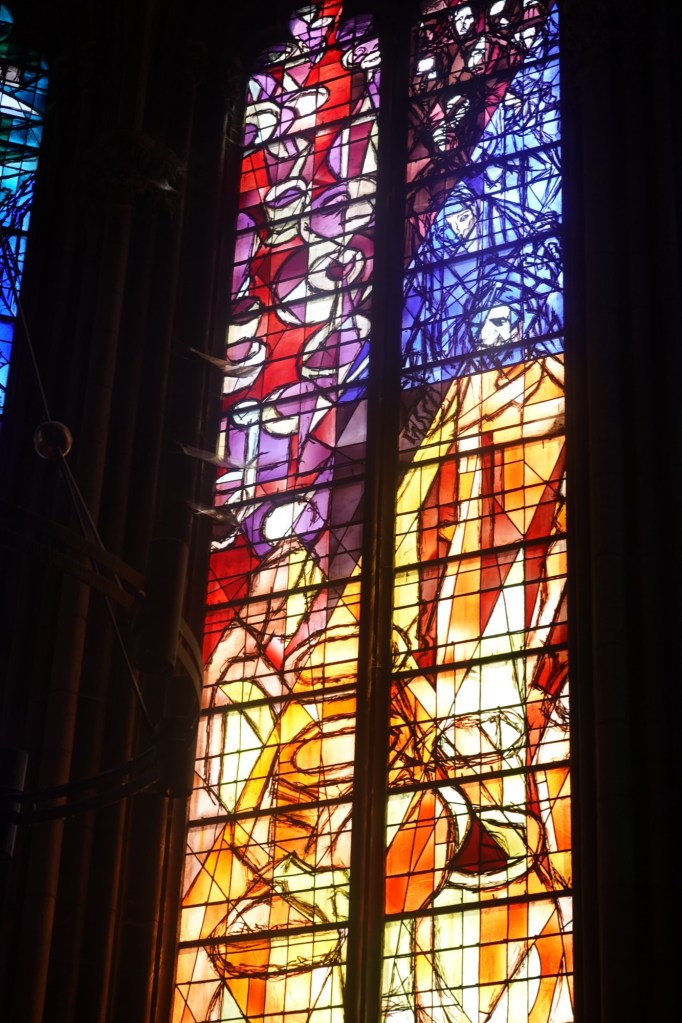
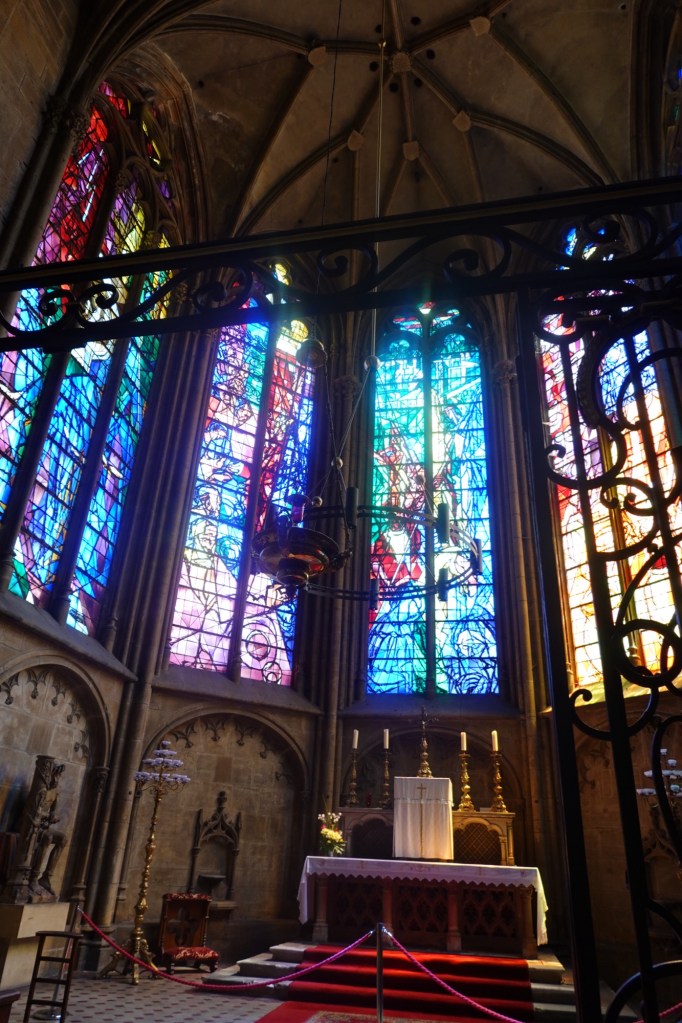
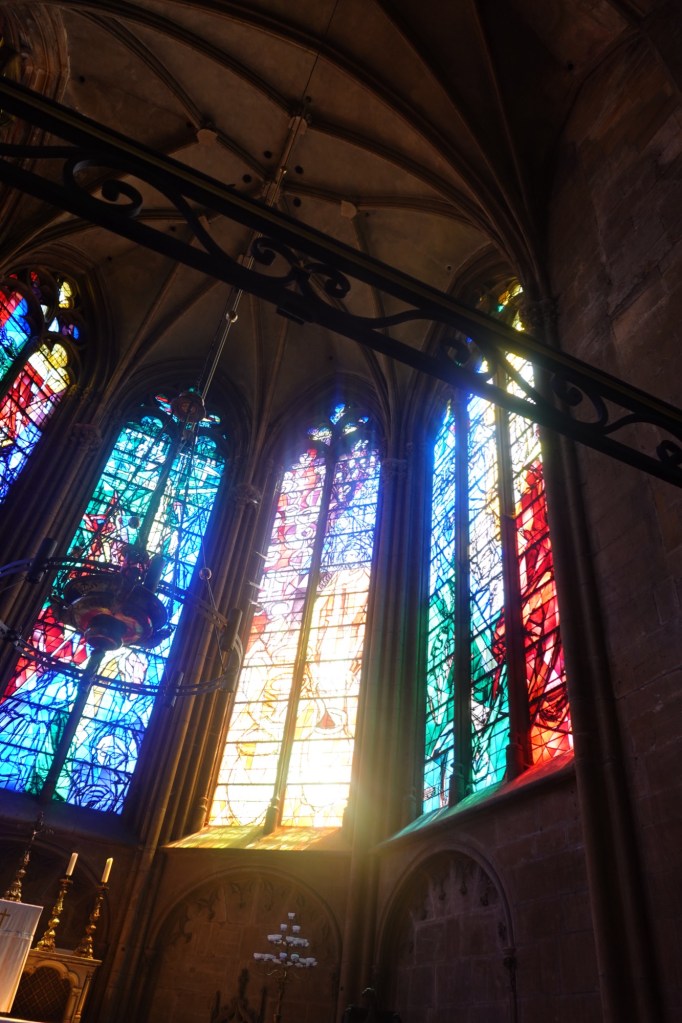
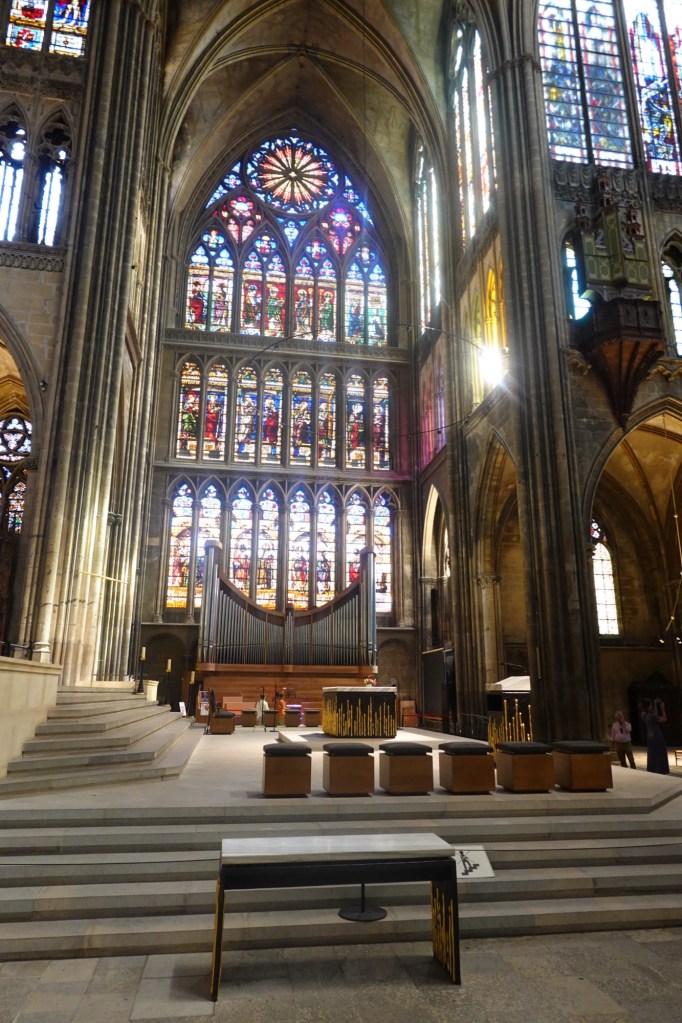
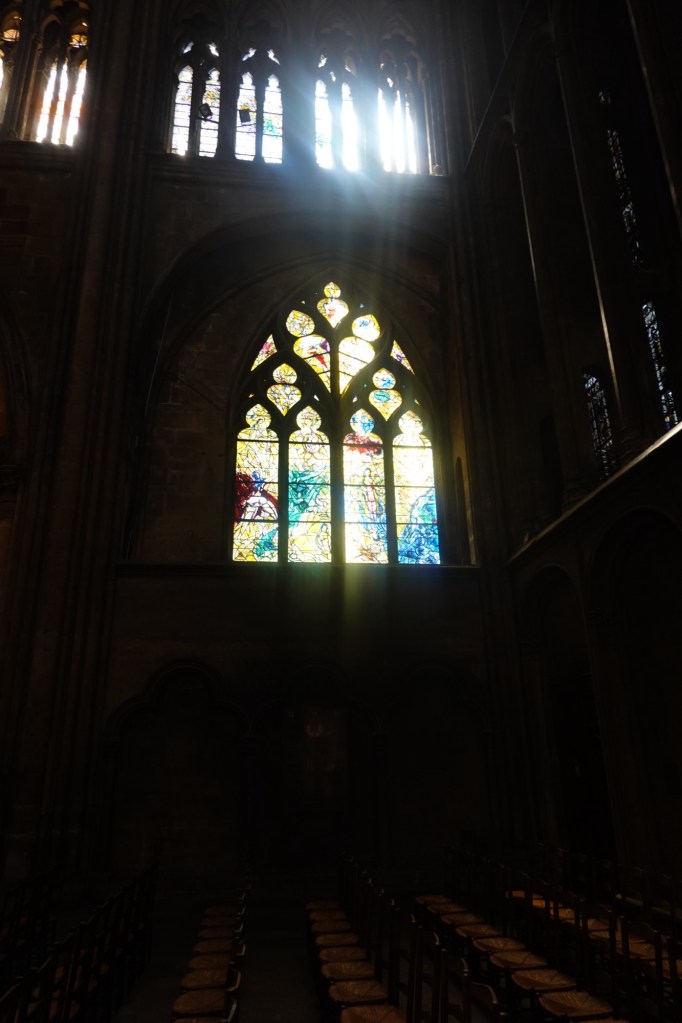
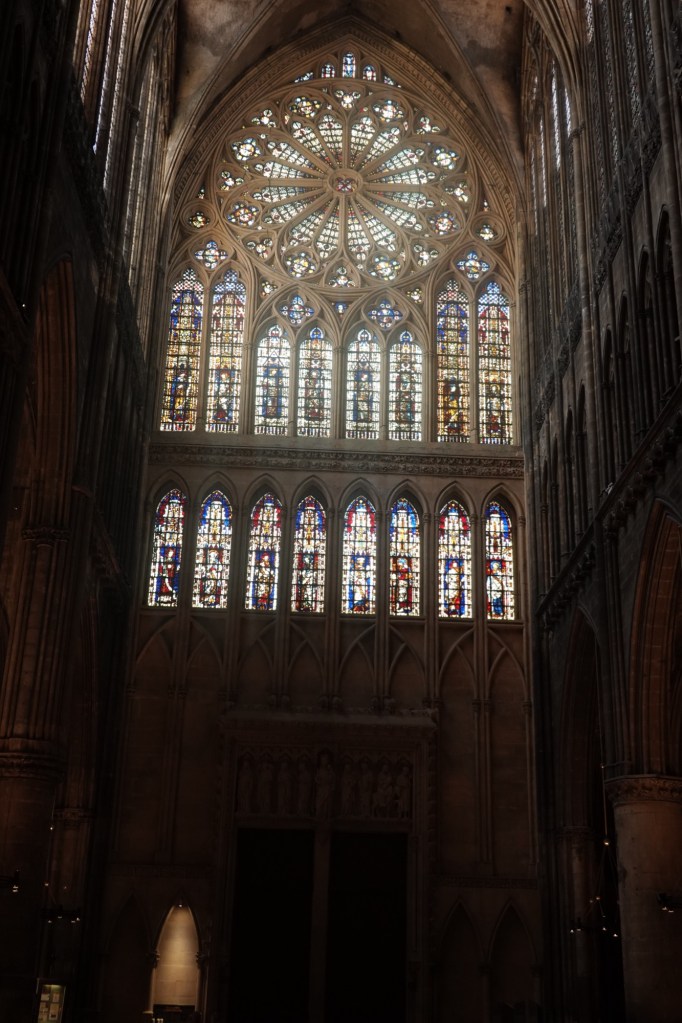
The city is also an interesting mix of architectural styles across the ages, starting in the Roman times. (The history of Metz goes back much later, about 3,000 years.)
The modern history of Metz is inexorably tied to the continued wrangling between France and Germany for the territory. The city was under French rule beginning in 1648, then was taken by the Germans in 1871 after the Franco-Prussian war when Alsace and half of Lorraine, including Metz, went to Germany. The hostility between the two nations simmered until WWI, when France regained control of the city, only to be occupied again by the Germans during WW2. It was liberated by the US army in the Battle of Metz and returned to French rule in 1945. With a history like that, I understand the importance of calling the city “mess” and not “mets.”
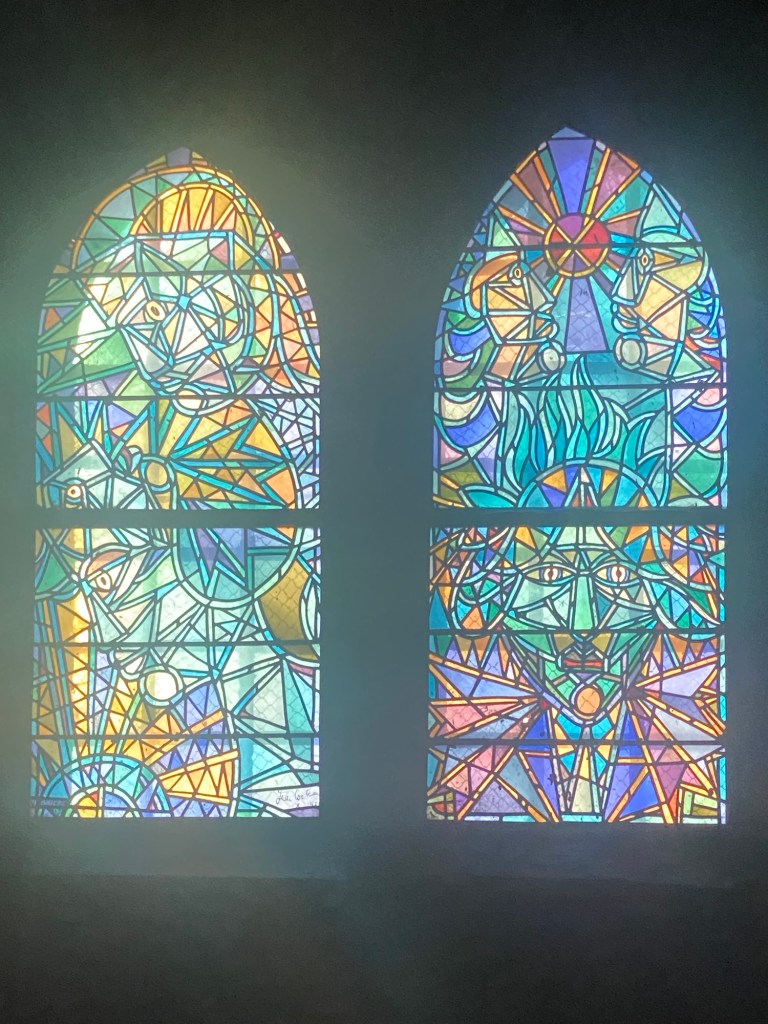
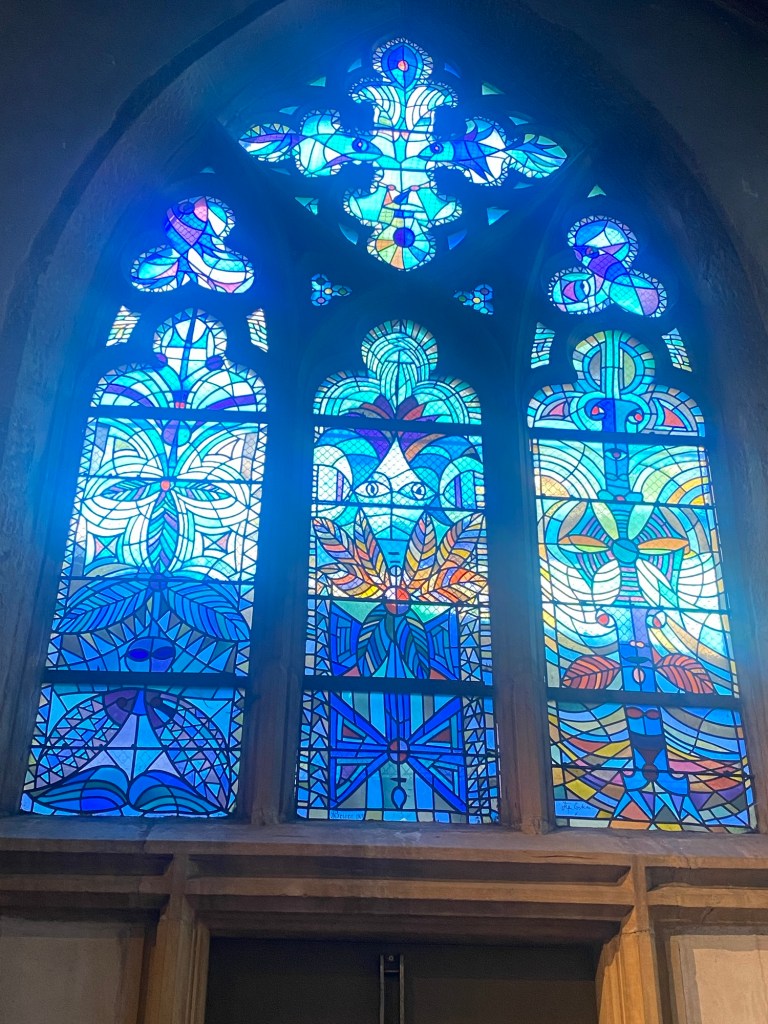
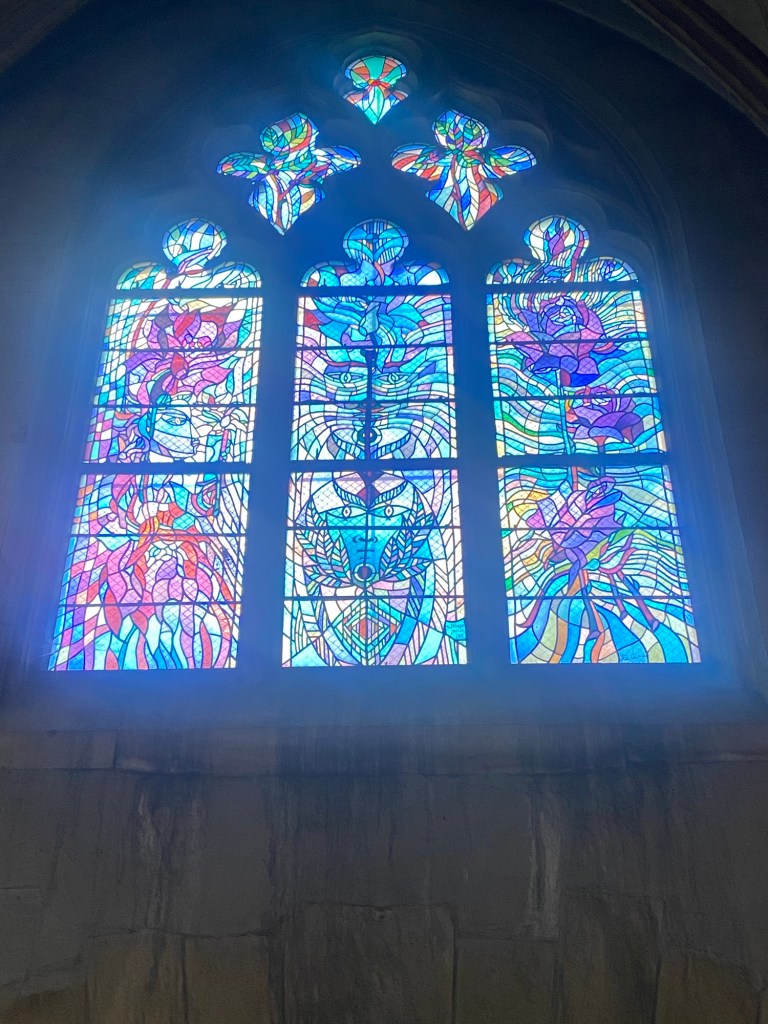
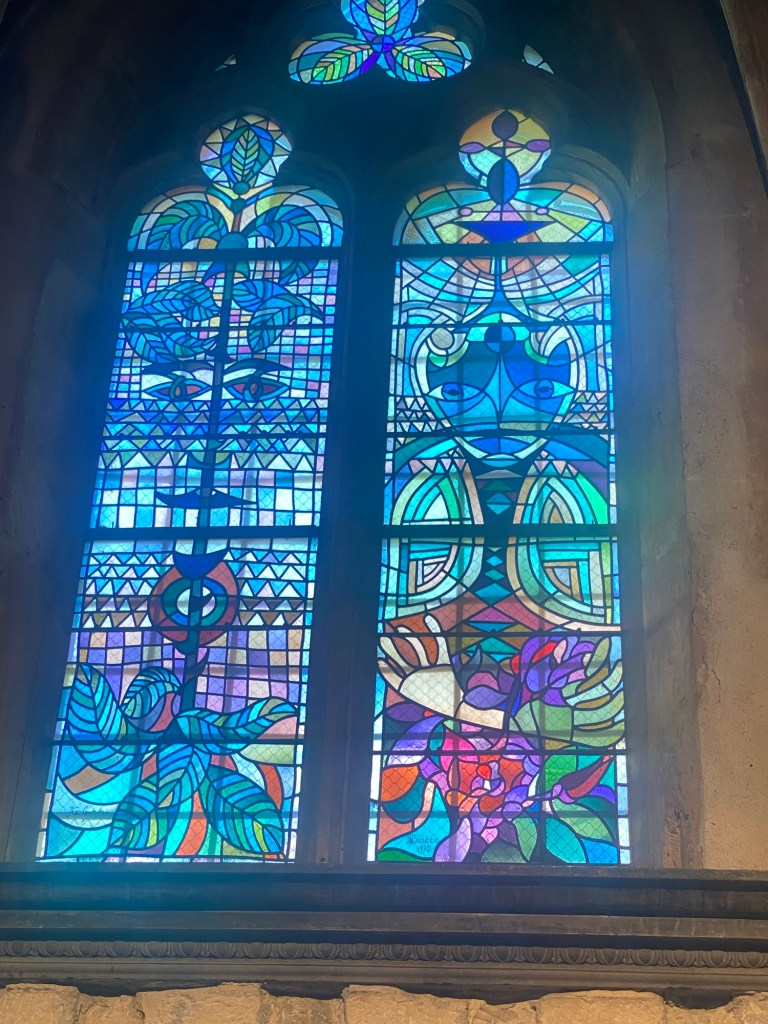
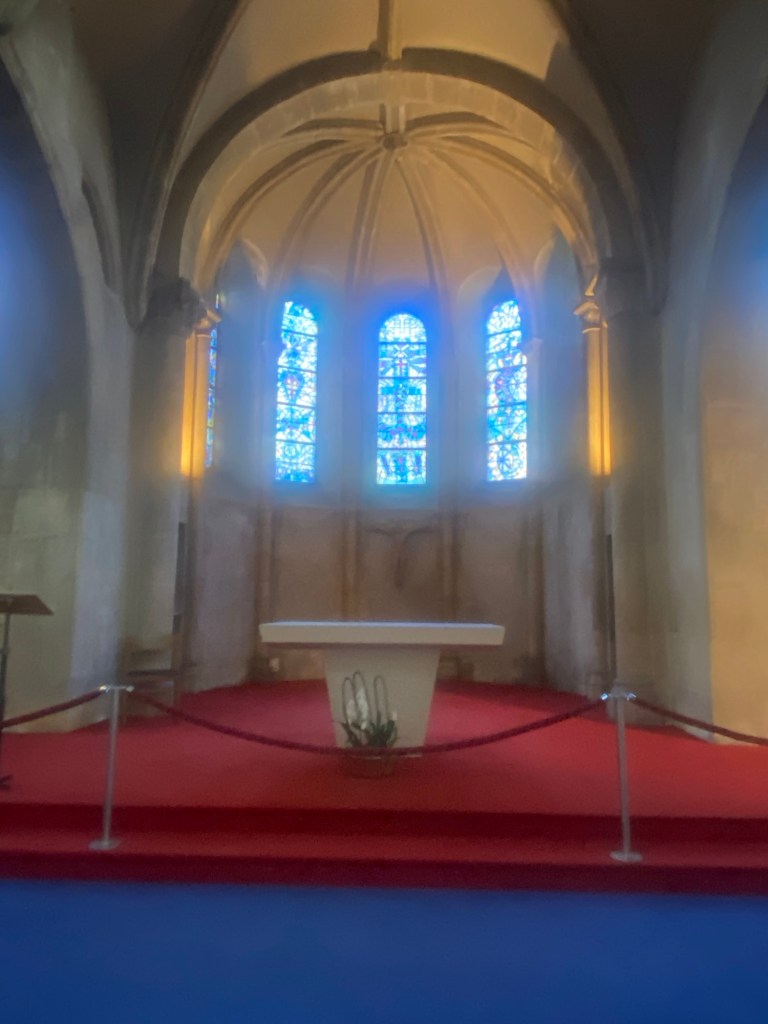
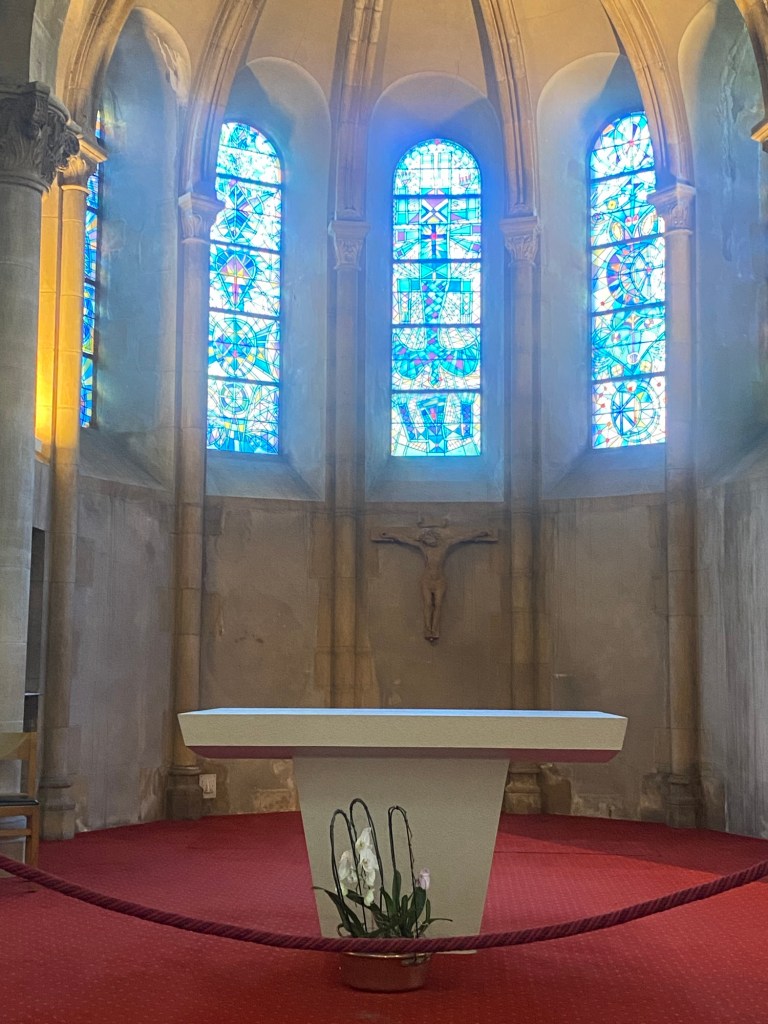
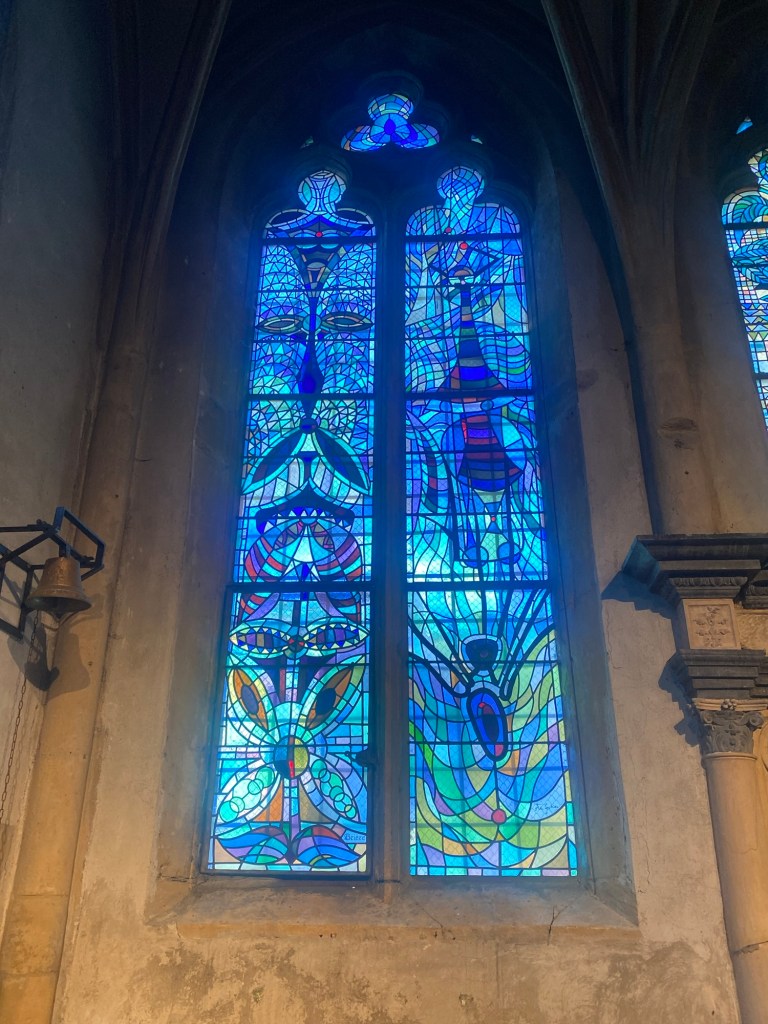
We ended our day with a visit to St. Maximin, another church with interesting stained glass. St-Étienne considered offering Jean Cocteau a commission, but decided against it based on his artistic and personal style. Instead, his work is prominently displayed in St. Maximin, including behind and surrounding the altar. It’s beautiful, but uses more of his symbolism than that of the Christian religion. The church leaders of the time must have been pretty avant garde.
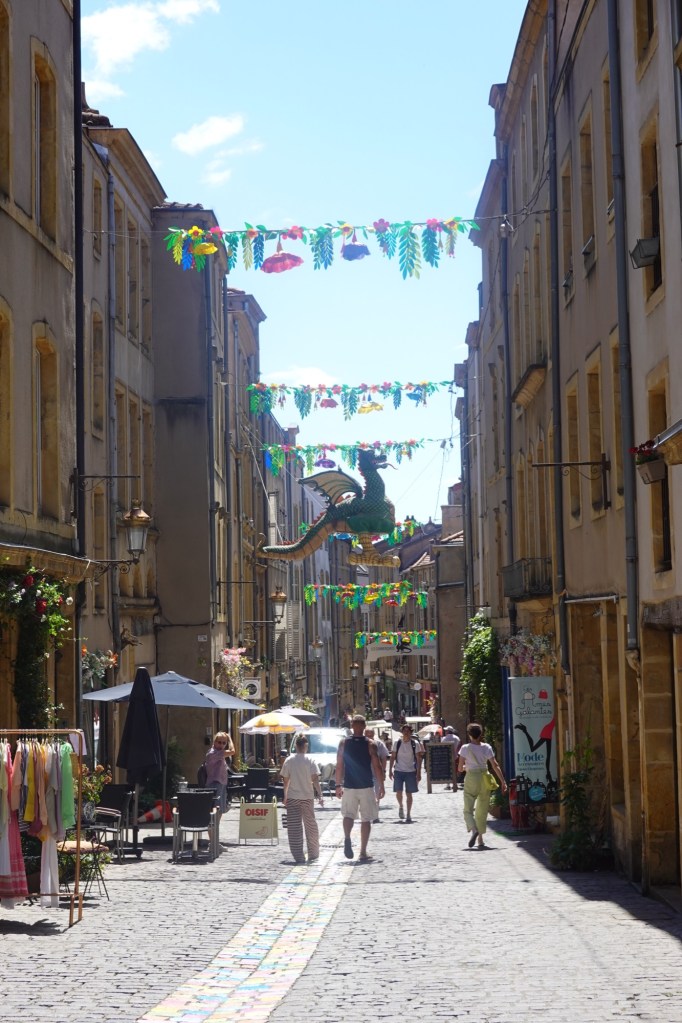
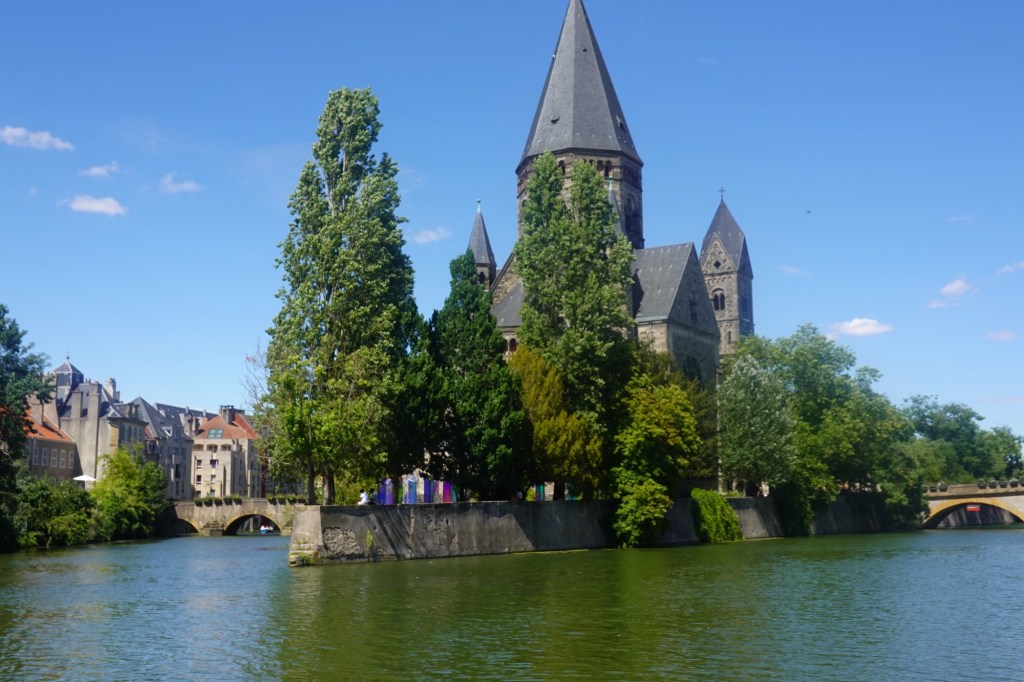
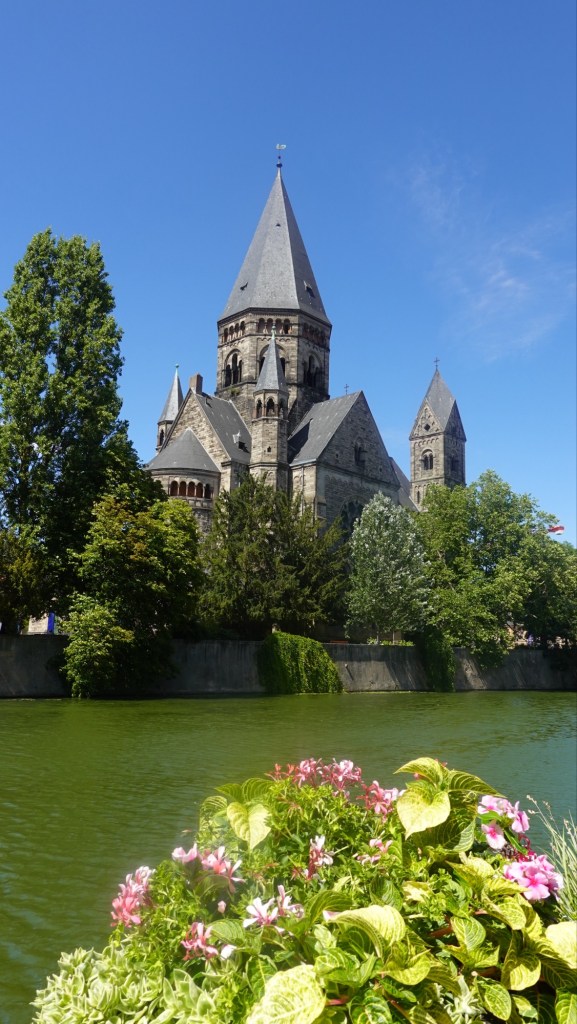
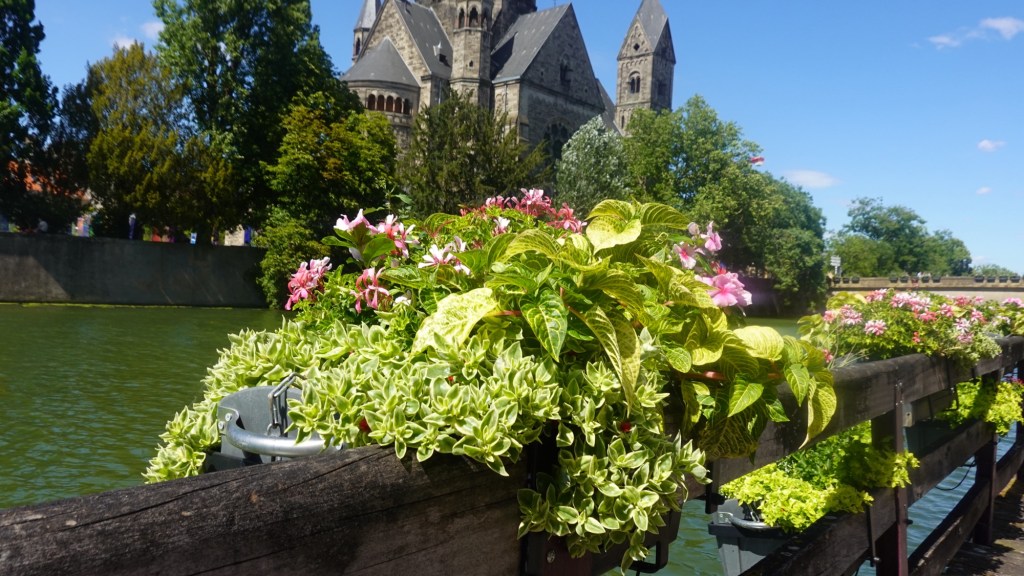
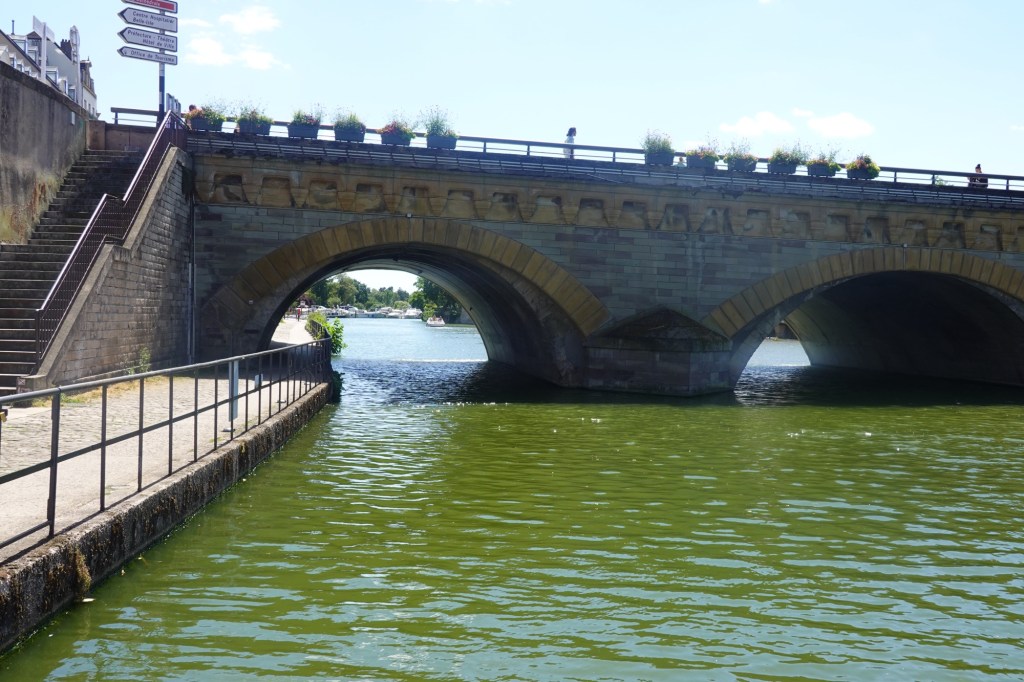
As noted in an earlier post, I was torn between using Nancy vs. Metz for our base. After spending a day in Metz I absolutely see its appeal, and I would recommend it over Nancy to someone coming for a day or two. The historical center is compact, with charming winding streets filled with shops and restaurants. It’s on the Moselle river, which would make for a nice day cruise or romantic evening walk.
That said, Nancy was the better choice for us. The train station was a five-minute walk over flat ground from our apartment, while the historic center of Metz, where we would have stayed, is about 15 minutes, uphill coming from the train station. Since we were catching trains four out of our five days in Nancy, the location made for pretty mellow commutes.


it’s amazing that the churches have survived the wars and conflicts that have plagued this area of the world.’
LikeLike
it’s amazing that the churches have survived the wars and conflicts that have plagued this area of the world.’
LikeLike
it’s amazing that the churches have survived the wars and conflicts that have plagued this area of the world.’
LikeLike
it’s amazing that the churches have survived the wars and conflicts that have plagued this area of the world.’
LikeLike
it’s amazing that the churches have survived the wars and conflicts that have plagued this area of the world.’
LikeLiked by 1 person
you are now officially experts on stained glass
LikeLike
And we are still going to St Chapelle, which is renowned for its stained glass
LikeLike
I did see st Chapelle but that doesn’t come close to all the stained glass you’ve seen!!
LikeLike
My great great great grandfather Valentine was born in Metz ca 1806 and lived there when it was owned by France, but he spoke German. He was a doctor and emigrated to the US in 1833, and worked at Castle Garden as a doctor before Ellis Island was built. All his records were destroyed during WW2 so I can’t go further back, but I hope to have the chance to visit Metz some day. Thanks for the pictures.
LikeLike