We have long been intrigued with visiting Easter Island, the remote island in the South Pacific that is the eastern-most point of the Polynesian Triangle. The other two points are New Zealand and Hawaii. Just contemplating how those early seafaring peoples were able to populate this vast swath of the Pacific Ocean is mind boggling, but best left to others more expert than I to discuss.
Easter Island, or Rapa Nui as it is known to the native people, is believed to be the last island to be settled by the Polynesians in roughly 800 to 1200 a.d. To this day Rapa Nui is the most remote inhabited island on the planet.
We previously visited Chile in 2013 and at the time considered making the trip out to the island, but cost and available free time led us to pass. Now we have the money and the time, so it was a go in advance of a longer trip to South America. Modern transportation technology makes Easter Island more accessible than when it was first “discovered” by European explorers on Easter Sunday in 1722, but getting there still demands time and effort from would-be visitors from most parts of the world.

The island was claimed by Chile in the late 1800s and the only flights to Rapa Nui are from Santiago on LatAm Airlines. LatAm operates two flights a day during the island’s high season, which is basically during the southern hemisphere summer from December to March. It’s a roughly 4.5 hour flight out to the island from Chile. Flight schedules get reduced at other times of the year.

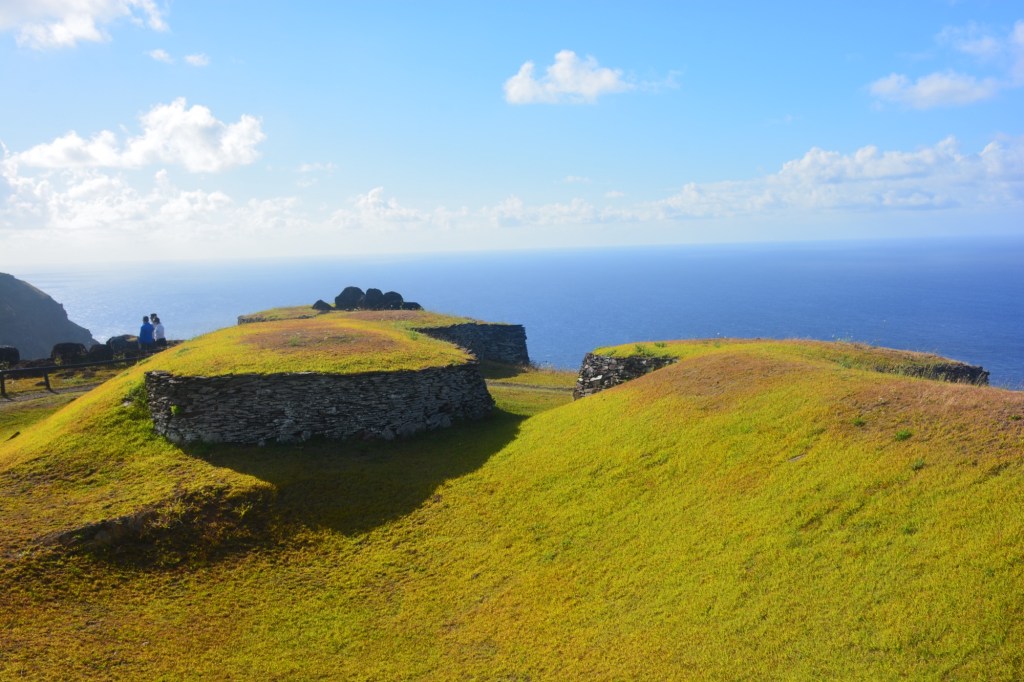
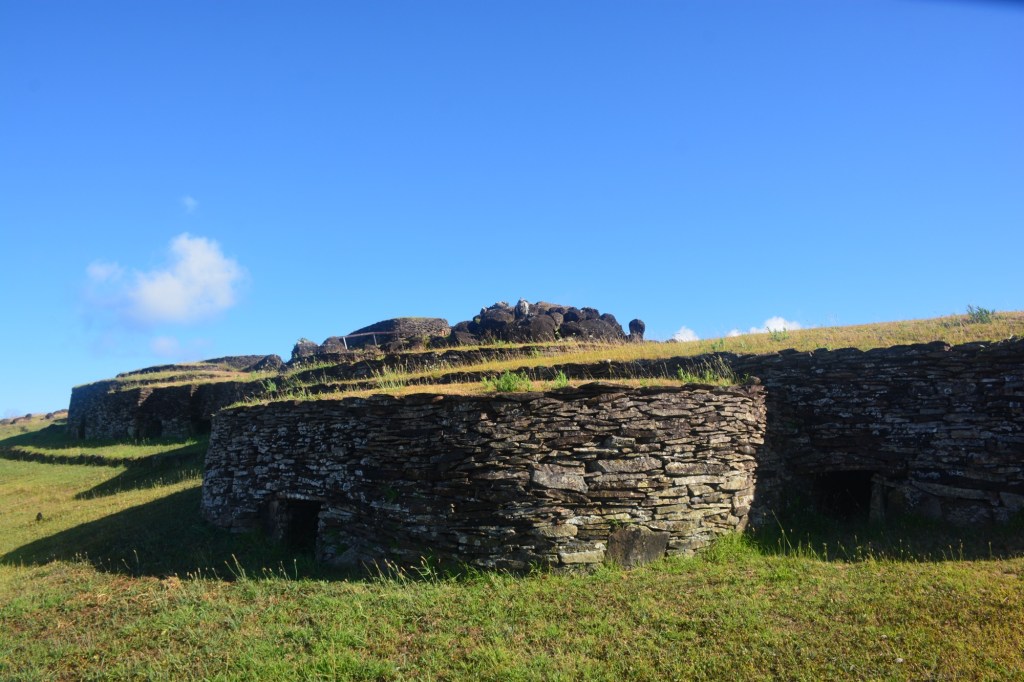
One must, of course, first get to Santiago, which in our case involved a flight from Philadelphia to Miami, a three hour layover, followed by a ~7.5 hour to 8 hour overnight flight to Chile. We stayed over in Santiago one night to rest before flying to the island. Weird fun fact: despite all of that travel when on Easter Island we were still in the same time zone as the eastern U.S. during our January visit.
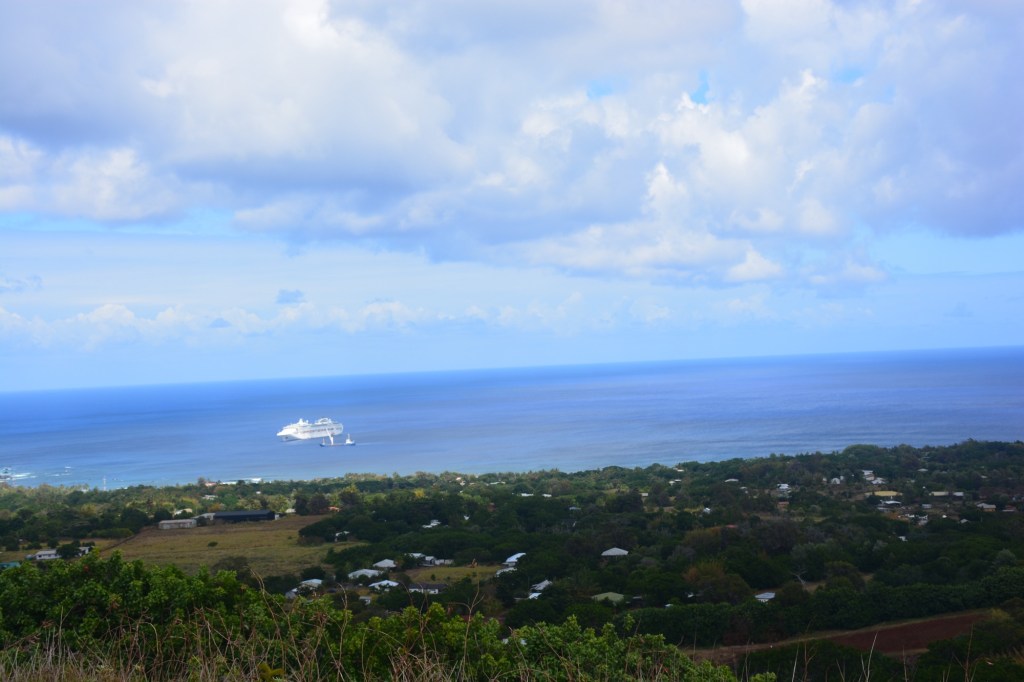
The occasional cruise ship will stop at Easter Island. (A ship based in Japan made a three-night visit during our stay.) However, despite being in the middle of the Pacific the island lacks a deep-water port that can accommodate large ships. Any cruise passengers must go via tenders to shore, and during periods when the ocean is particularly rough the cruise operators will bypass Easter.

The allure of Easter Island, aside from its remote location, is of course the famous “Moai,” the large statutes carved out of the island’s volcanic craters during the years long before the appearance of European explorers. When later Europeans traveled to Easter Island from 1770 onward the Moai had been toppled over by the islanders themselves either as a result of civil war or disillusionment. There were only a few hundred island inhabitants when English explorer Captain Cook arrived in 1838, but it is believed Rapa Nui previously supported thousands of people. (Easter Island has long been studied as an early example of societal and environmental collapse.)
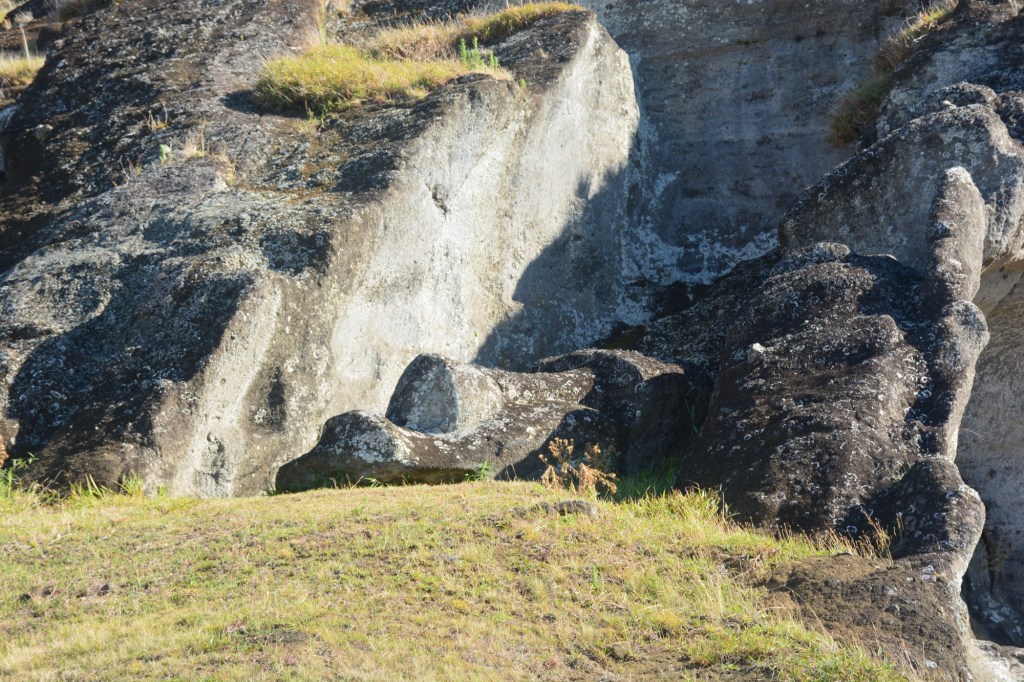
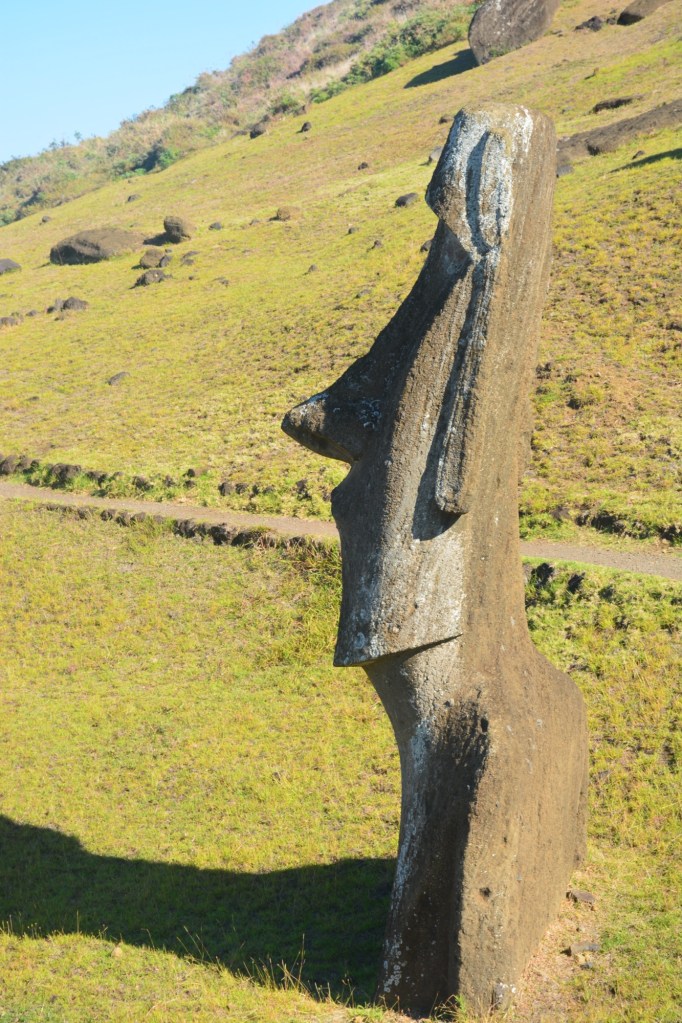
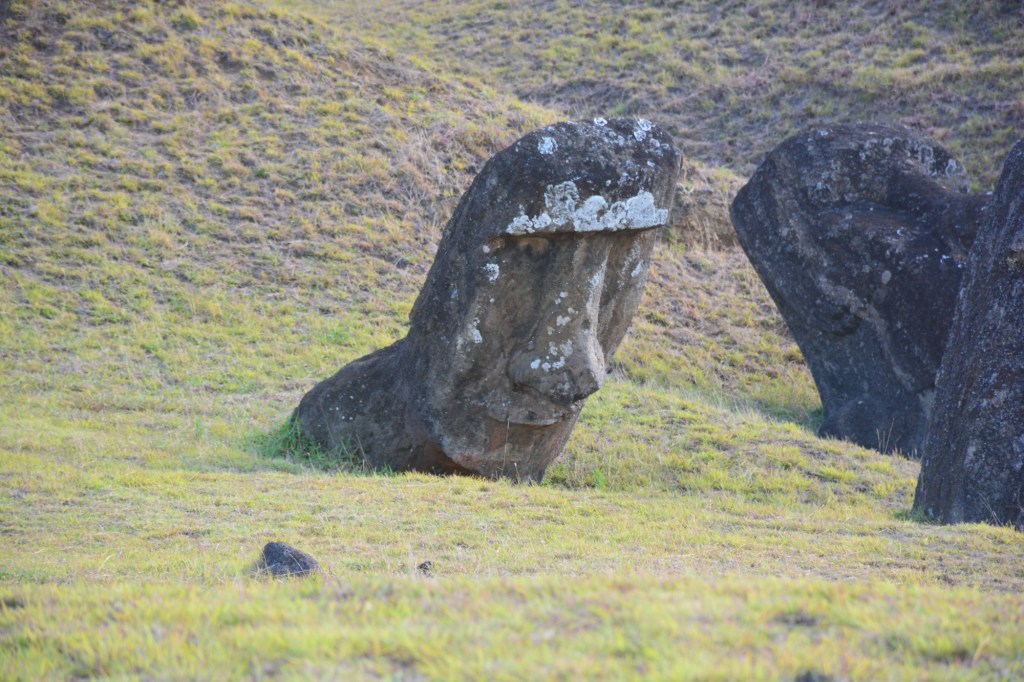
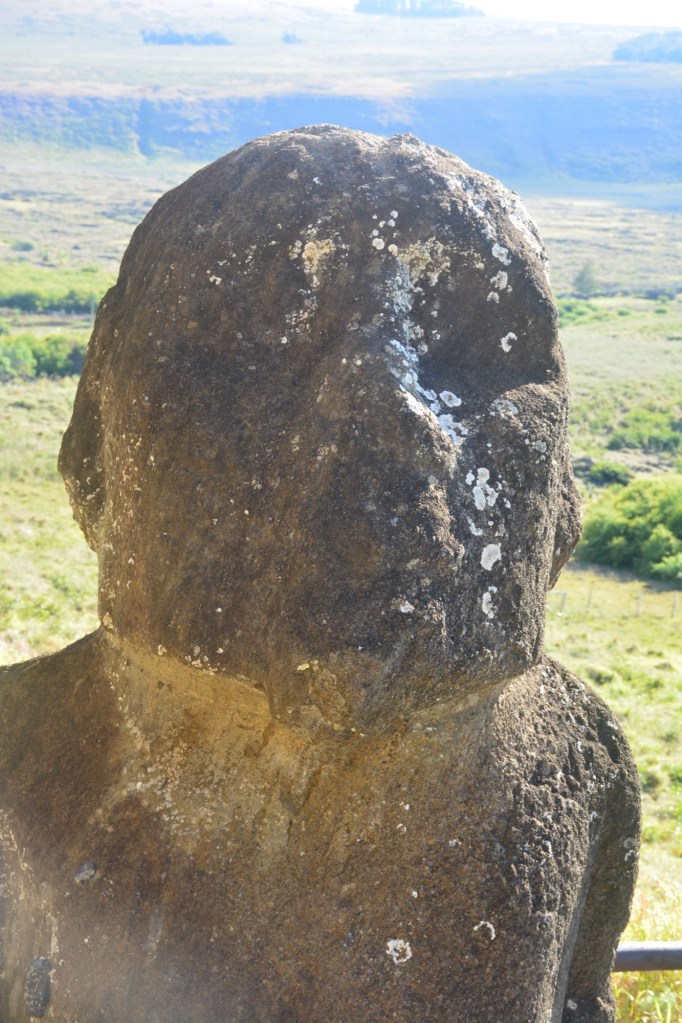
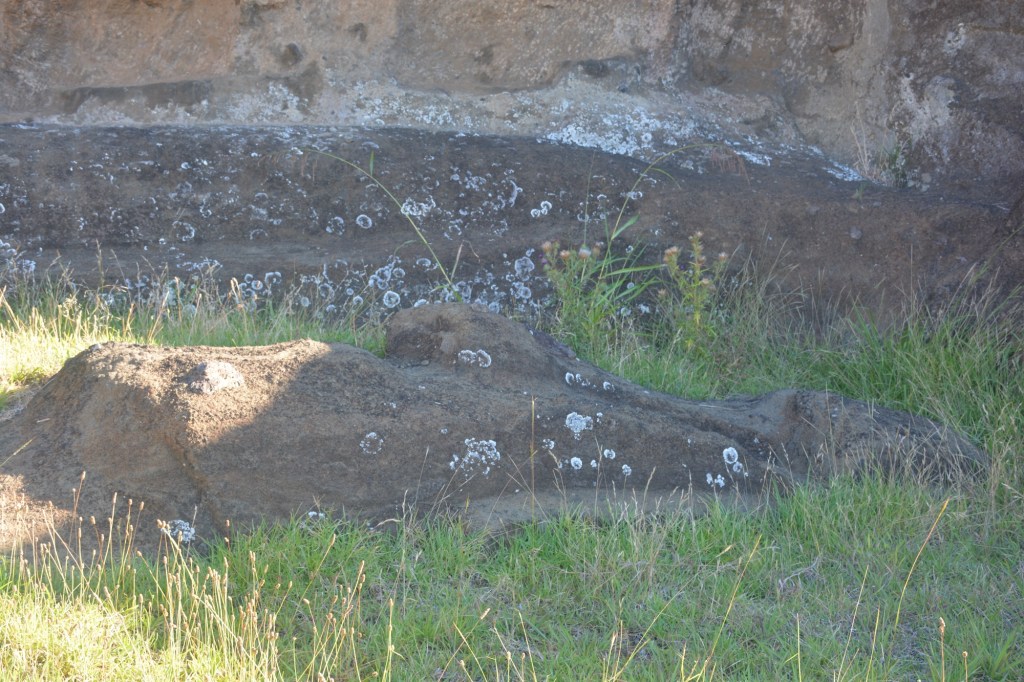
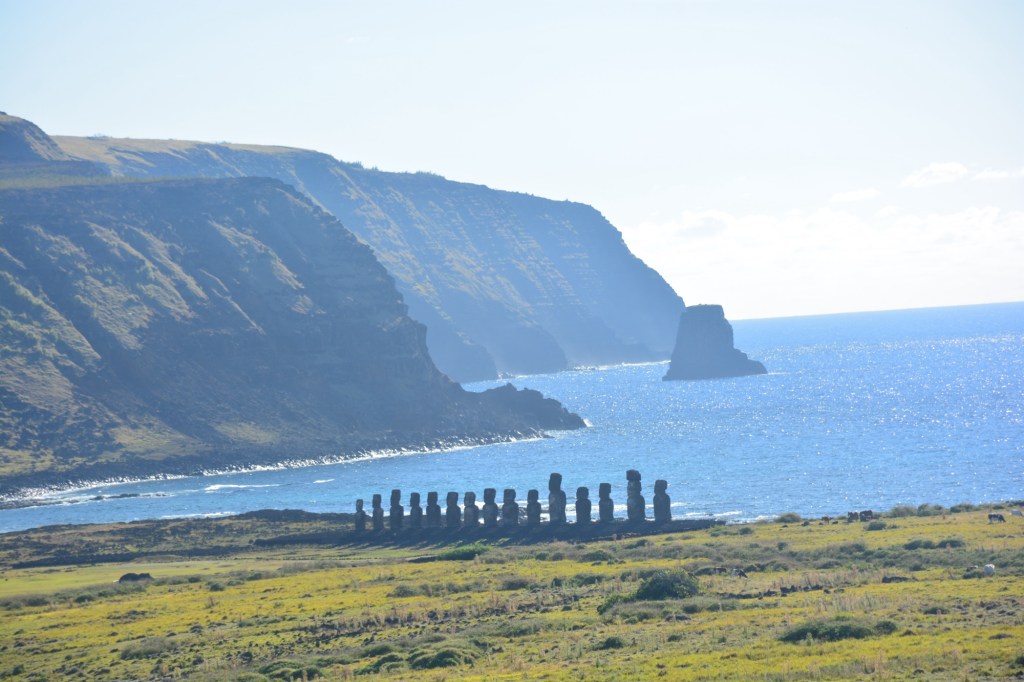
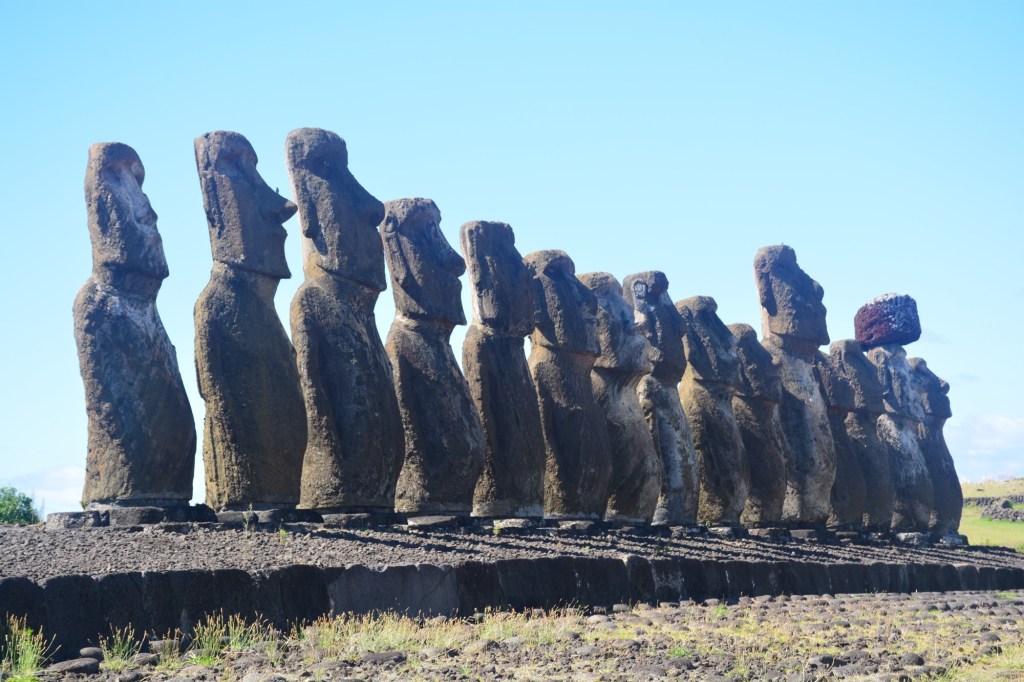
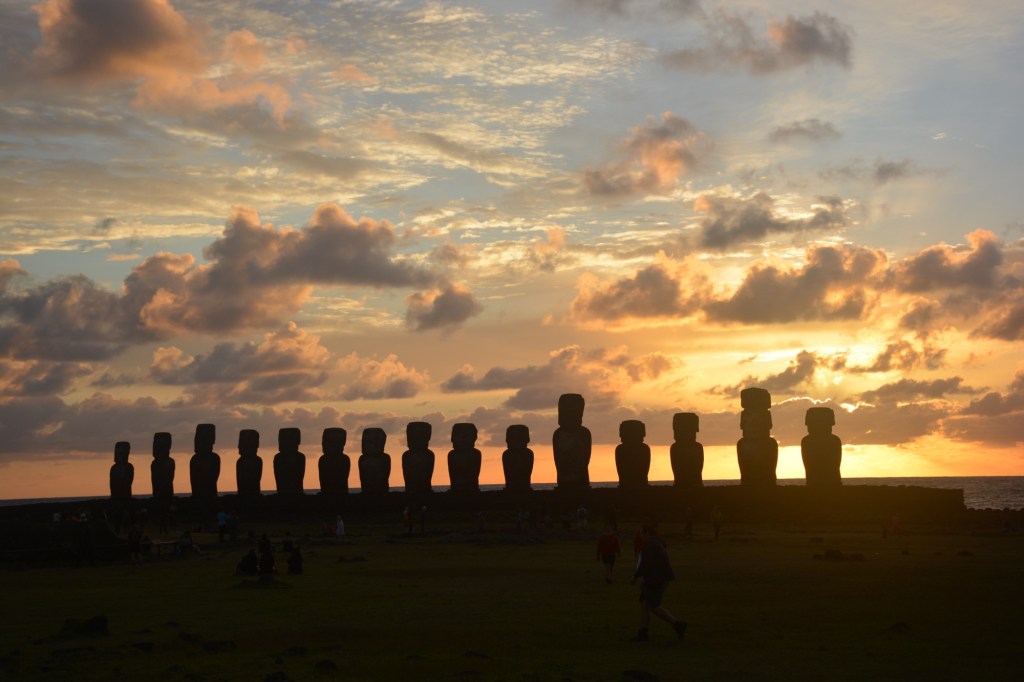
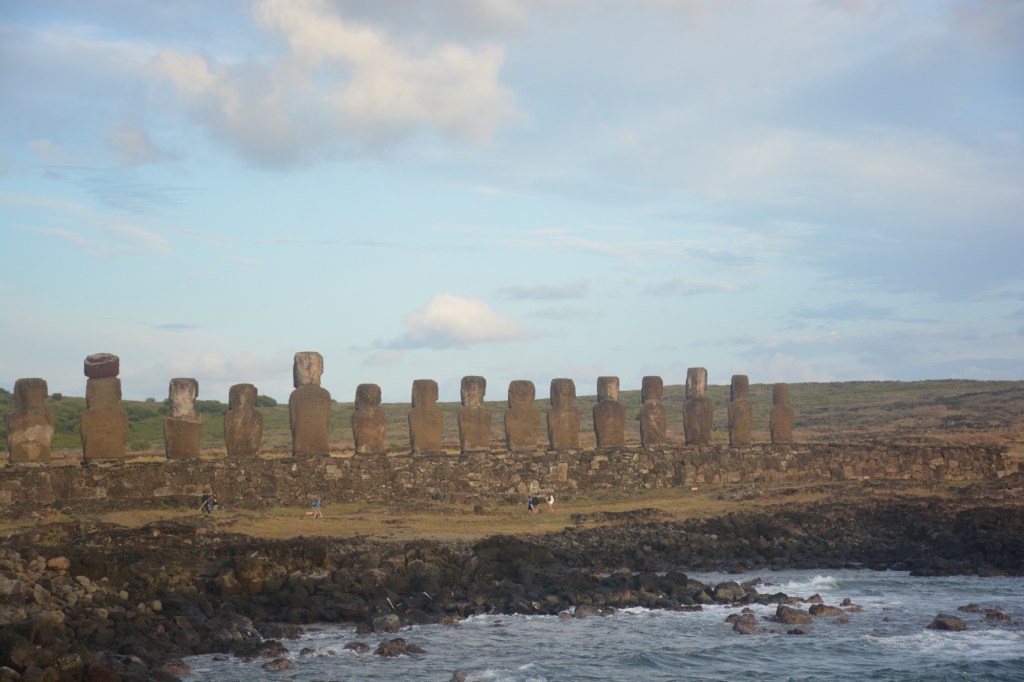
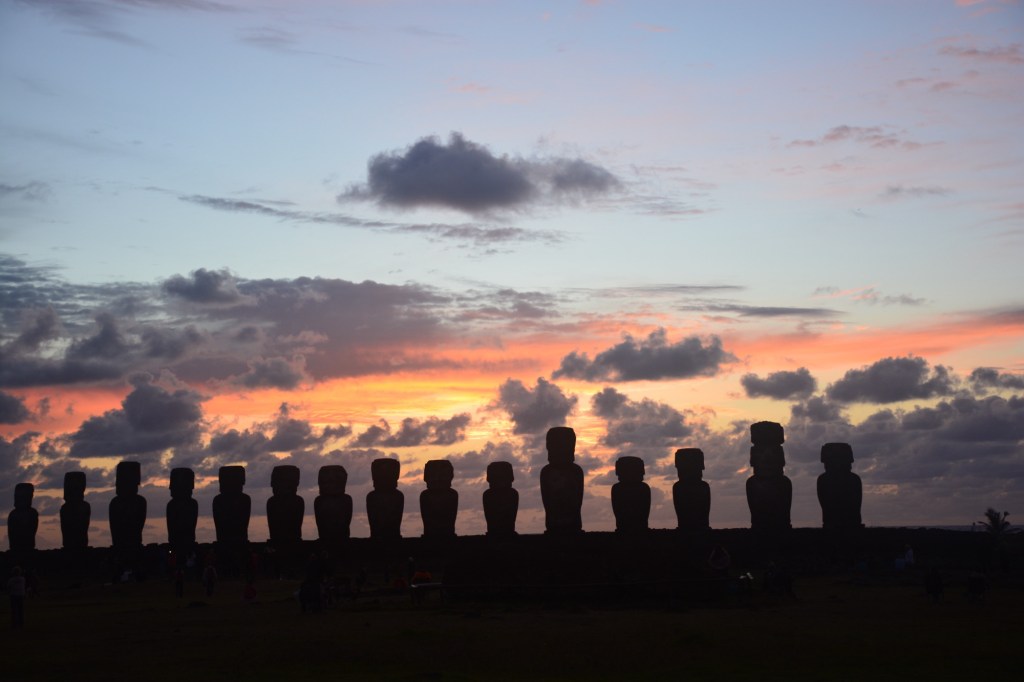
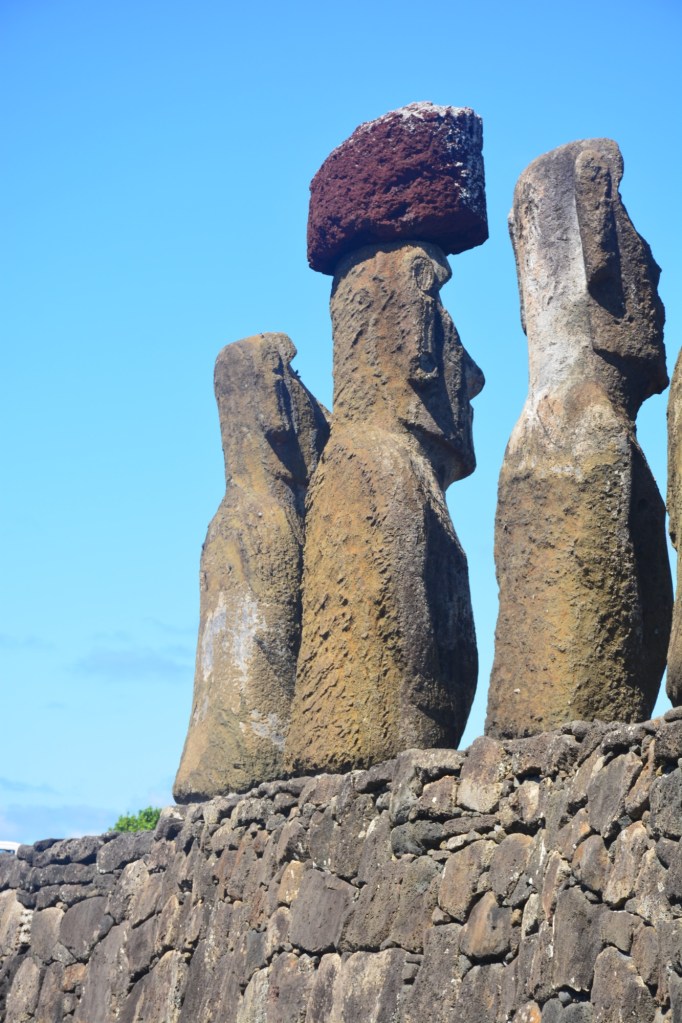
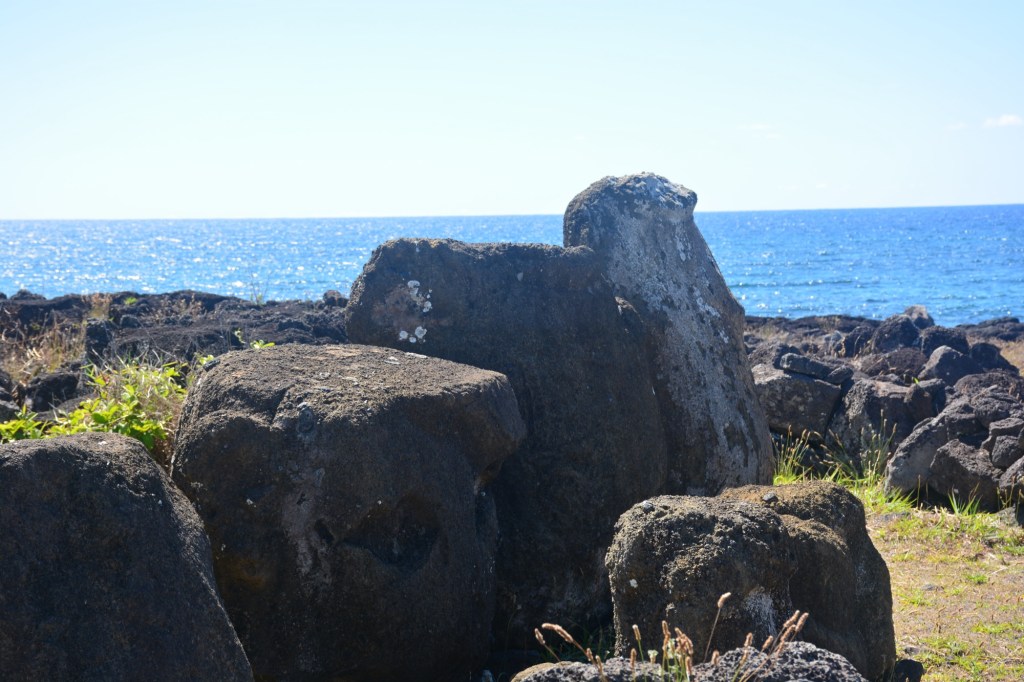
Many of the Moai are still on the ground in pieces, or partially buried near their original quarry site, but others have been reconstructed by archeologists. The most famous can be seen at the Tongariki site on the southeastern edge of the island. It’s at this site one will find 15 massive Moai standing like sentinels, with their backs to the sea. The Moai were representations of ancestors who helped watch over and protect the living. They always faced inland.
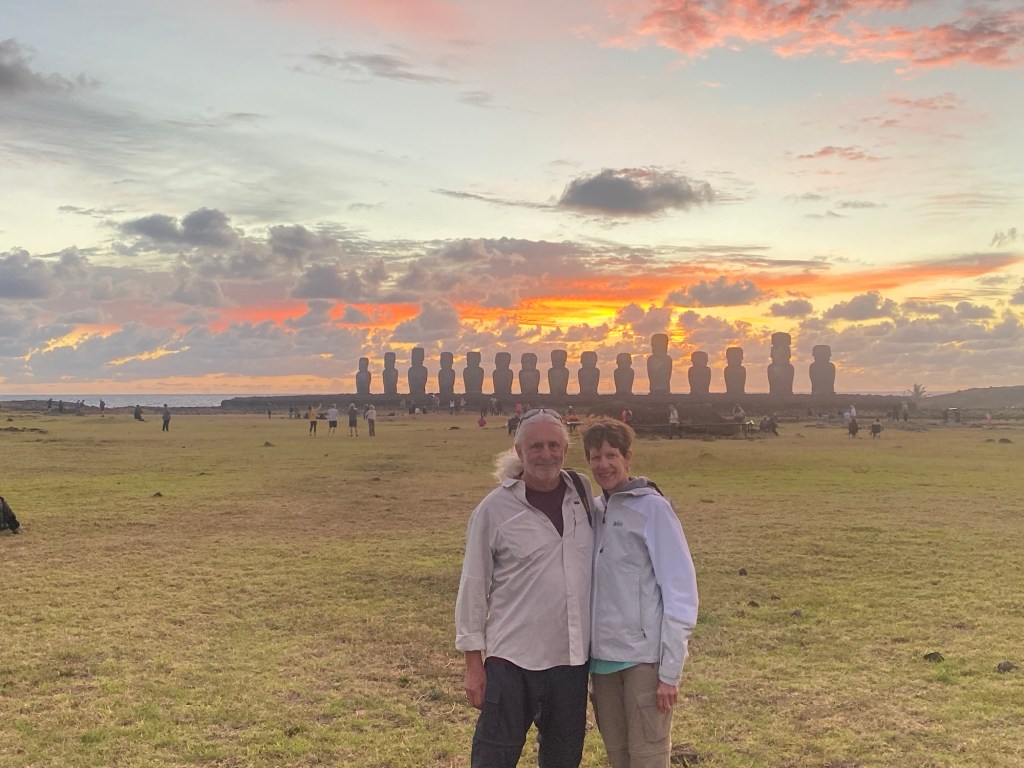
We visited the Tongariki site twice; once during the afternoon when as a group of nine travelers we were basically the only people there. The second time was as part of a sunrise visit that attracted multiple travelers. Still, despite this being the height of the high season, the island is still remarkably uncrowded. Again, that likely has something to do with its remote location. Compared to the throngs visiting a popular European destination, or Yellowstone in summer, this trip has been an absolute joy.

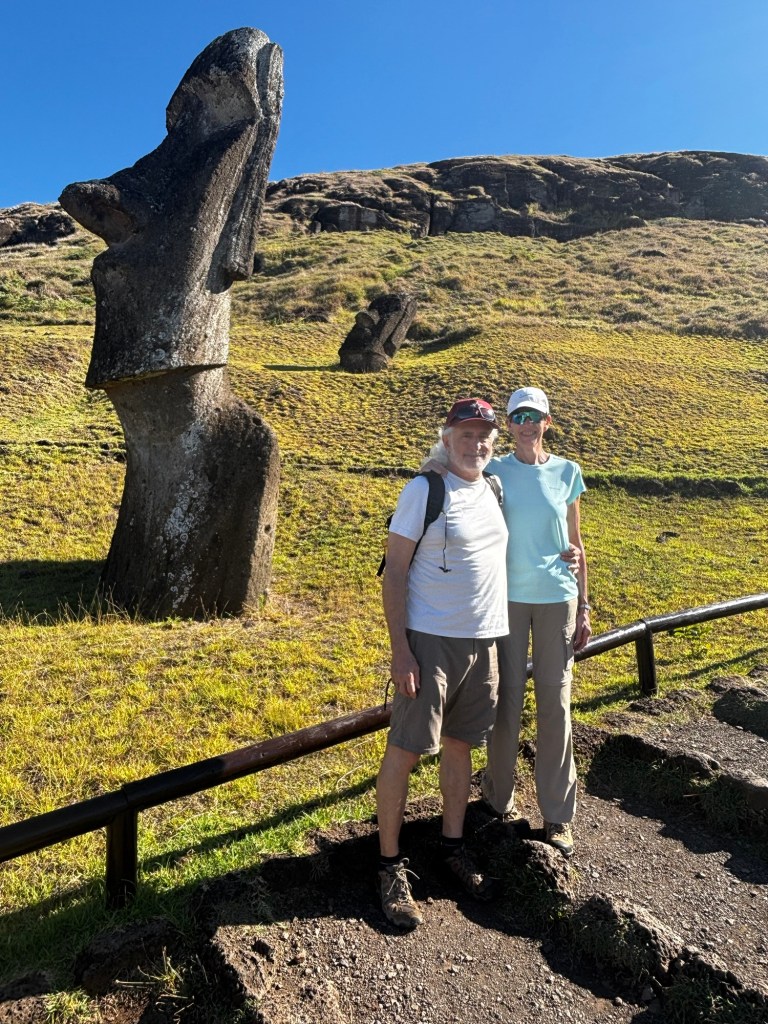
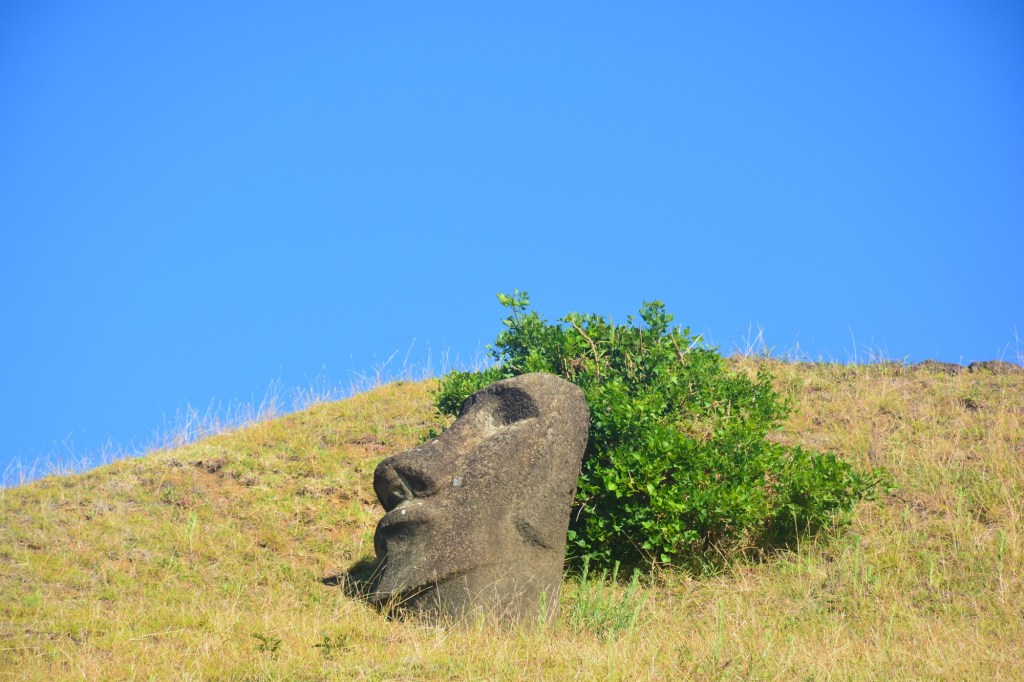
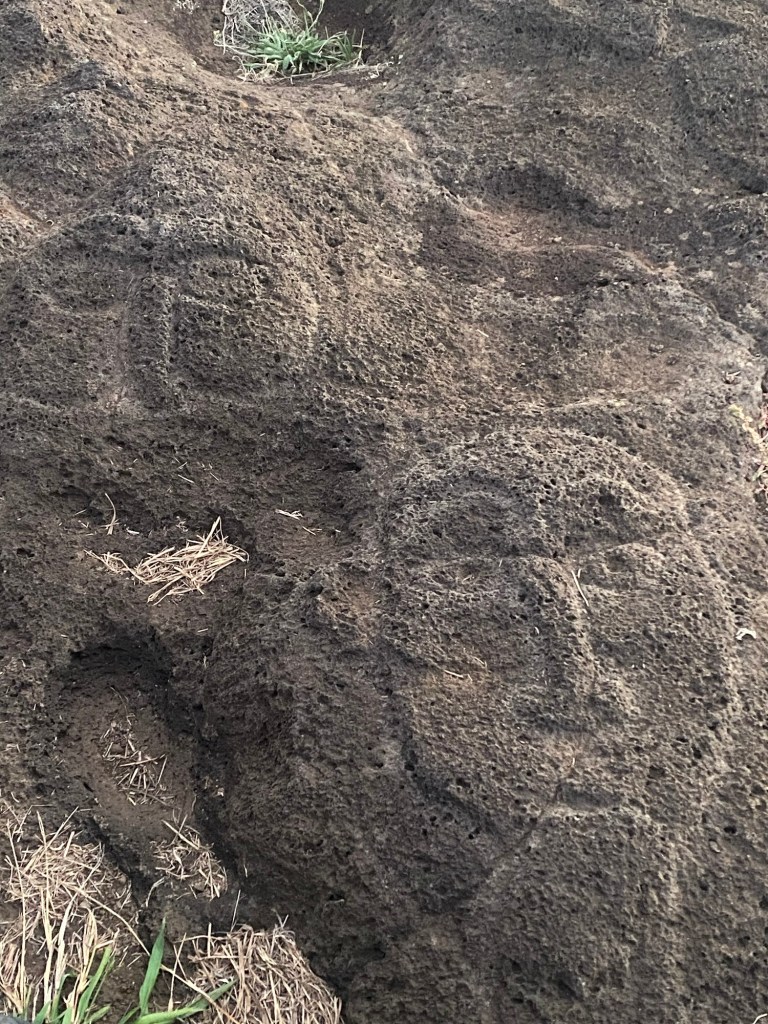
We were chaperoned around Rapa Nui by Green Island Tours, led by our native-born tour guide YoYo. He was knowledgeable and informative, and prone to relating stories of his childhood on the island. That included time spent scampering around in the Rana Raraku volcanic pit, where the Rapa Nui carved out their massive statues. Unfortunately, for safety reasons the Chilean government no longer allows visitors into the pit itself, where one can find partially finished Moai. However, the ground outside of the pit is choc-a-block with Moai, some partially buried but nonetheless striking.

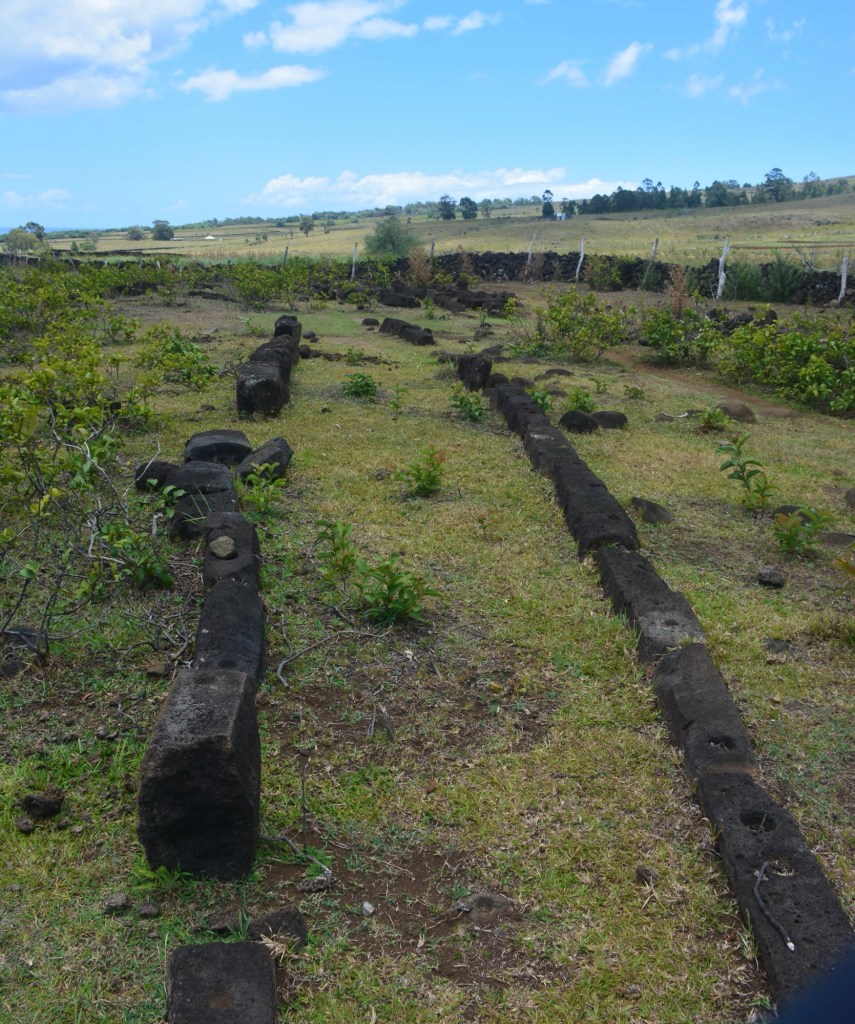
Much of the island is a Chilean national park. There is a $100 per person entry fee to visit the sites, but the ticket is good for several days and multiple visits. Using a local guide is required, and it’s essential as most sites lack informative signage. There are also ALOT of cows and horses grazing these days, which was kind of weird.
Most of the roughly 8,000 year-round residents of Easter live in or near the town of Hanga Roa, which sits on the northwestern edge of the island near the Rana Kau volcanic pit. (There are over 70 extinct volcanos on this small island.) We could easily stroll into town from our hotel, Nayara Hangaroa, where there are a number of restaurants, most featuring locally caught seafood. Tuna and a white fish similar to mahi mahi seemed to dominate, but everything we ate was good. The island is well worth the effort of reaching for anyone so inclined.



 It's What We Do
Thank you for this incredib
LikeLike
just wondering how big the Moai are in relation to you and Pat’s stature?
LikeLike
Varies. The ones in the sunrise pics are on the order of 15 to 20 feet and weigh several tons. There are smaller ones
LikeLike
the history of the statues are truly are so interesting
I cant wait to hear more –where are the cows and horses
LikeLike