You can’t visit Colombia, especially Medellin, without addressing the elephant in the room: the legacy of Pablo Escobar, the notorious head of the Medellin cocaine cartel in the 1980s and early 1990s. His reign of violence, long over, is probably why many of our friends thought it odd we were coming to Colombia. But that was then.
It’s hard to believe, but there are actually “narco tourists” that come here specifically to venerate Escobar. Colombians in general, and Medellinos in particular, however, would prefer to forget the murderous path he cut through the city.
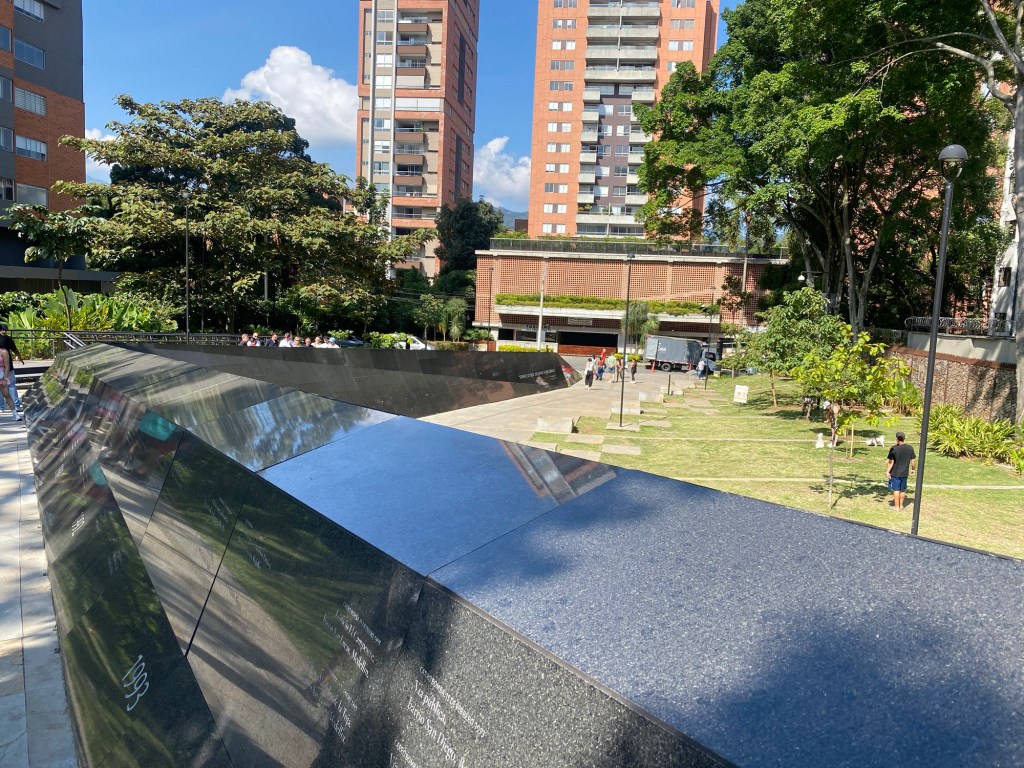
Medellin, as we’ve noted before, has transformed itself from one of the most dangerous cities in the world into a vibrant tourist and commercial hub. Our final day in the city included a visit to a memorial park dedicated to the more than 49,000 people that were killed during the years the Medellin and Cali cartels fought for control of the cocaine trade.
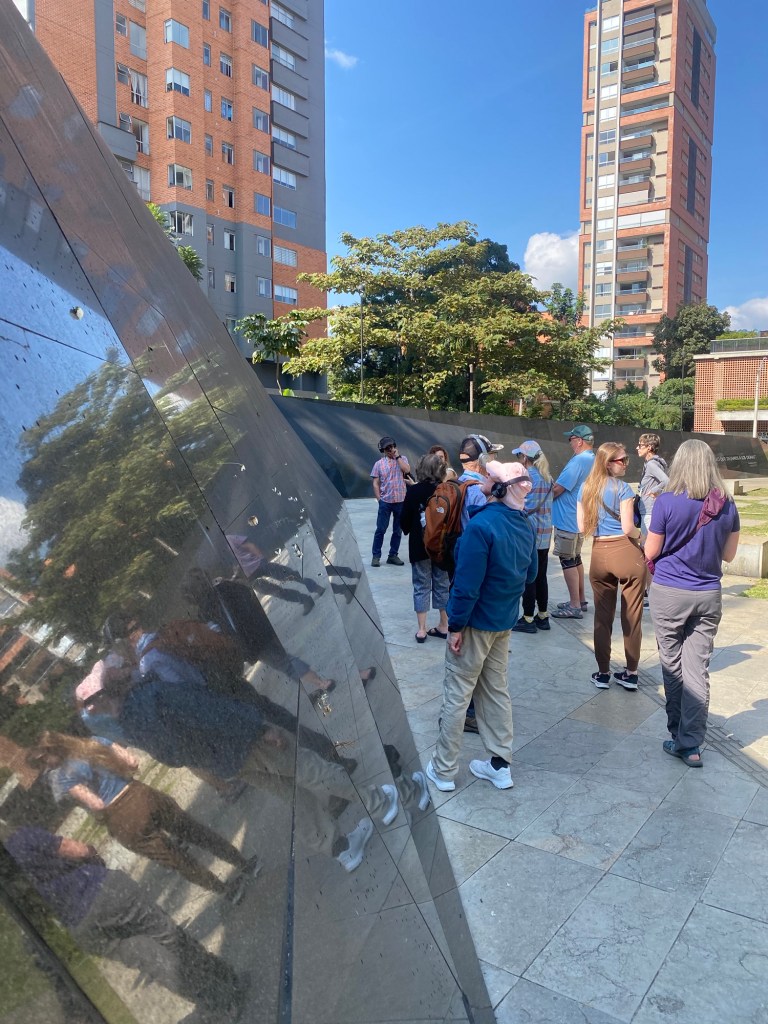
The park was established at the site of Escobar’s principal home in Medellin, a six story structure that was bombed by the Cali cartel in the 1980s. Escobar was shot to death by authorities in 1993. The city later assumed control of the property and imploded the damaged structure.
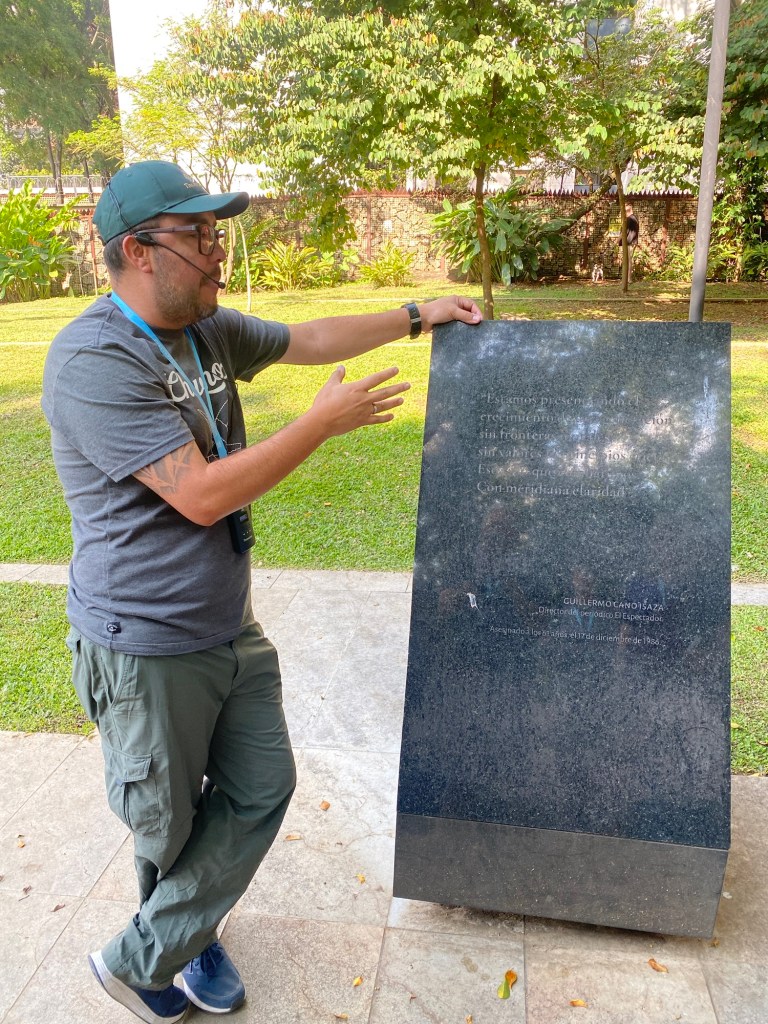
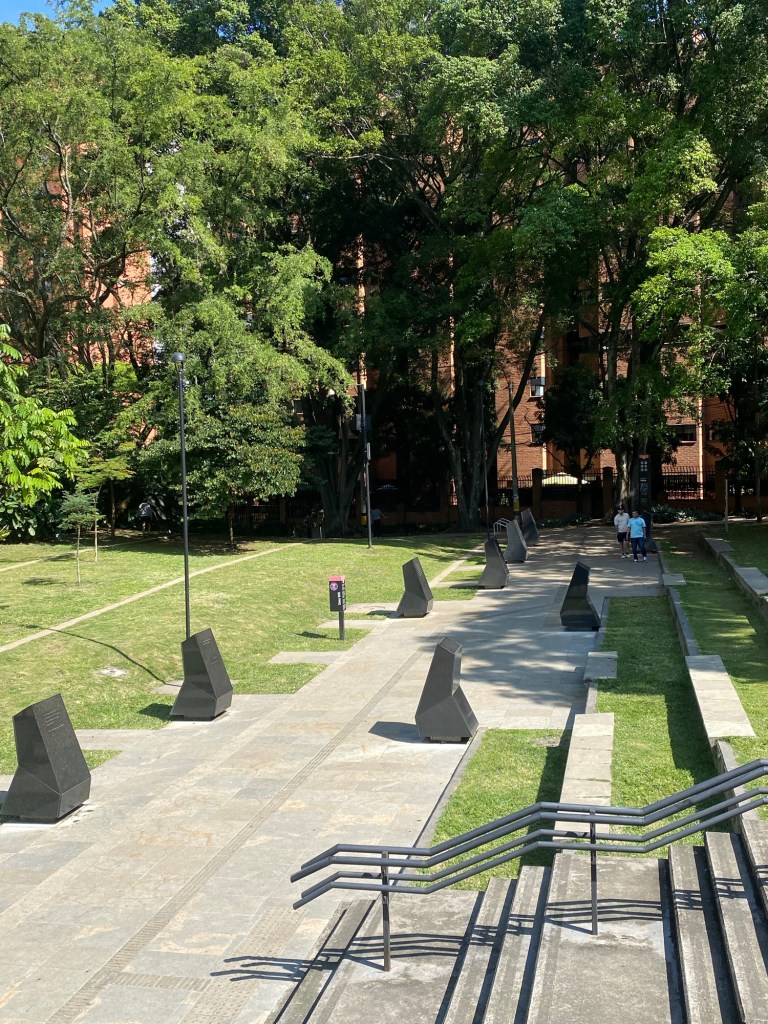
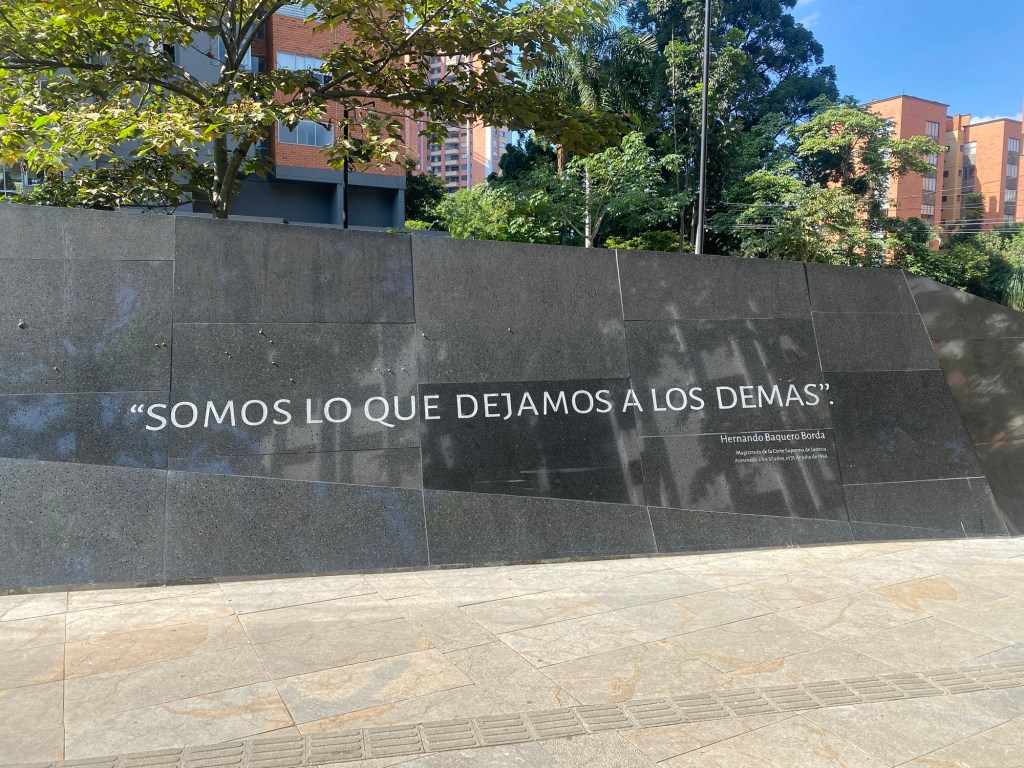
The park features several obelisks dedicated to some of Escobar’s more prominent victims. One was a presidential candidate he had assassinated in the 1980s. The victim’s son, who was 8 years old at the time of his father’s death, is now the mayor of Medellin and a likely future presidential candidate.
Others are memorialized by a long black wall that dominates the area. On one side are tiny holes honoring the thousands of victims of the violence. The other features a timeline of Escobar’s most blatant atrocities.
Bombings were a favorite means of spewing mayhem, beginning in 1984 with a car bombing outside of the U.S. Embassy. By 1989 there were days with multiple bombings in a single day carried out by Escobar’s henchmen. People want to venerate that guy? No wonder Colombians want to forget all of that. It’s a sobering place to visit, but worth it.
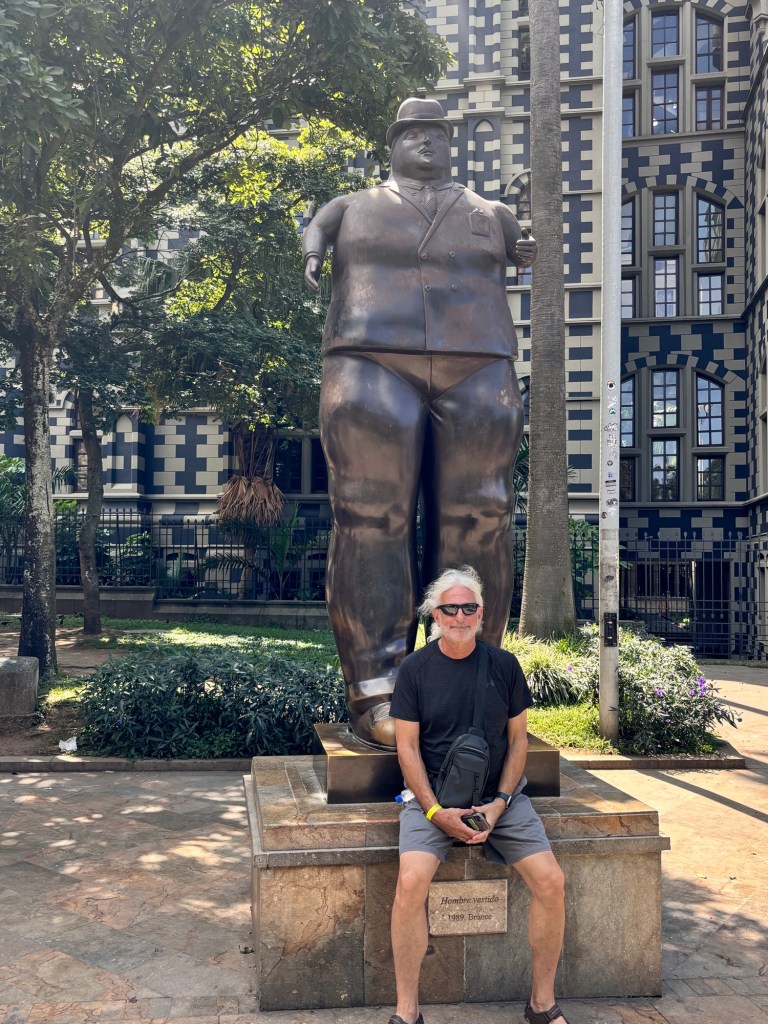
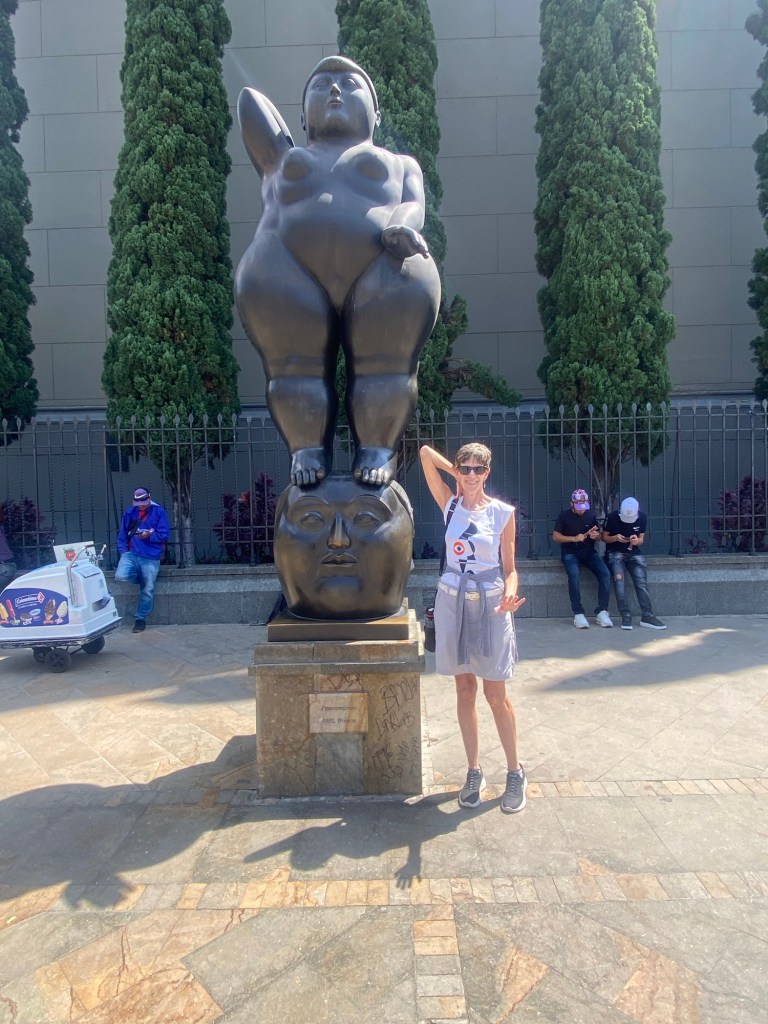
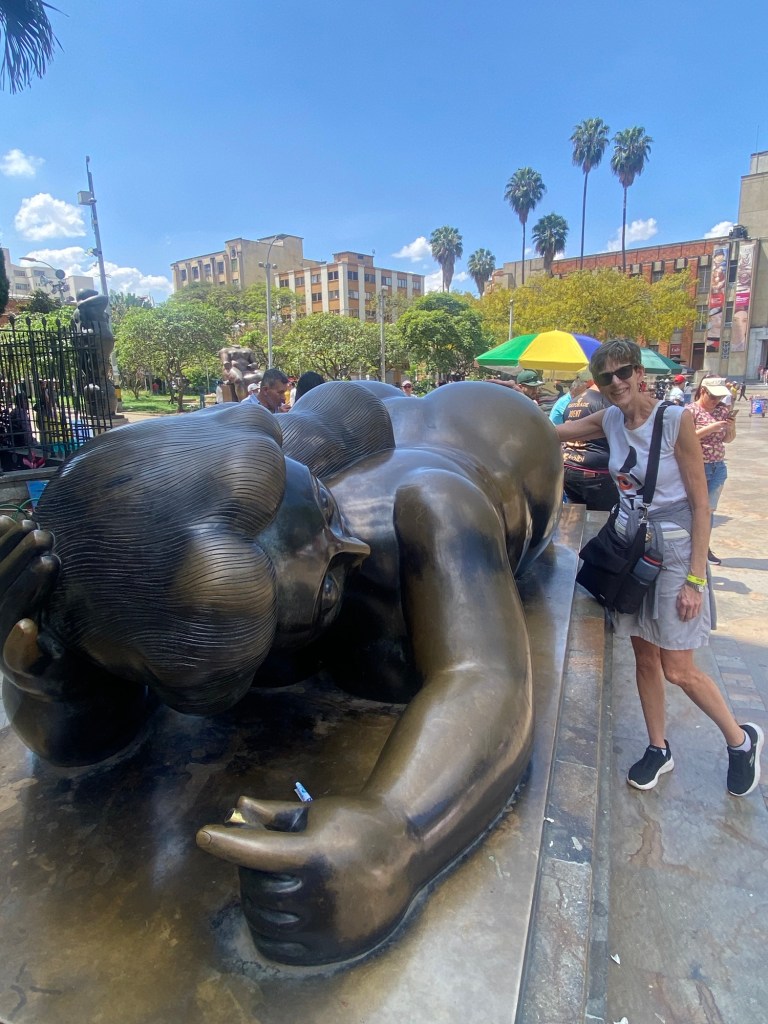
Afterwards was time for another dose of Botero, Colombia’s greatest artist. Yes, there are museums housing his works in both Bogota and Medellin. The later wouldn’t allow photographs of his paintings inside the museum, unlike in Bogota.
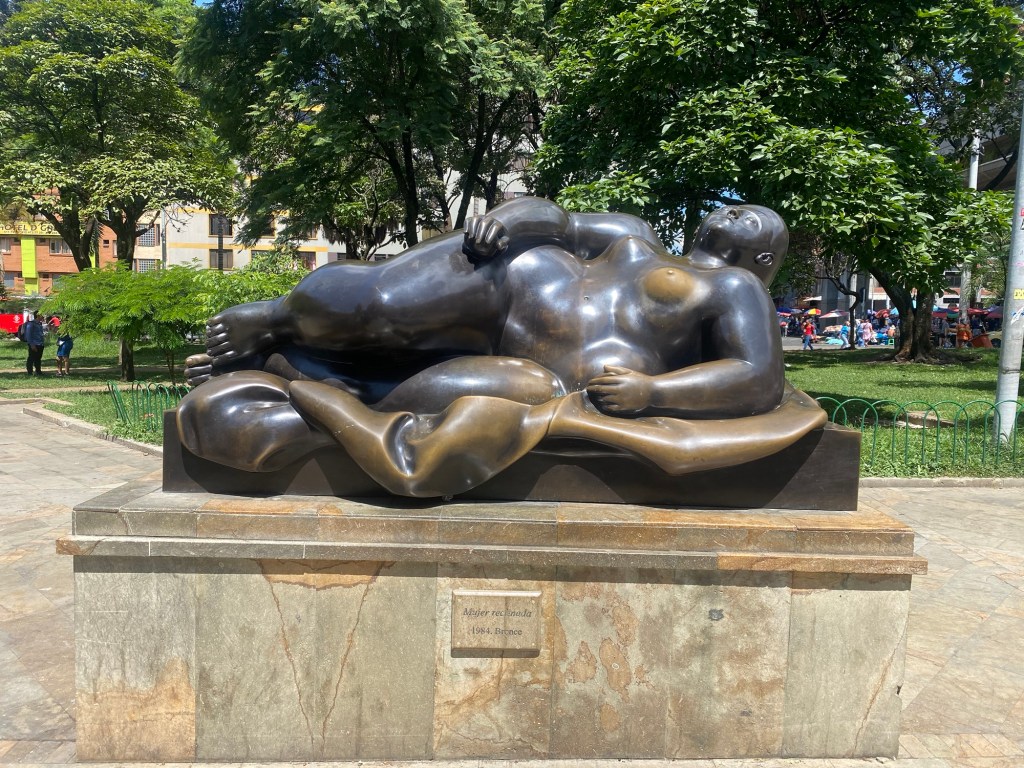


The grounds in front of the Medellin museum, however, are home to 23 of Botero’s massive sculptures. Botero donated the works and curated their installation. He wanted his art to be accessible to everyone and there was plenty of activity on the day of our visit, from vendors to people just out enjoying the day.
We wish we would have had more time to explore the rest of the museum’s collection, and additional time to explore more of Medellin. It’s one of the downsides to traveling with a tour group. But that’s offset by the way our tour operator, Overseas Adventure Travel, exposes its clients to “real life” in the places they go.
Next up is a visit to Colombia’s “Coffee Triangle,” where we will be able to visit a coffee grower and learn about how America’s favorite brew is produced.
 It's What We Do
a very talented artist –great sculptures
>
LikeLike