Our second day in Sa Pa brought even more sun, and we were happy we burnt money to get a little help from our ancestors.
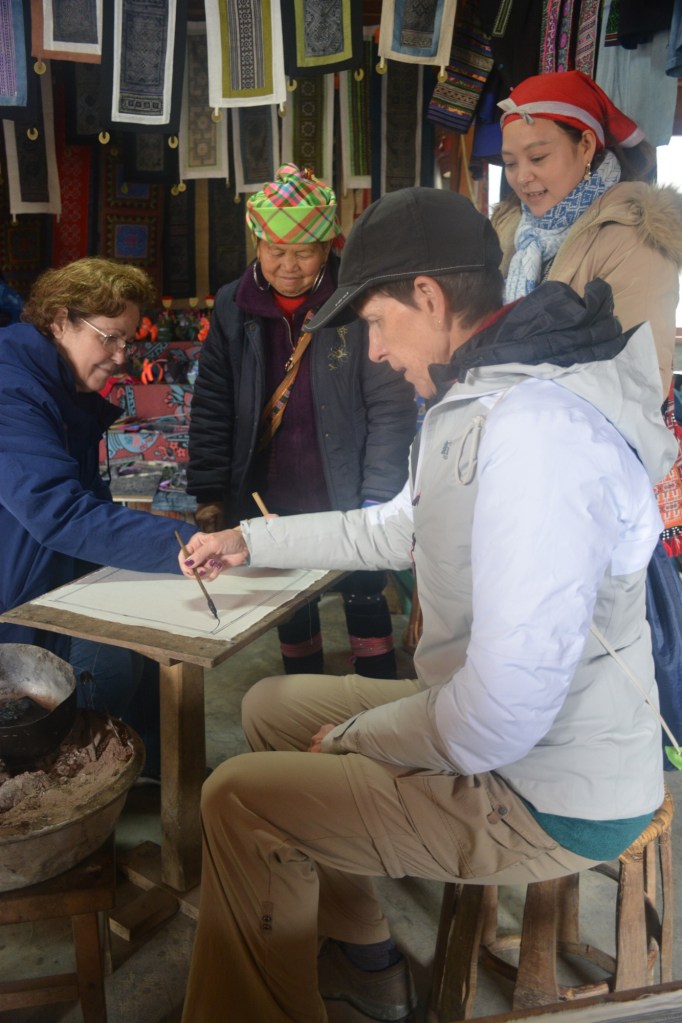
We made another walk to a second village. Although similar to the first it was less touristy, as the first village had a batik artist who was officially recognized by the government and who gave lessons to tourists.
I didn’t actually see much of that first village as I was accompanied by a woman who wanted to sell me her crafts. She was very pleasant to talk to, and spoke good English, but unfortunately we couldn’t buy from everyone. (Jim had already bought something from the villager who joined our group yesterday, and I wanted to buy from the higher-quality crafter we were about to meet.)

We stopped at the home of a local in our second village, Sin Chai, just to look around. She was working on a piece of embroidery and hardly stopped for a minute as she spoke to us through our guide. These folks are really industrious. When one task is done they move to another.

Our guide Thai had told us that human trafficking is a big problem as the area is so close to China. Young women are either duped or enticed to go to China where they are forced to become prostitutes or to become wives to several men at once. Some of these woman make it back, but unfortunately they aren’t generally accepted back into the community, and are sometimes forced to move to the town where they can hopefully start a new life.
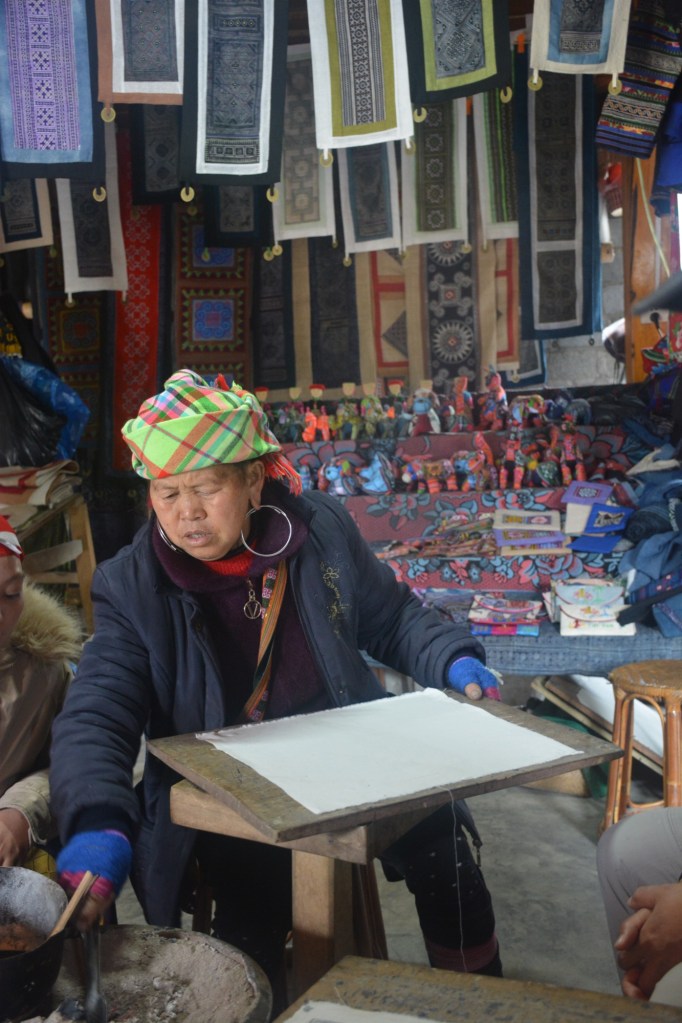

We saw one such woman at this house. She had just washed her hair and was wearing shorts and a sleeveless shirt, not something we’d seen on the other villagers, who dress in traditional clothes and are quite covered up. The woman’s style was seen as a symptom of her kidnapping, and another reason they have a hard time getting back into their own society. So awful and sad.
After that stop we headed to the school, which was significantly cheerier. These kids are always so cute, and we feel good knowing that OAT’s charitable arm, Grand Circle Foundation, donates to these schools. They donate funds directly, to help build a bathroom, for example, or a modern kitchen. We also brought snacks for the kids.
That’s said, one school visit per trip is probably enough for me, but since this was the optional “post trip,” we got a second visit. Maybe I was just reaching travel fatigue.

The rest of the day was largely on the road. We stopped at the same pizza place and got more fries, pizza and Vietnamese food, which no one complained about.
Although we all got a hankering for Western food now and then, our guide said we Americans are much more open to local cuisine than his Asian tourists. He says after a day or two of Western food they need their pho or rice or whatever they’re accustomed to eating. That may be because America is such a melting pot we are more likely to at least try other cuisines.
Our last day in Hanoi was totally open, and I had asked early on about making a trip to Ha Long Bay. In doing my usual copious research, I knew it was doable as a day trip from Hanoi, and as one of the “seven wonders of the natural world,” I really wanted to get there. I figured it was unlikely I’d be back in the area to see it another time.
Happily, the weather had improved enough to make the trip feasible, and the rest of our group was enthusiastic about it. I don’t think any of us were up to a day of museums in Hanoi, which was the likely alternative.

Thai arranged for a private van, which meant the drive would only be about two hours each way, rather than the slog if you did a shared trip and had to make stops at several hotels. The road was also the best in Vietnam, built to transport goods from the nearby port of Haiphong. Altogether not a bad start to the day.
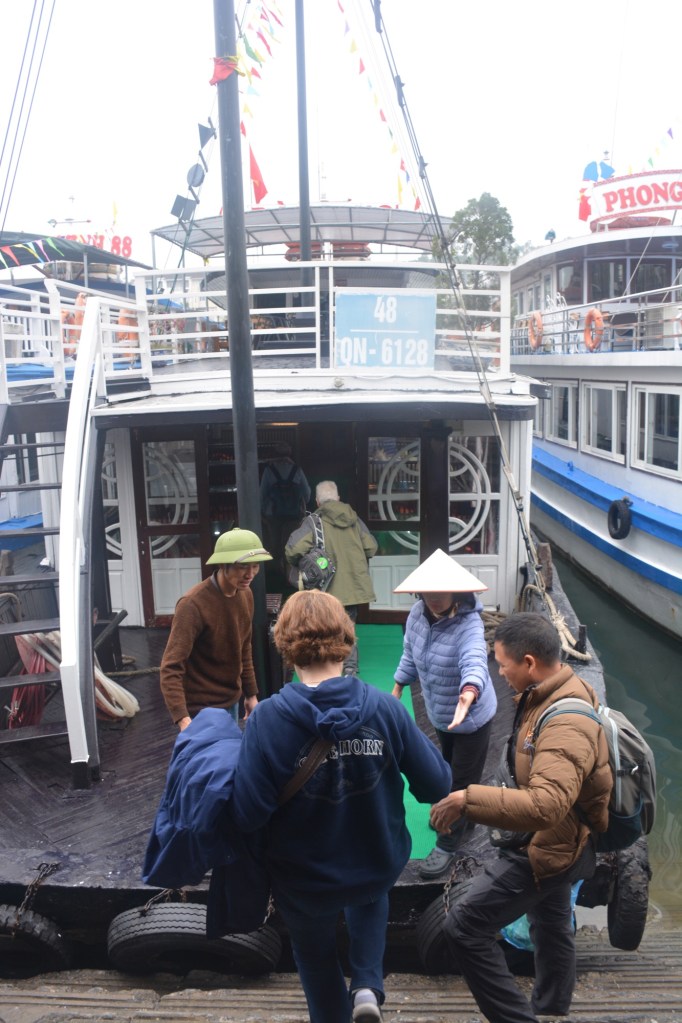
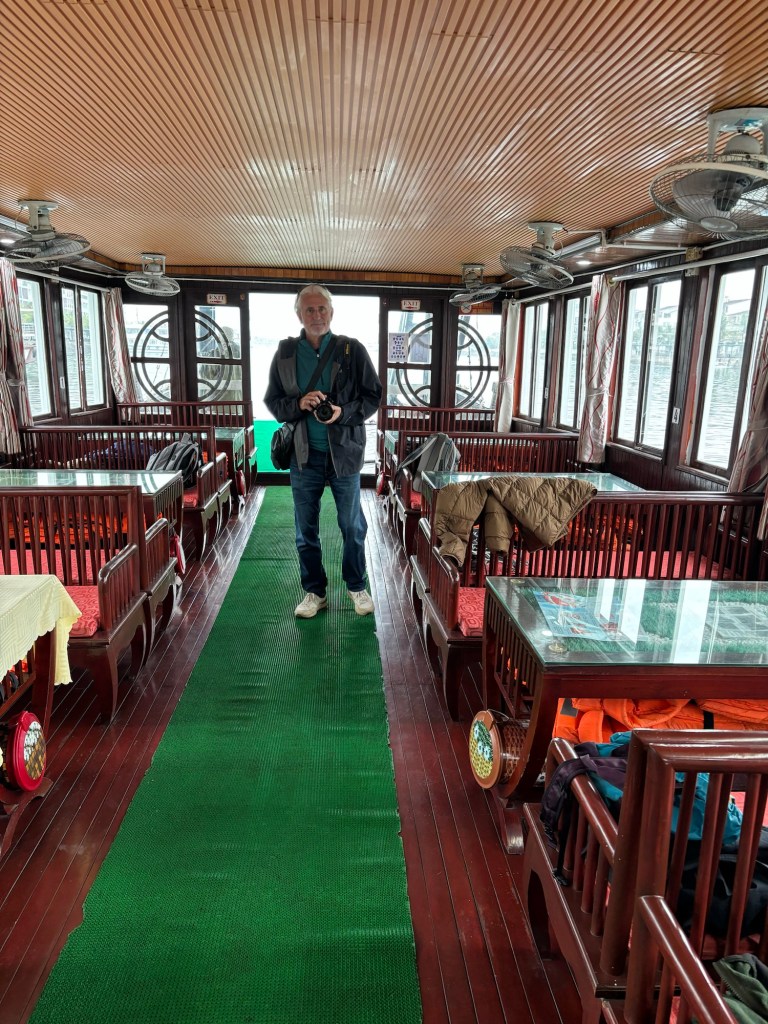
We knew we’d have the boat to ourselves, but we were shocked at the size – it could have fit 50 people. Called a “junk,” a Chinese name based on the fact the planks on these boats were usually reclaimed and uneven, this boat was anything but.
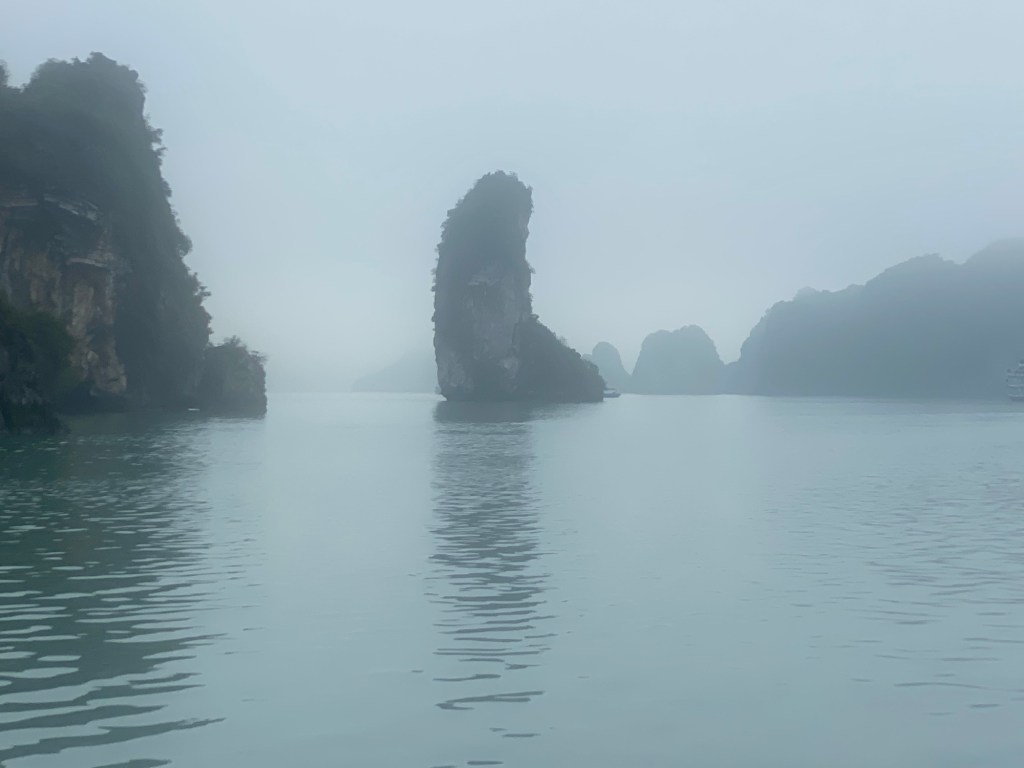
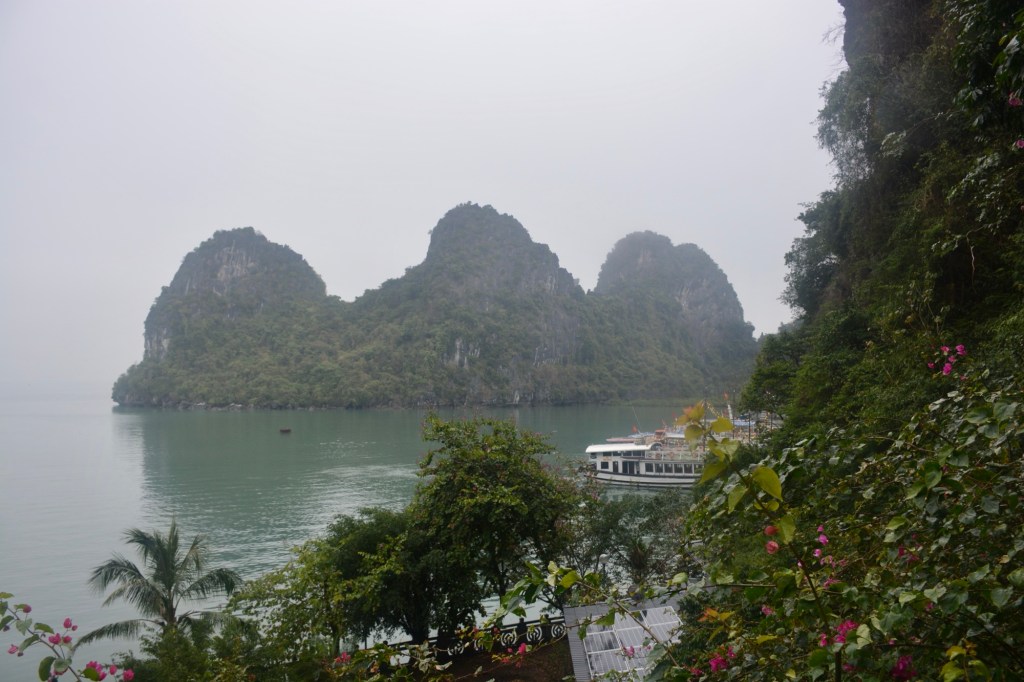
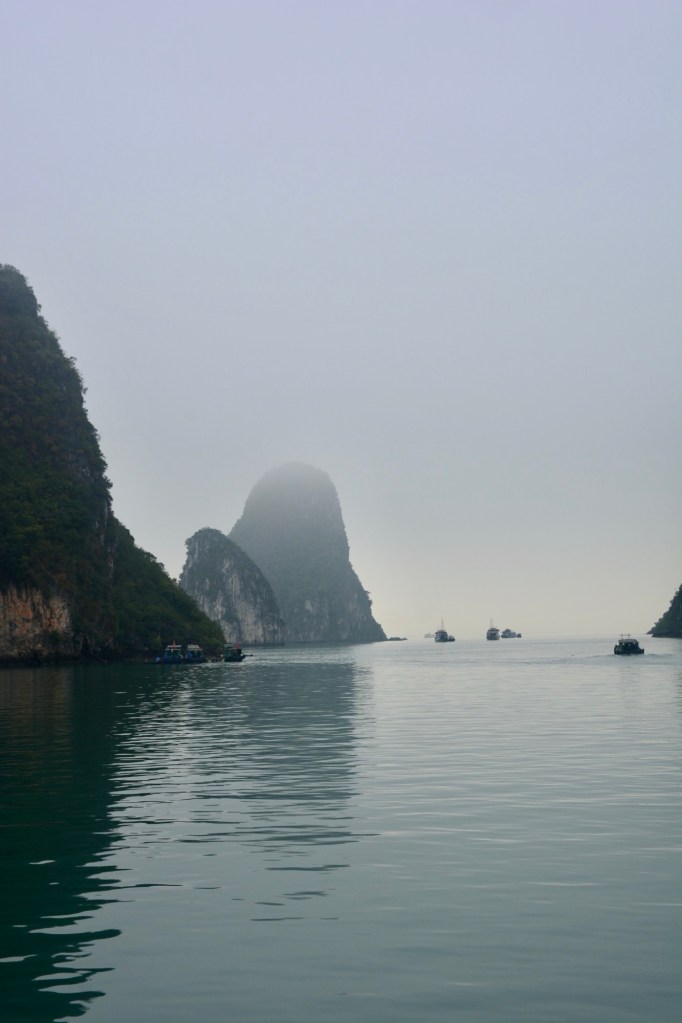
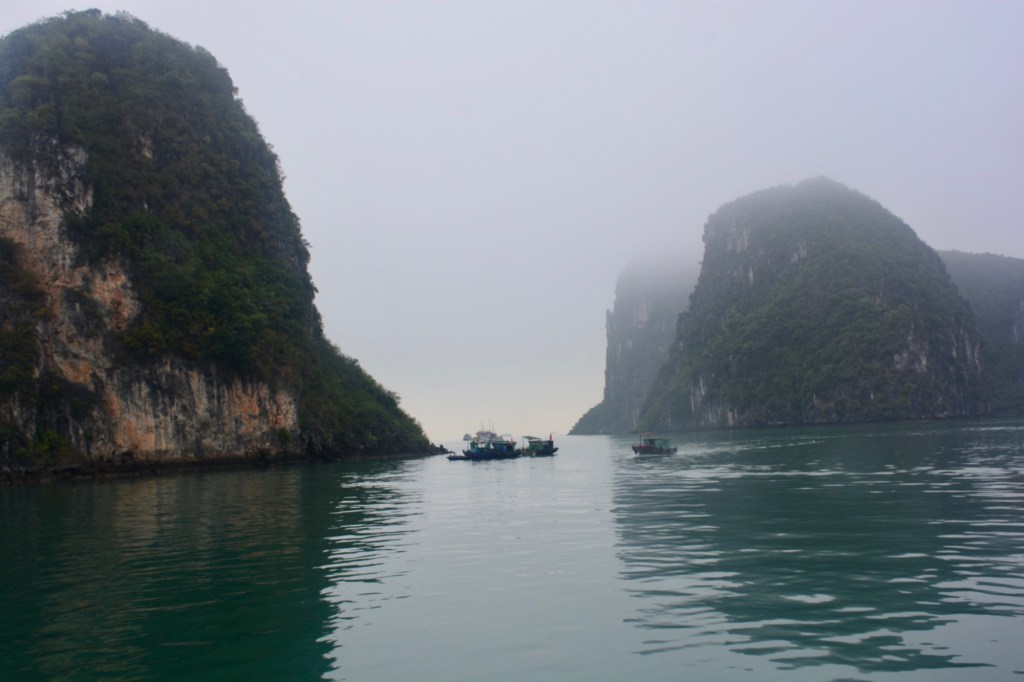
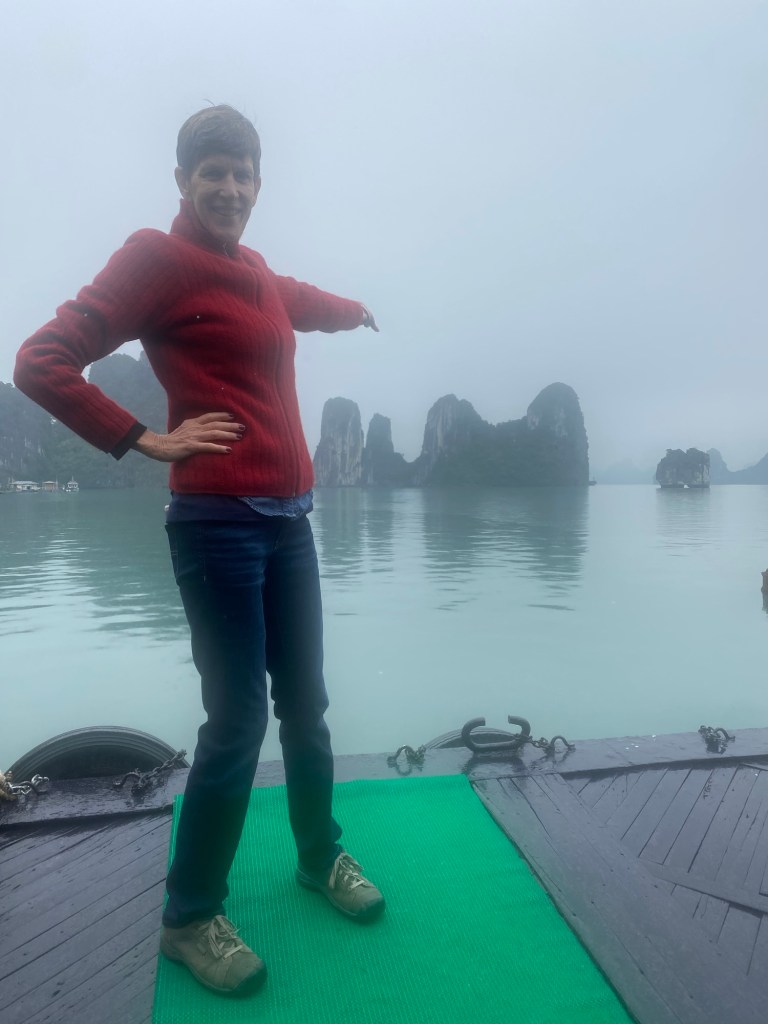
The other shock for me is that the limestone monolithic islands for which the Bay is known are viewable right from the dock. I had expected that we’d have to sail an hour or so to reach them.
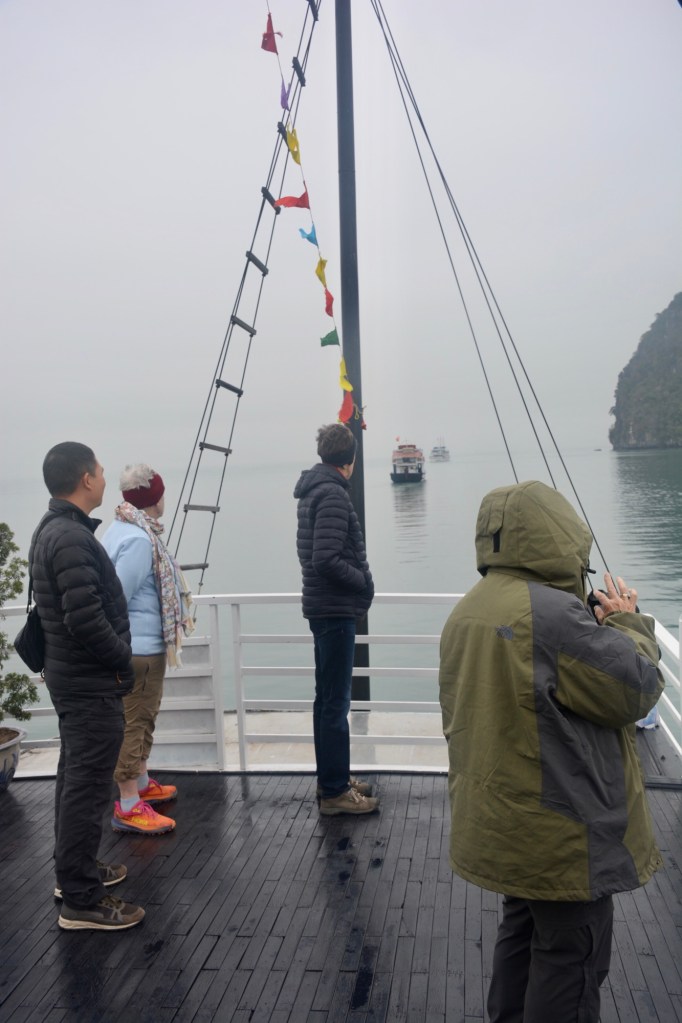
It was peaceful and sublime sailing among the islands in the mist. Our pictures would be more stunning if the weather were clear, but they were still cool to see. One of our companions listed the cruise in her top five experiences of the trip, and she had even done the pre-trip to northern Thailand. (It might be in my top five too, but I need to give that more thought.)

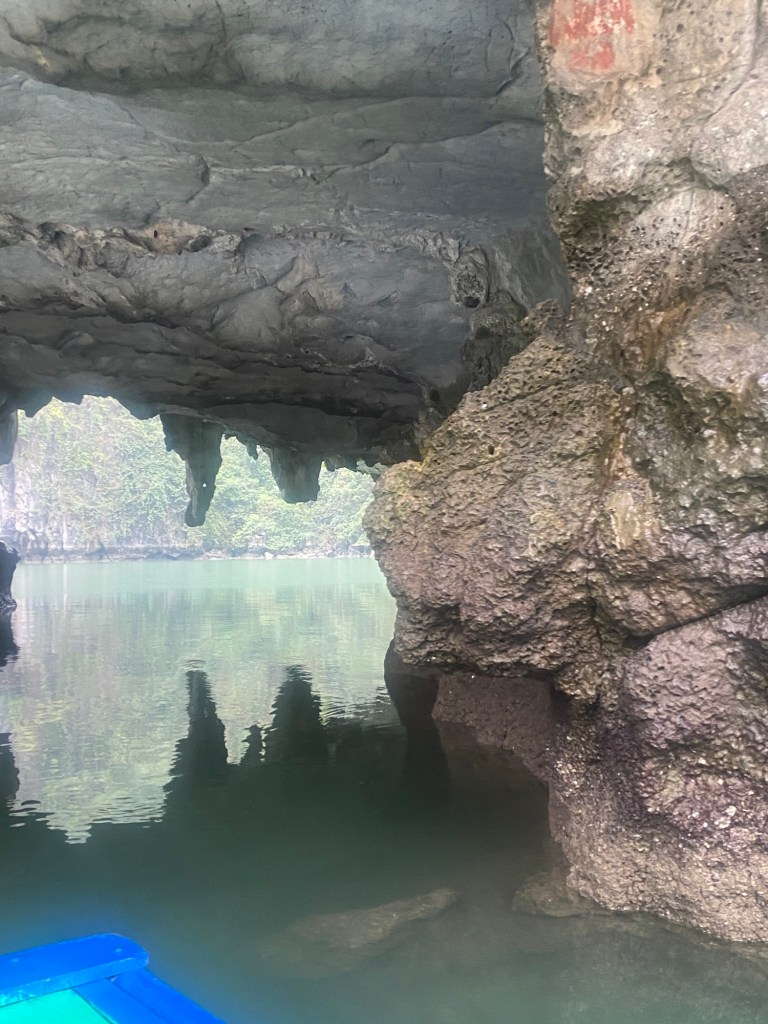
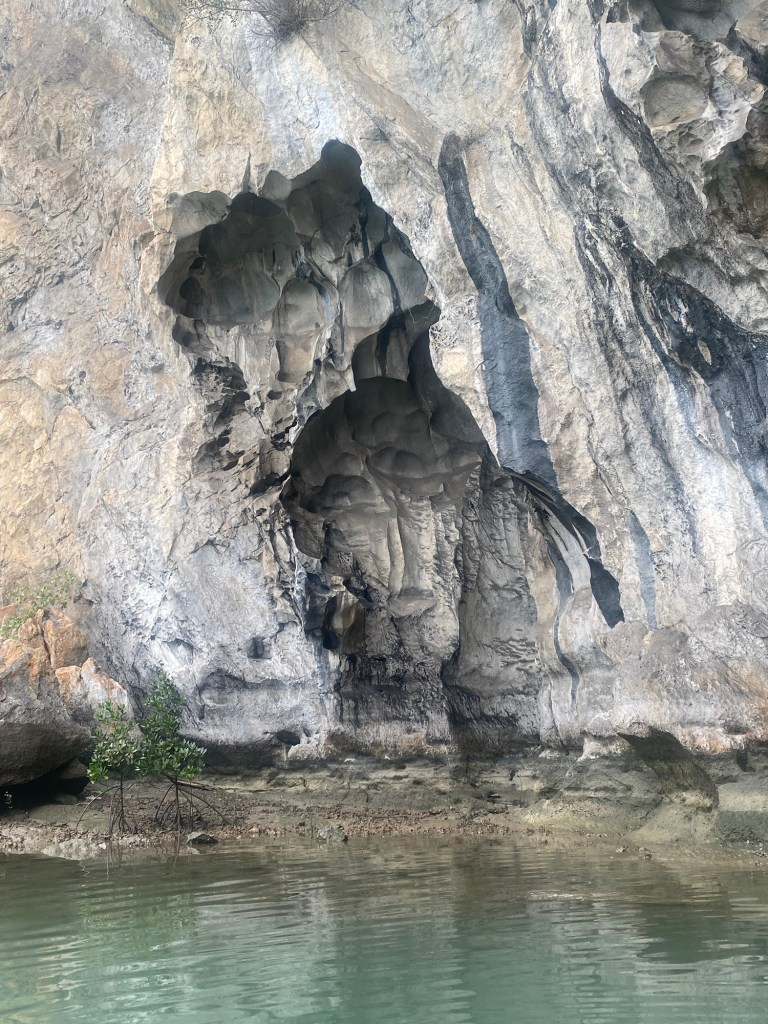
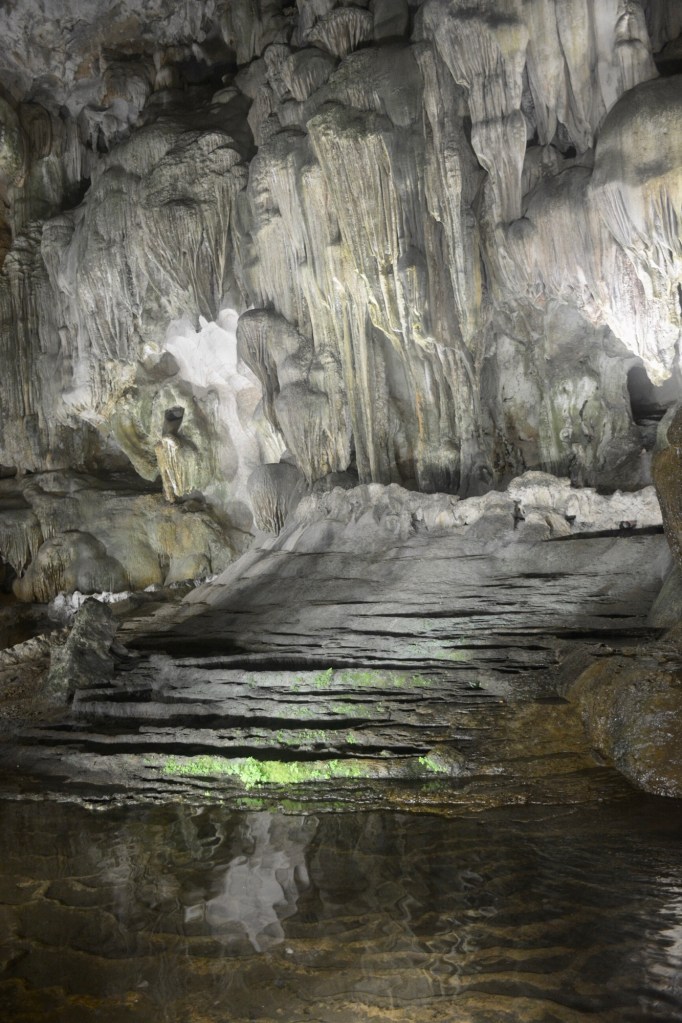
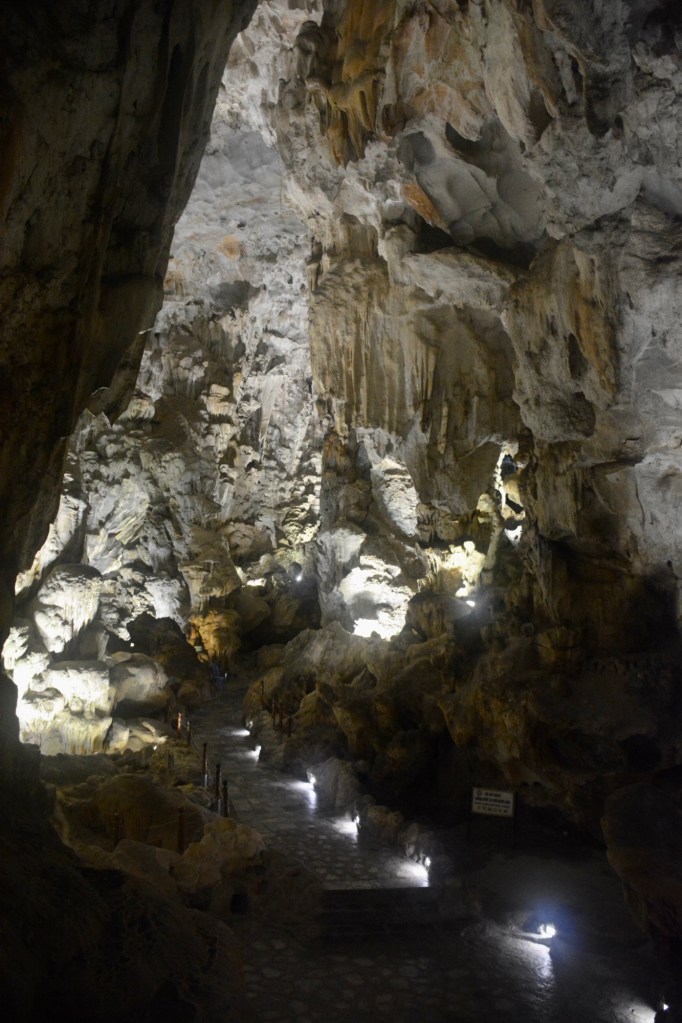
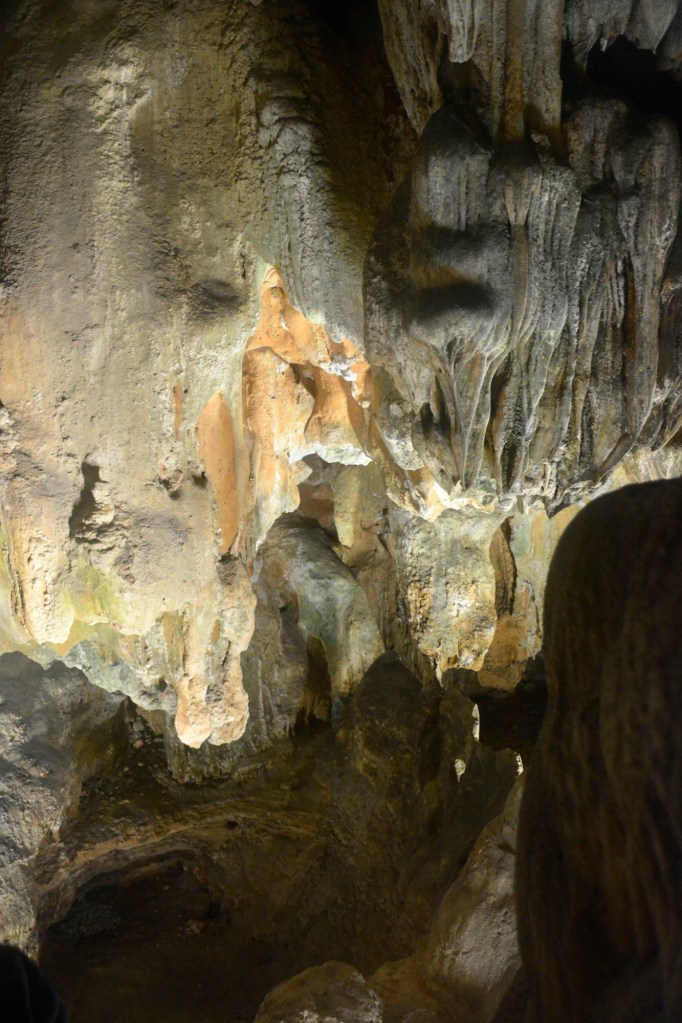
Although the trip was my idea, I also didn’t know we’d also go into a cave, which was the hollow interior of one of the islands, of which there are several.
The stalactites were amazing, and whoever did the lighting did an excellent job highlighting their beauty and mystery. As usual with nature, it’s hard to do justice with photos, but these give some idea.
Our next unexpected activity was a sampan ride through some of the rocky overhangs. This area is really popular with kayakers, but being OAT travelers (I.e., seniors), we got paddled around instead. That was good by us!
Then it was time for lunch. Our guide in Saigon had said the food in north Vietnam was bland, and I had found that to be generally true. Not bad, just not as interesting in Saigon. But this was the best meal in the north, and one of the best of the trip – at least if you were a seafood lover.
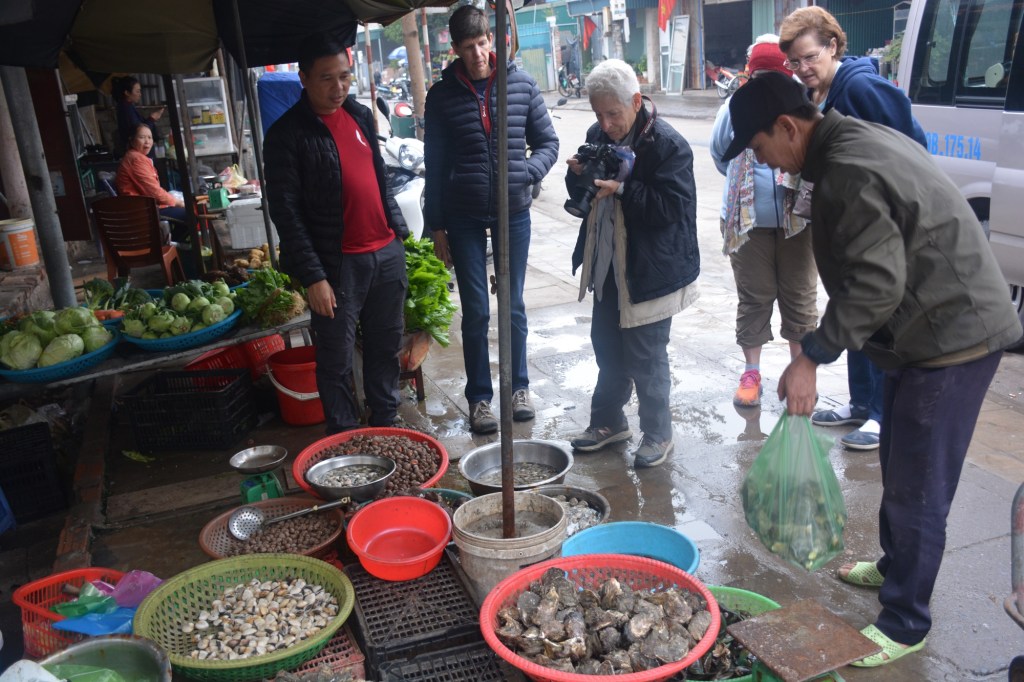
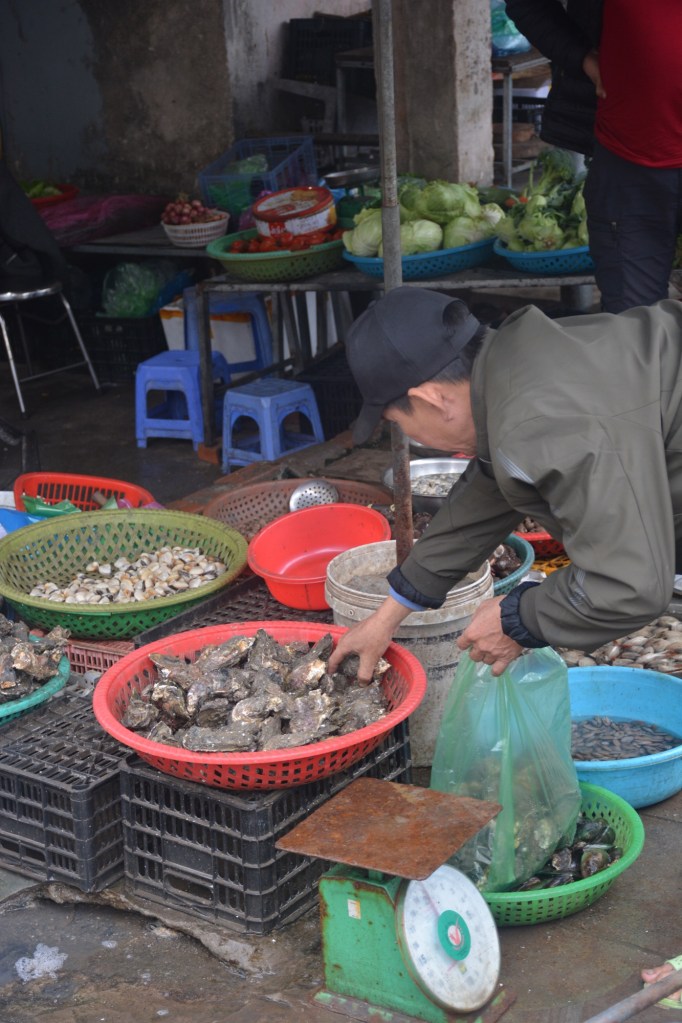
We had prawns, squid, snapper and oysters grilled with onions that Thai had just bought from the market before we got on the boat. Everything was incredibly fresh and delicious. Of course, there were also two kinds of rice, vegetables, chicken, pork and tofu. By this point in the trip I’d learned to pace my eating so I mostly stick with the seafood and vegetables.
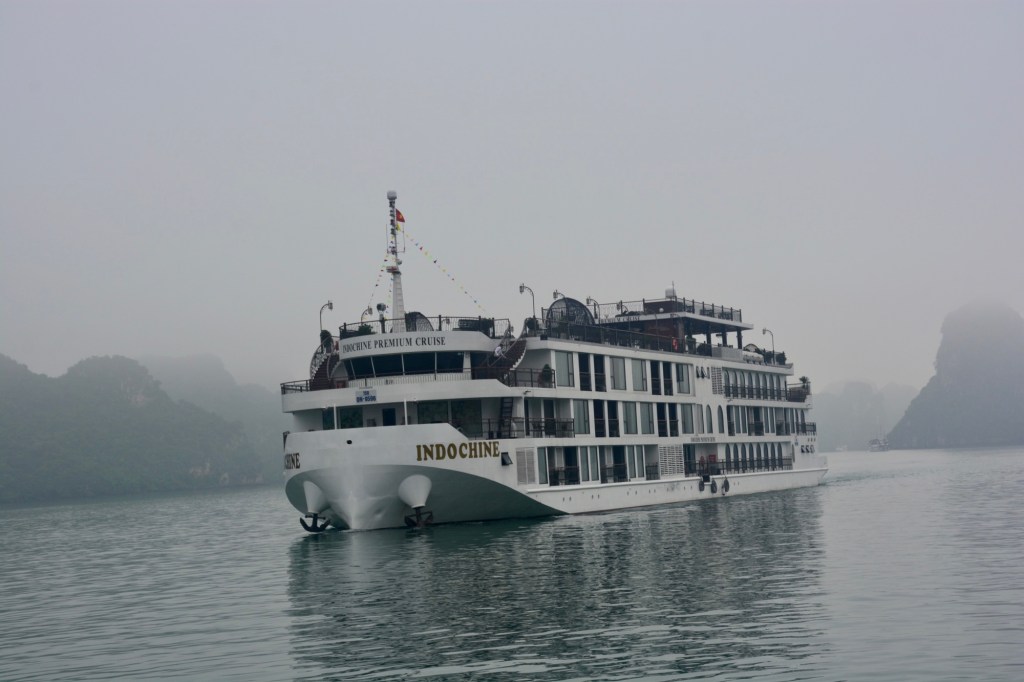
Although I suffered a bit with the colder than usual temperatures in Hanoi, we reaped the benefits of traveling off season in the Bay. There were other boats to be sure, but we were the only group in the cave and in sampans, and even the other boats seemed to just provide color, rather than feel overwhelming. I’ve read that in peak season you could feel like you’re on a crowded street or highway with all the boat traffic.
This was a great ending to our time in north Vietnam. We have a few hours to kill today, hence this post, but I’ll leave with these wonderful images in my mind.
 It's What We Do
This stop looked like the best of the trip, didn’t realize how cold it was.
>
LikeLike