Before getting to Angkor Wat, we needed to take an eight-hour bus ride from Phnom Penh to Siem Reap. I wasn’t looking forward to the drive, but I had my Kindle and was mentally prepared. Thanks to our excellent guide, Soeng, the bus ride was not only bearable, but enjoyable.
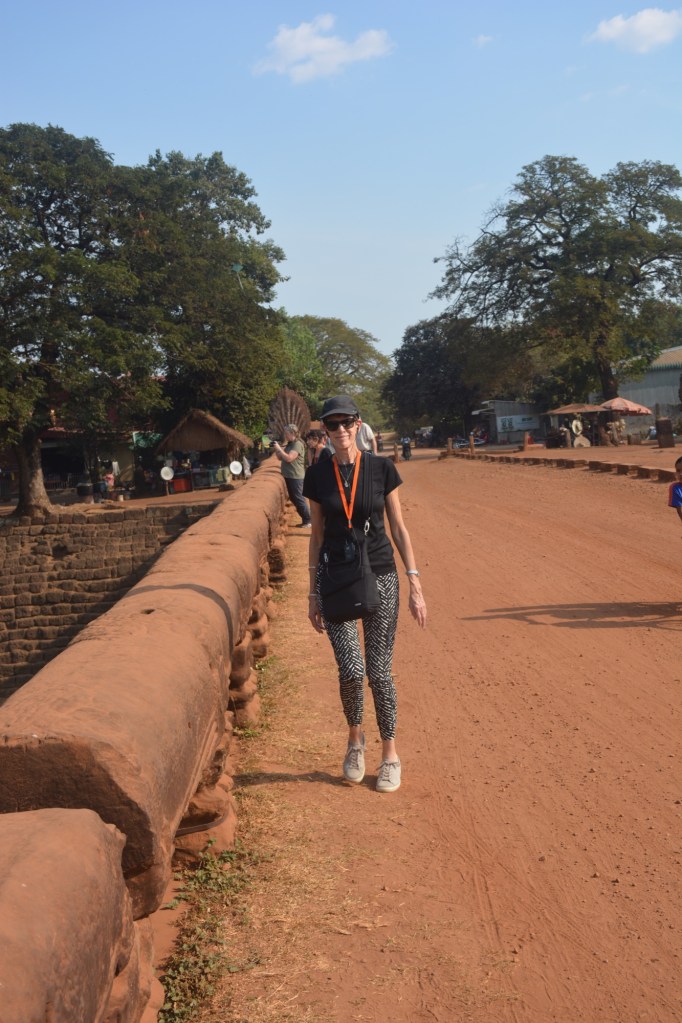
There were sights along the route, of course – rice paddies, school kids biking home for their afternoon break, gorgeous temples smack in the middle of tiny, dusty towns – a nice look into life outside the city.
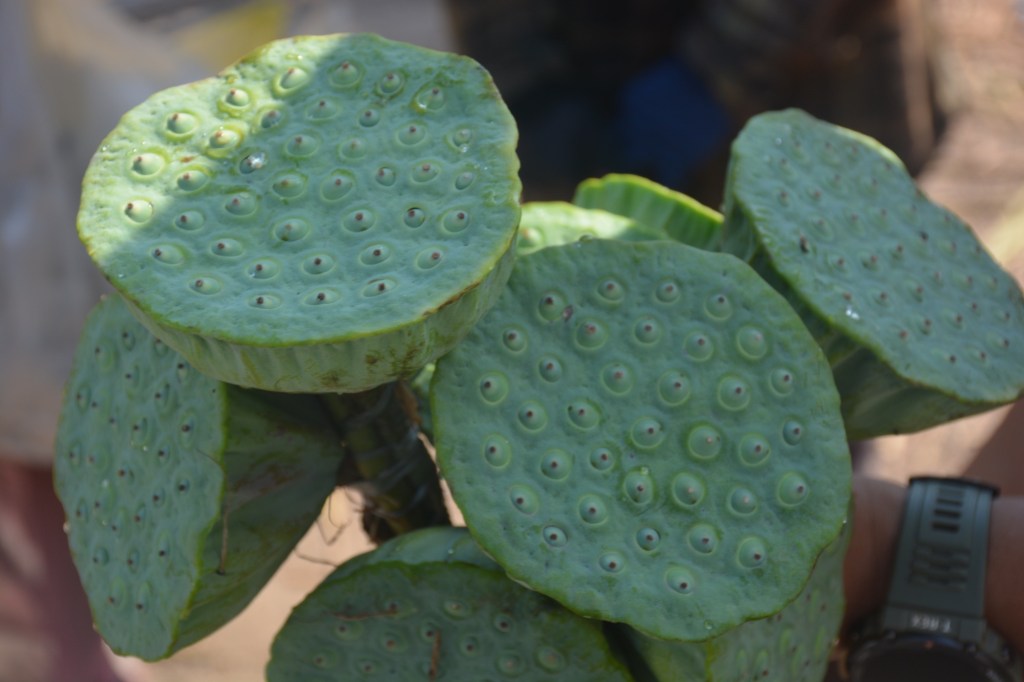
But Soeng had the bus stop several times for “cultural” experiences. The first was to buy some lotus flower pods from a roadside vendor. You pluck the pods and peel them – quite tasty; softer and less salty than a nut.

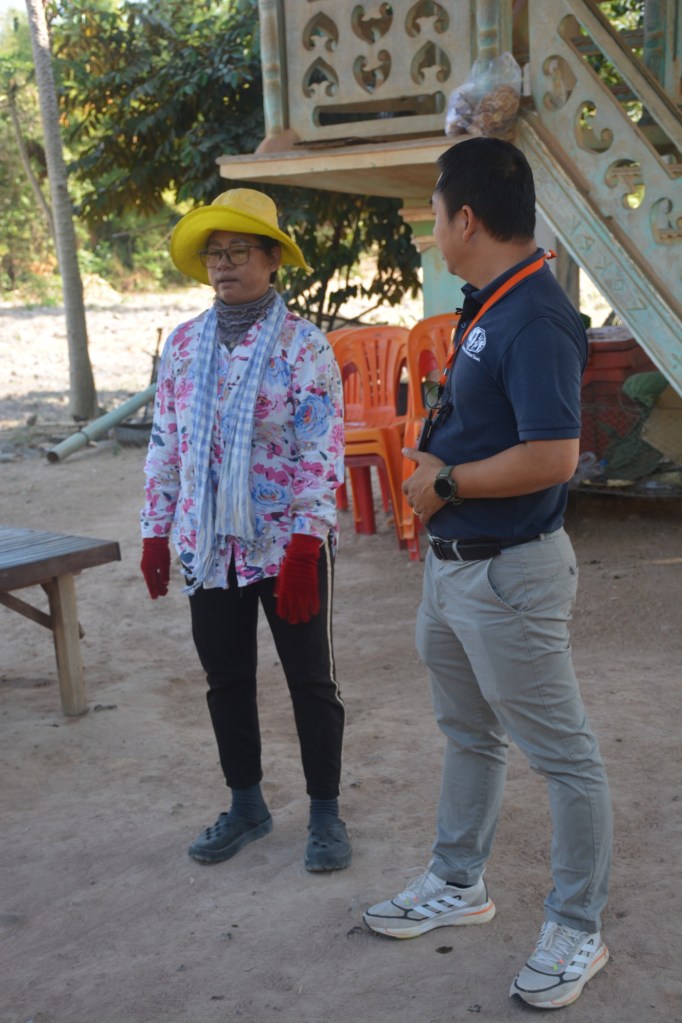

The next was a visit to the tarantula lady. We grossed out our Facebook followers with pictures of the tarantulas, but this was only a small part of the day, and very interesting. The woman tracks and catches tarantulas on her property, defangs them and deep fries them. They’re considered a delicacy and sell for about $.75 each, depending on the size. Yes, we tried them. I just ate a leg, which was mostly skeleton. Jim had a part of the body, which he said was kind of mealy. I’m sure the Cambodians would think some of our food is weird too.
Our lunch was at an open air restaurant set on stilts in the river. It’s all for tourists, of course, but it was a nice view and good food.
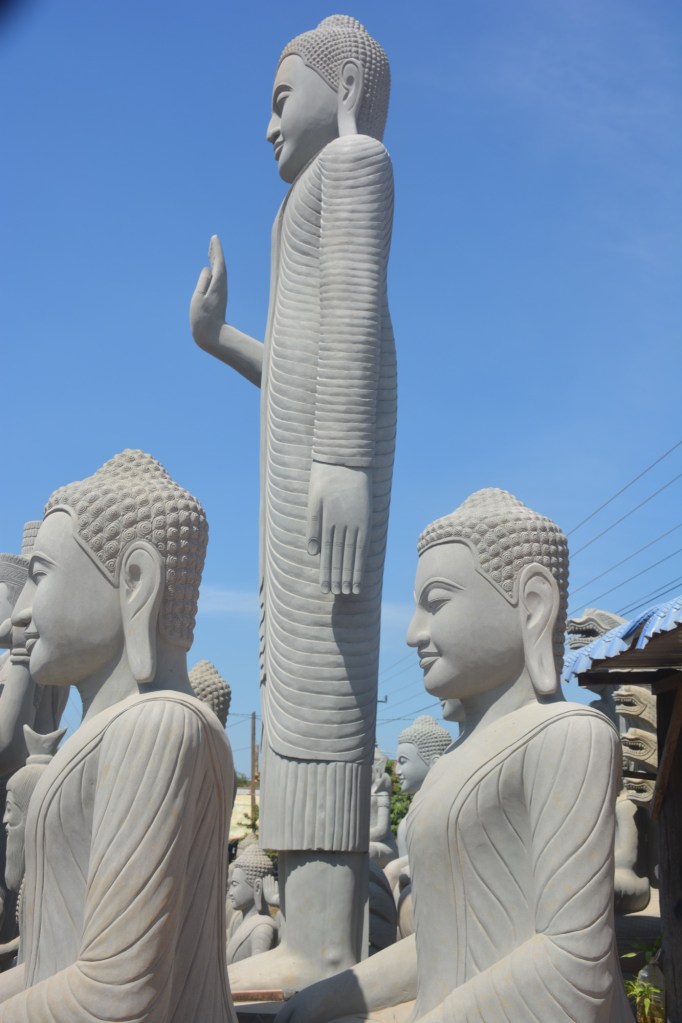
As we were driving, I saw more than the usual number of Buddha statues, and turns out it was an area where sandstone and soapstone sculptures, made from local materials, are sold. I bought a tiny Buddha surrounded by a naga – a multi-headed snake that protects the Buddha. (There’s a lot more to the legend, but too much for now.)
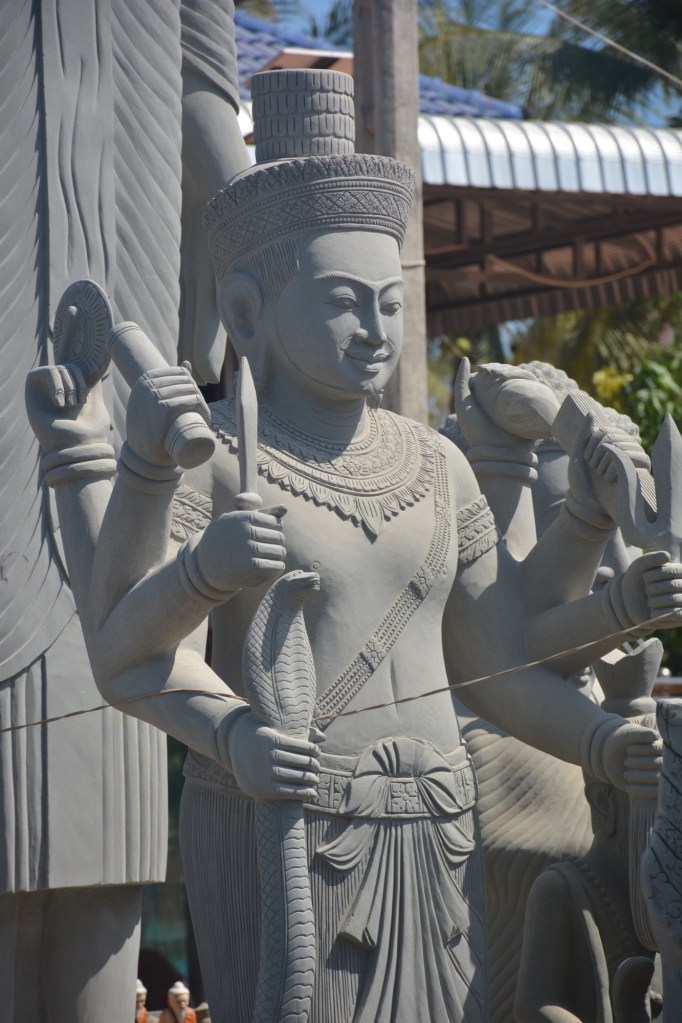
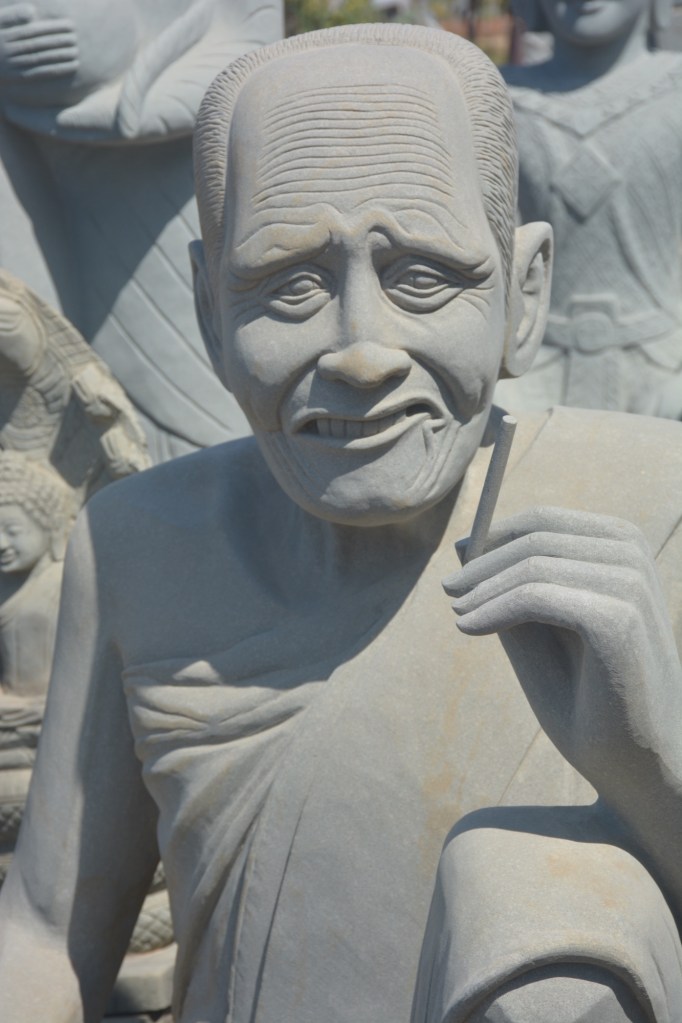
Then it was on the road again, with another stop, this time to watch someone making the Cambodian equivalent of rice crispies. It was a multi-step process powered by a tractor engine. Soeng told us the man worked from 7 am to 5 pm, laboring over a hot wok and a pounding pulverizer. Tough work. We tasted the crispy rice kernels, which aren’t tasty in their basic form, but apparently are better when combined with coconut milk and other ingredients.
The final stop before arriving in Siem Reap was an ancient pedestrian—and-scooter only bridge protected by naga. All in all, the stops kept us interested and allowed us to stretch our legs so the time went relatively quickly.

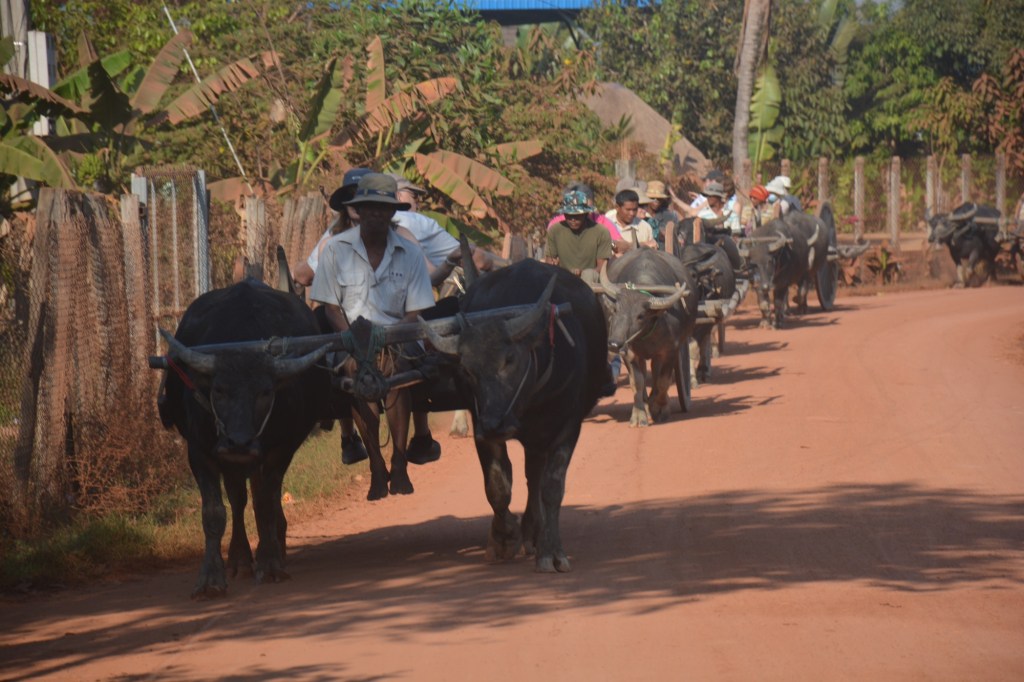
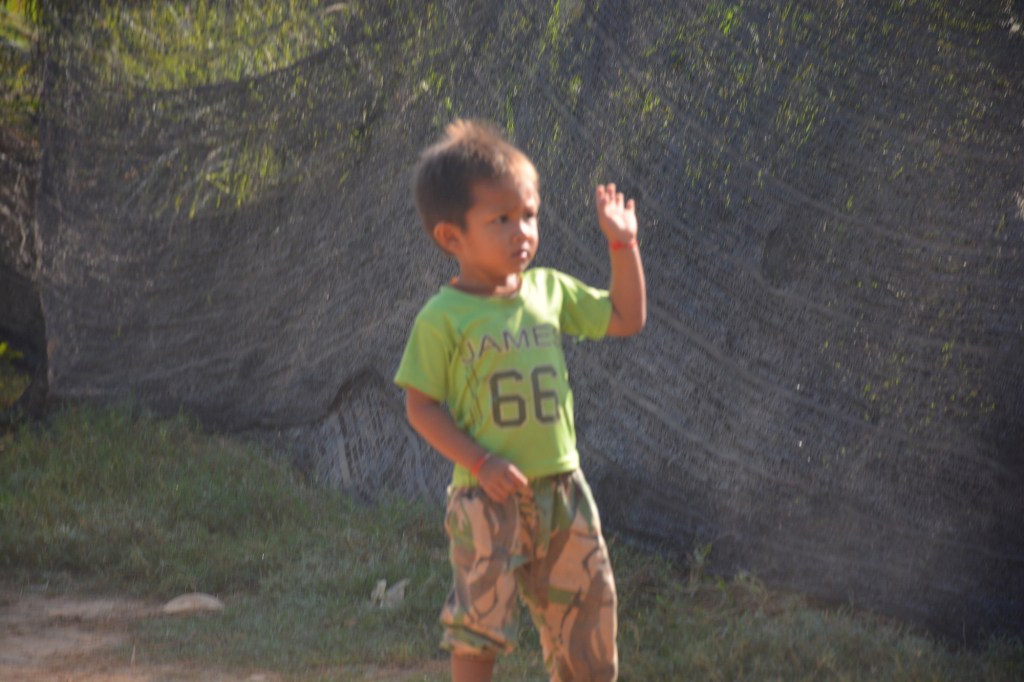
We started with a ride on an ox cart. It was a ride to nowhere, kind of like the camel ride in Egypt, but this was more comfortable and since we rode through a small village we actually got to see how the people there lived. We were surprised at the size of some of the homes, which were quite large, with multiple generations of families living together.
The next day was a fascinating look at another slice of Cambodian life.
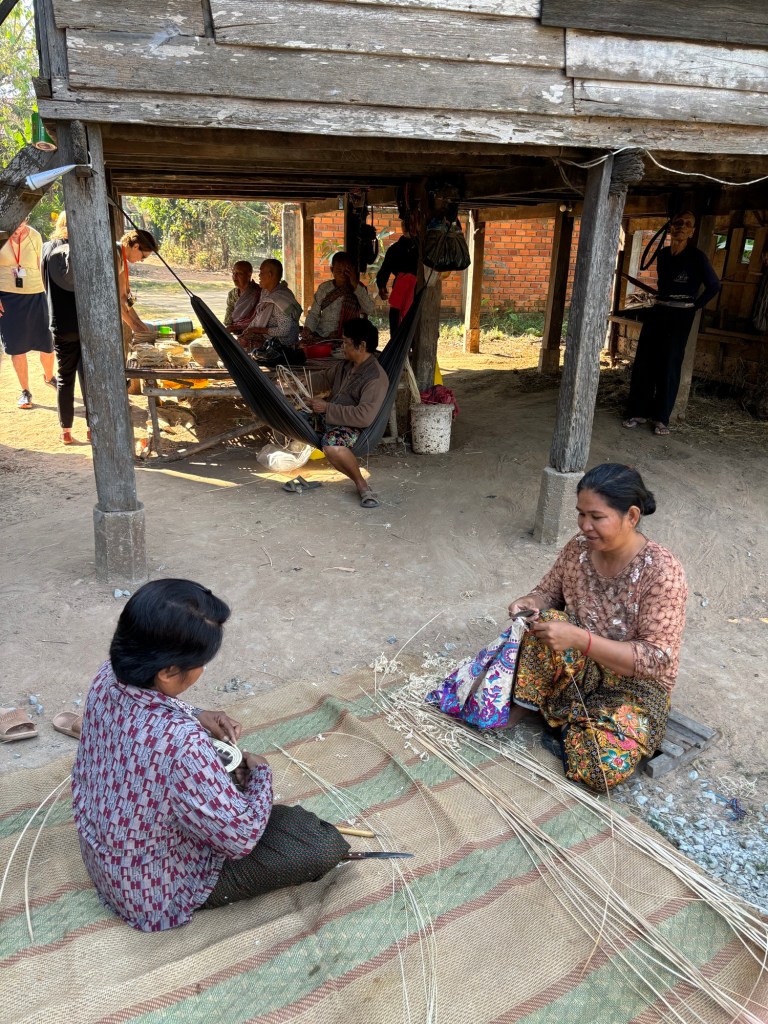

We visited a family who creates baskets from rattan. Their work is intricate and beautiful. One 100-year-old home is shared by three sisters. There are other homes in the compound for other family members.
The highlight of the morning was a cruise to view one of the many floating villages on Tonle Sap Lake. Homes, schools, stores, restaurants and temples all float on the water. Depending on the season (I.e., rainy or dry), the homes are towed to other parts of the lake. Tonle Sap is the only lake in the world in which water flows both ways. During the rainy season the swollen Mekong River pushes water into the lake, increases in its size and depth. In the dry season, which is now, water flows out to the river and the lake shrinks.
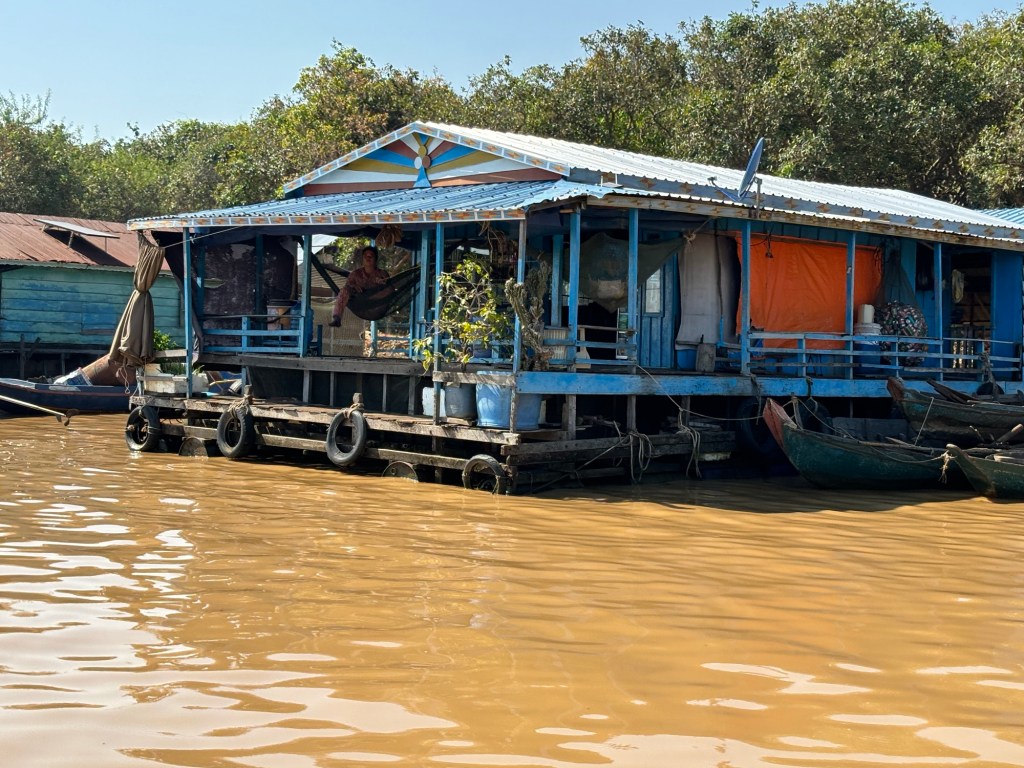
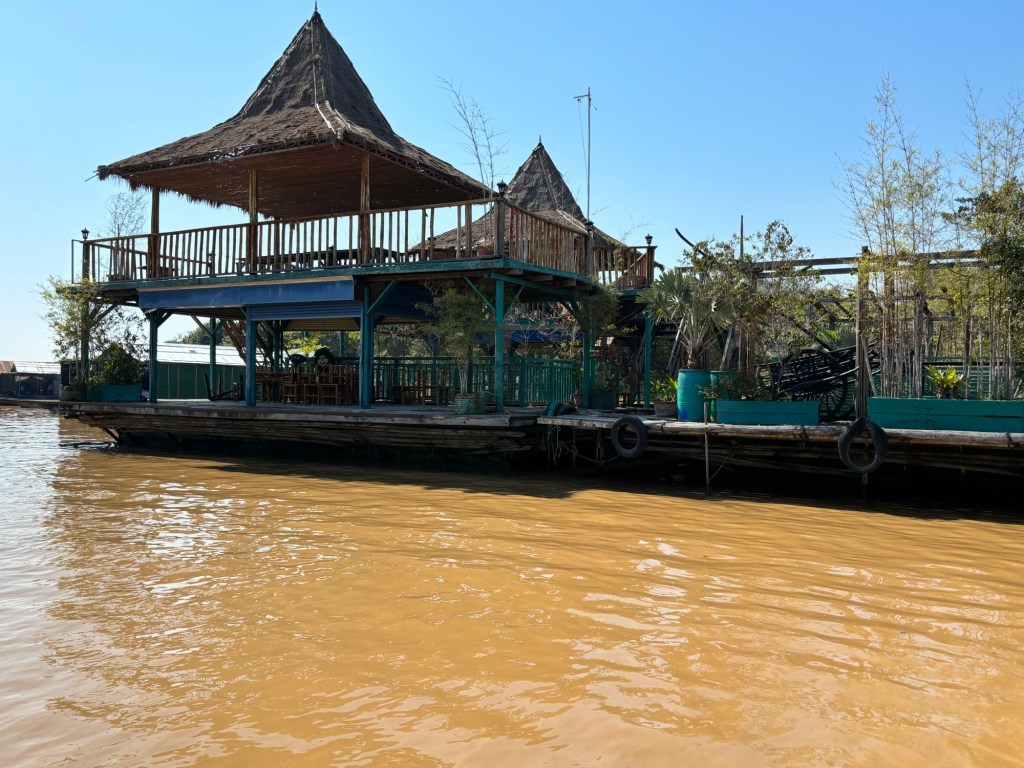

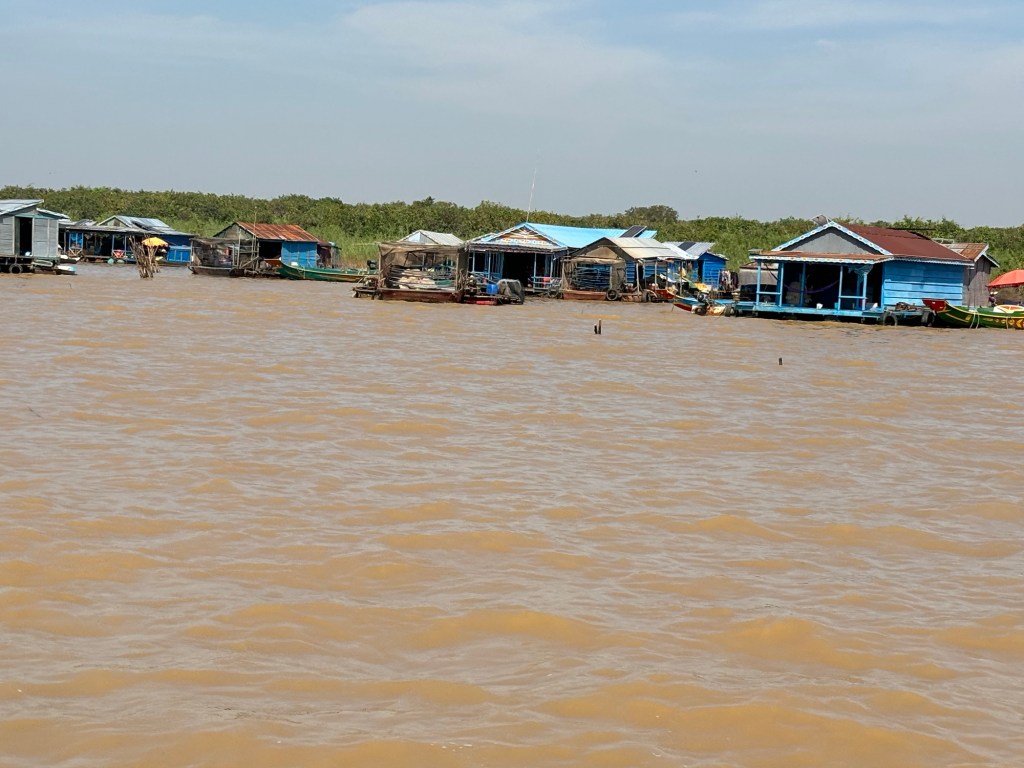

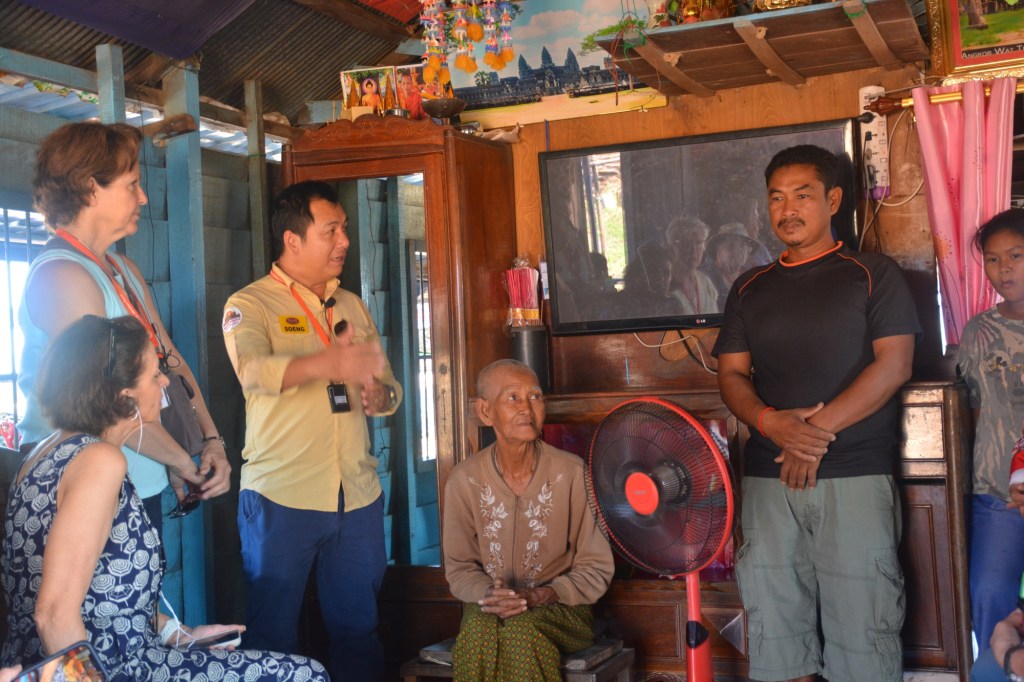
Truly fascinating to see people living like this. We met one of the fishing families on their houseboat. Three generations live on it, but multi-generational living situations are the norm in the country.
We’re now in Saigon, and I was surprised to see a small floating village just outside the city, so it’s not unique to Cambodia.
 It's What We Do
difficult to point out any specific photo as being breathtaking – loving all of them
LikeLike