The final leg of our journey in Patagonia was a four-day cruise from Punta Arenas, Chile, to Ushuaia, Argentina, during which we crossed the Straight of Magellan, traversed the Beagle Channel and made landfall at Cape Horn. Cape Horn is, of course, at the tip of the South American continent and thus the southern-most point of the populated world. It’s true there are now researchers that spend large chunks of time on Antarctica, but unlike Patagonia there is no evidence humans ever populated Antarctica prior to the modern era.
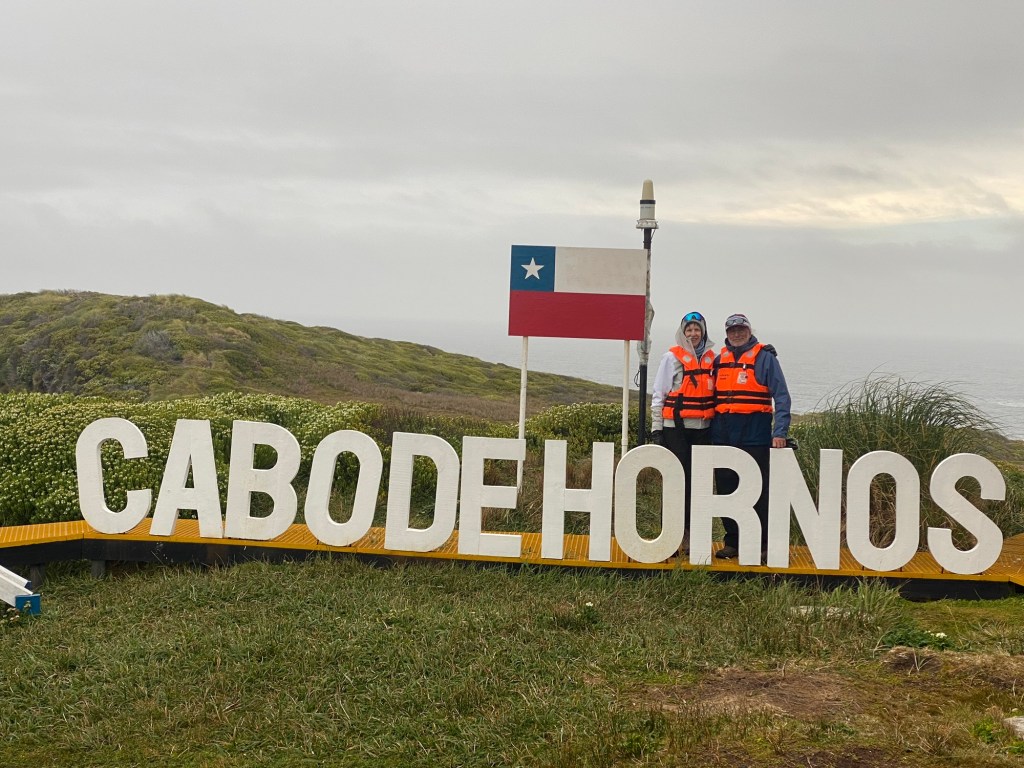
While there was more beautiful scenery elsewhere in Patagonia, including on this voyage, stepping onto Cape Horn was the highlight of the trip for me. While it might not look like it from the photos, our tour leader Carlos declared the day to be a nine on a scale of ten. And he should know. Carlos led the first of these excursions in 2009, when Overseas Adventure Travel launched the Patagonia itinerary, and he is still excited to make the landing after multiple visits.
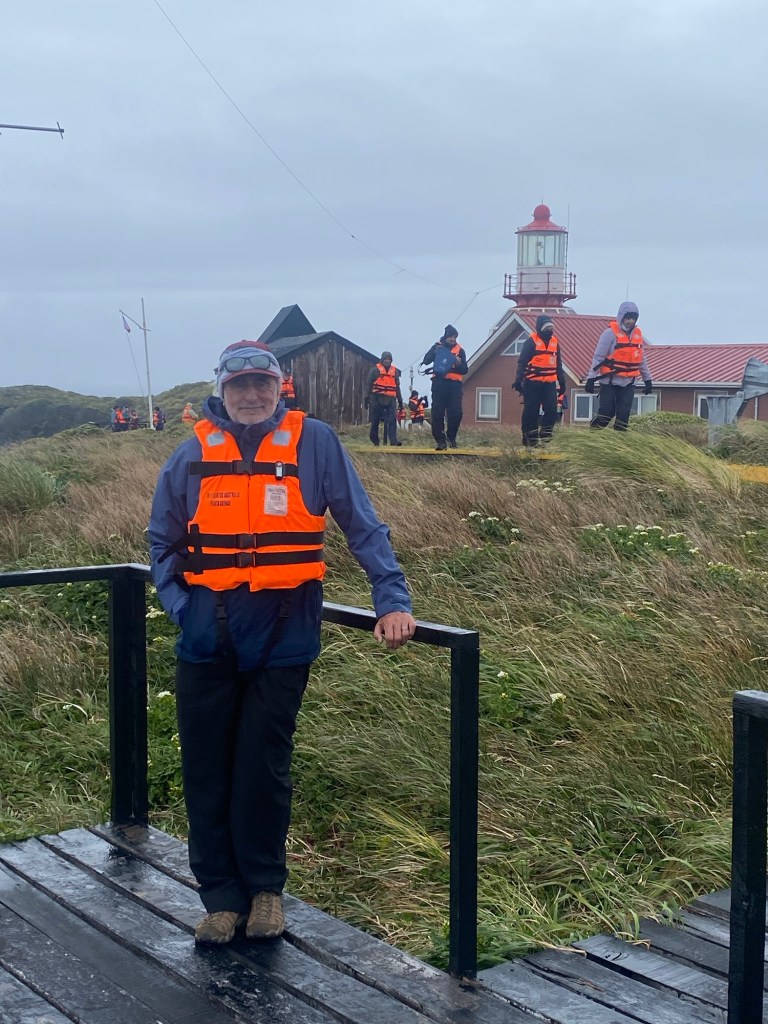
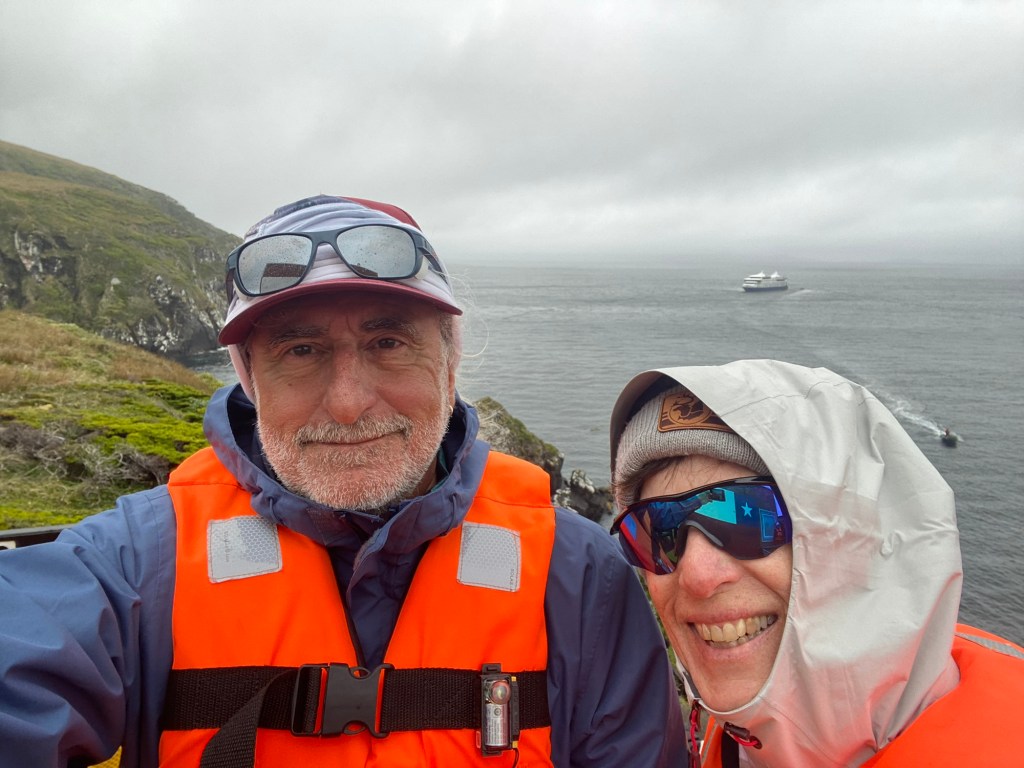
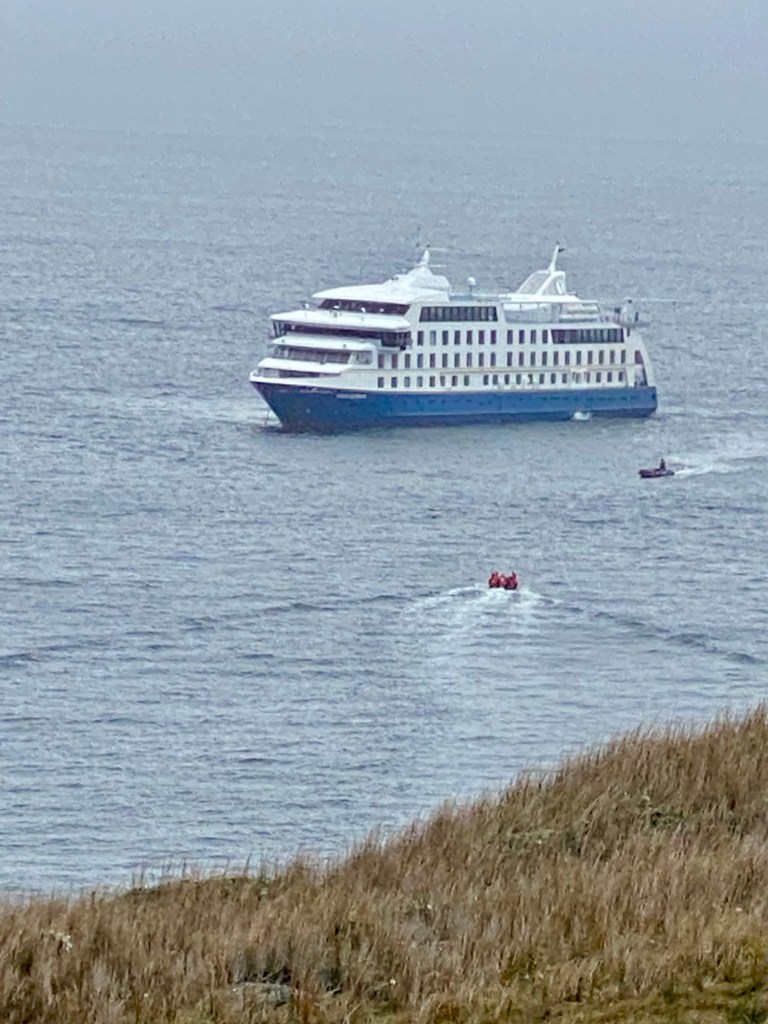
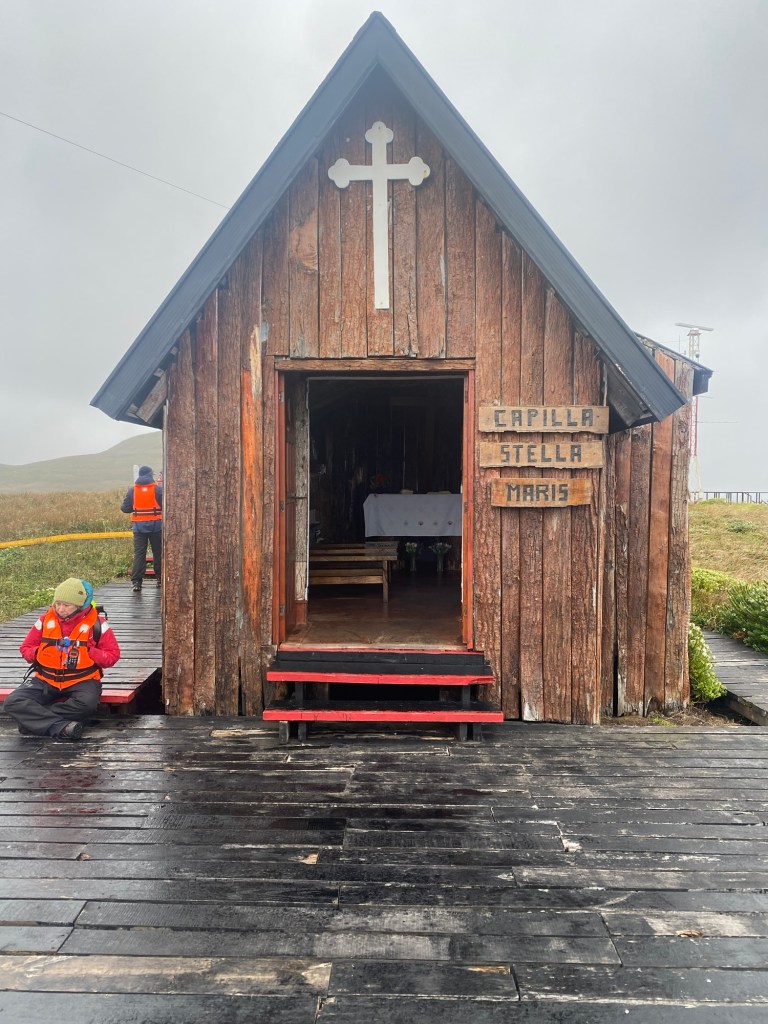
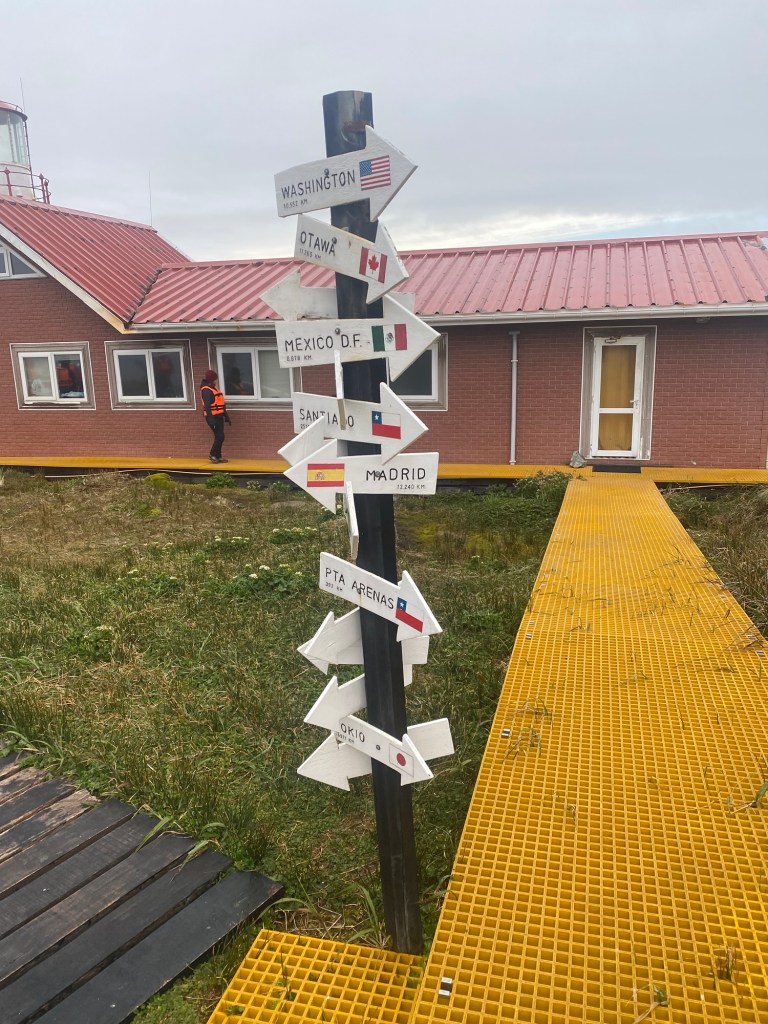
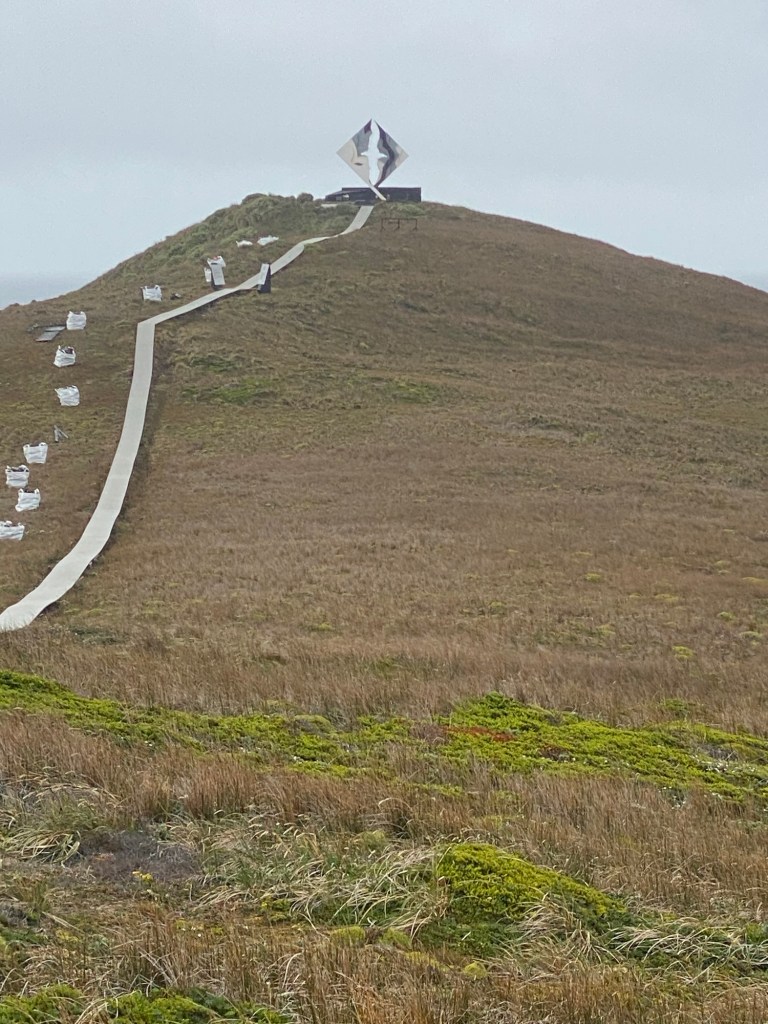
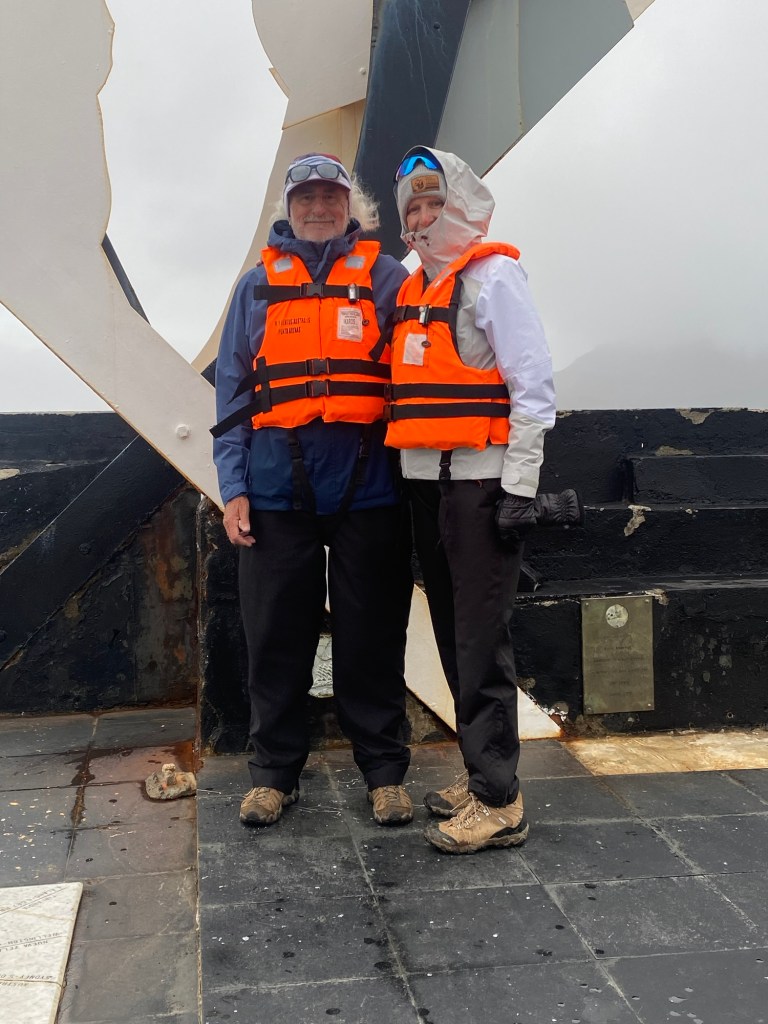
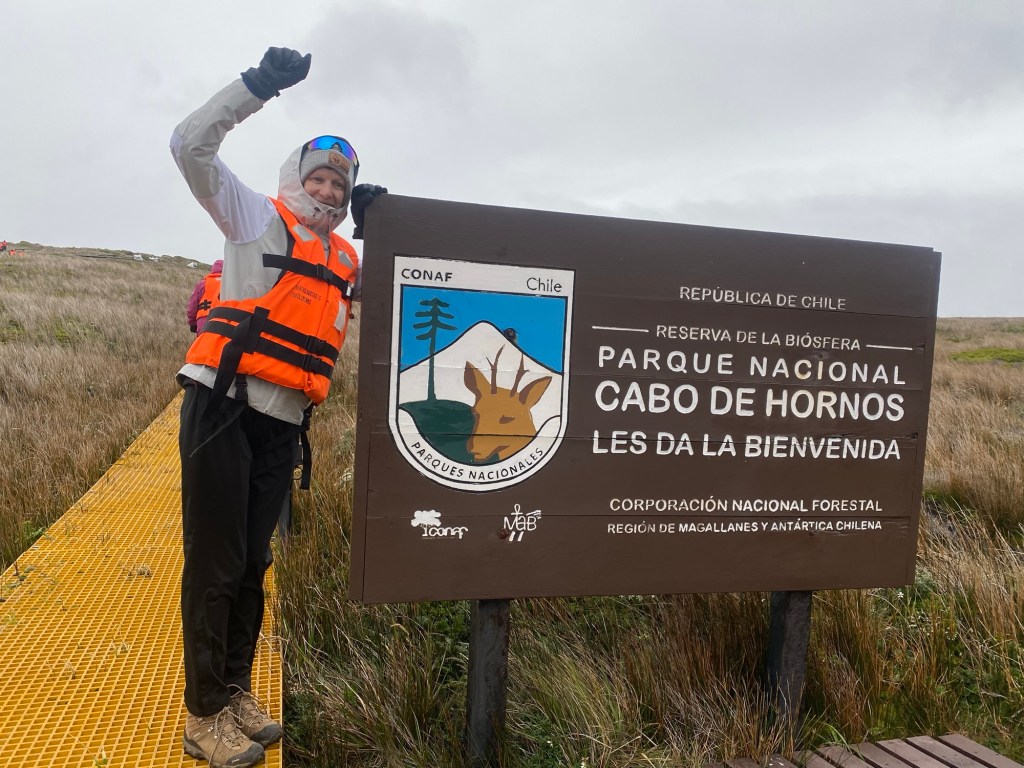
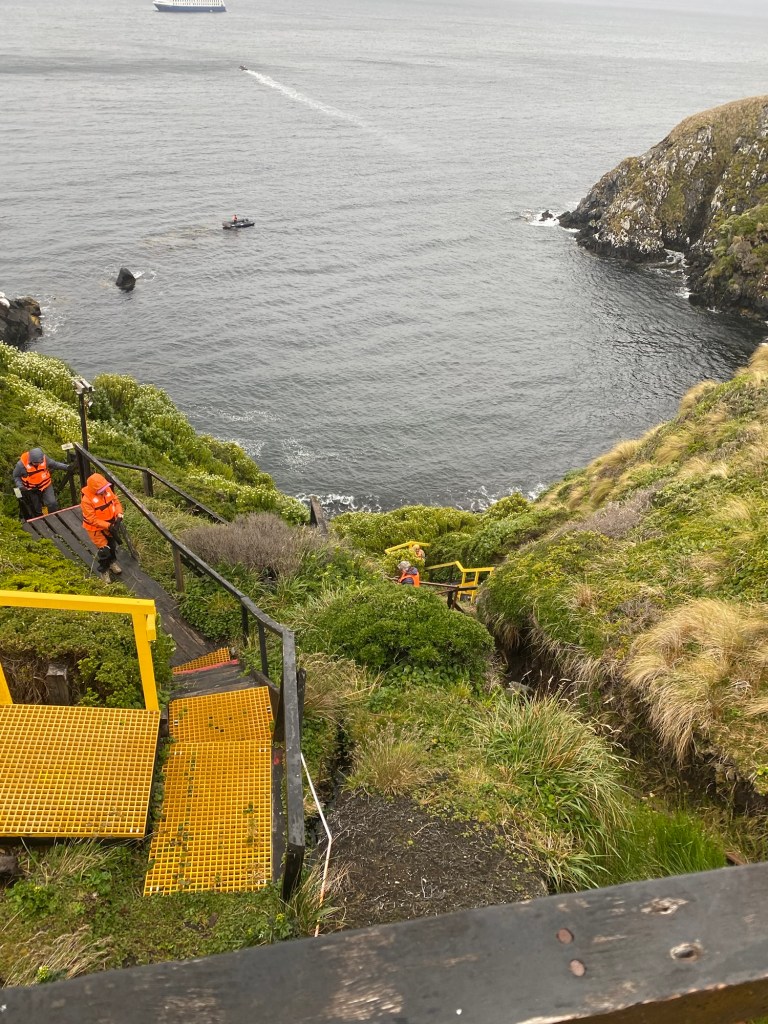
You must be ready to go at 6:30 a.m., but you won’t know if it’s a go or no-go for landing until the excursion team reports back on the conditions and the captain deems it safe to put people ashore. Strong winds and rough seas can make landings impossible. In truth our luck with the weather was amazing for the entire trip. For our Cape Horn visit the temperature was 48 degrees Fahrenheit with light winds. Balmy for this part of the world. We encountered much stronger winds in the Torres Del Paine park.
Our journey was aboard the Ventus Australis, an expedition ship purpose built in Chile to sail in this region. Its maximum capacity is 210 passengers, so smaller than most cruise ships, but with comfortable cabins and basic amenities like lounges and a bar. It’s an all inclusive ticket and all meals are at set times in a single dining room. Luckily for us as passengers the boat was only about 60% full, so the common areas weren’t overwhelmed.
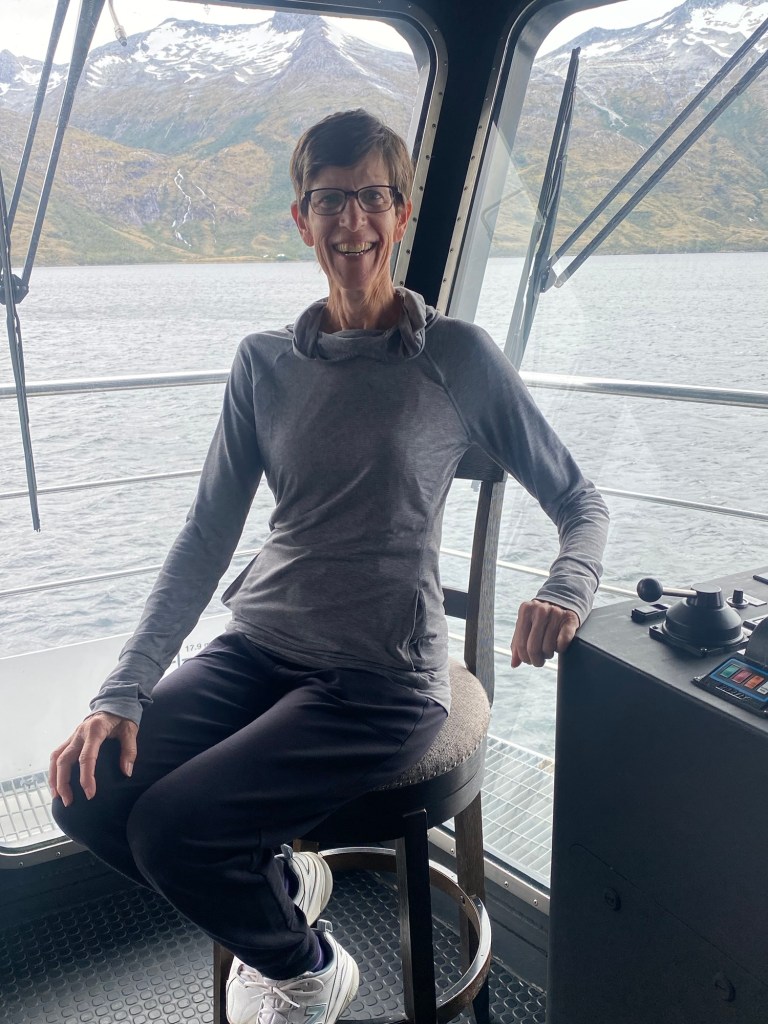
Australis is permitted to offload passengers at the remote locations we visited, including Cape Horn. The vessel’s smaller size allows it to navigate narrower channels and get closer to landing spots than a cruise ship. The cruisers will sail through commercial shipping lanes like the Straight of Magellan but they are en route to larger ports like Punta Arenas or Ushuaia, on their way to other South America, or heading to Antarctica.
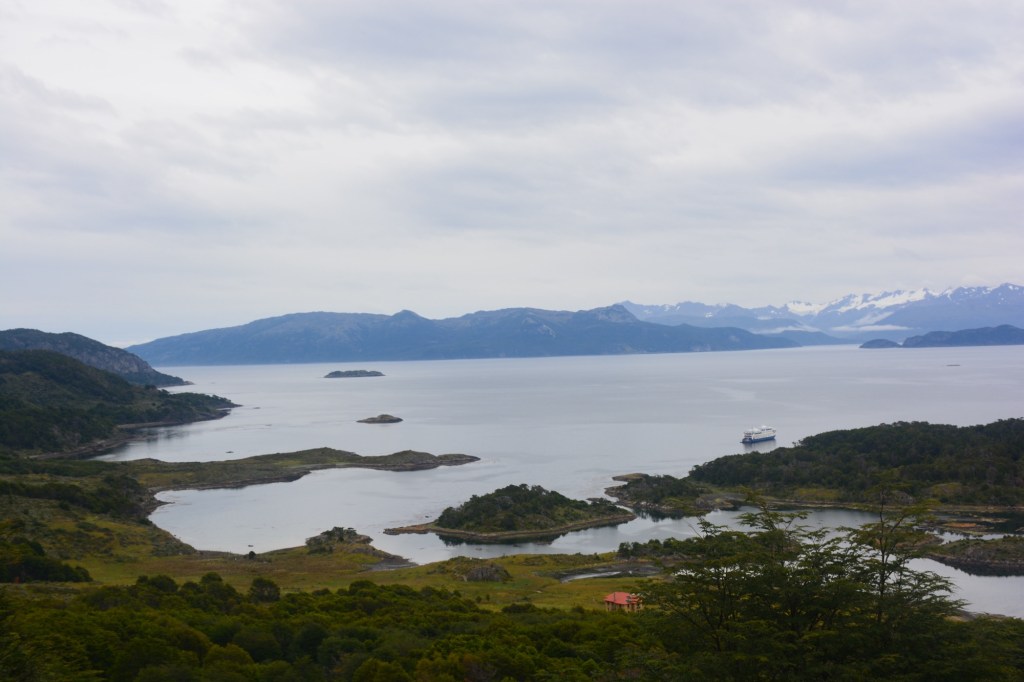
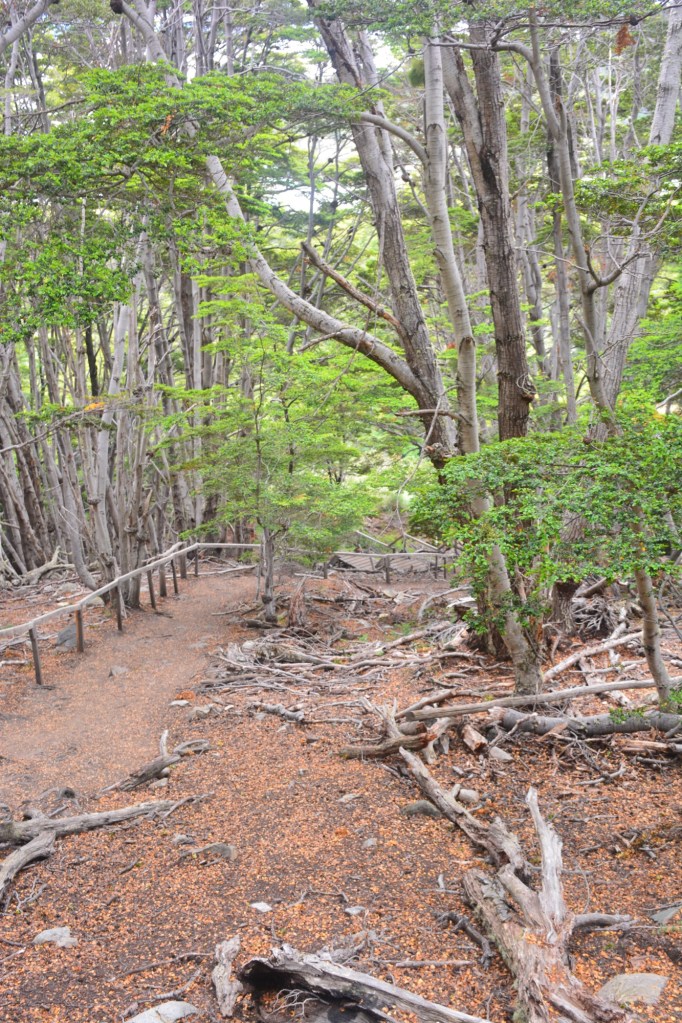
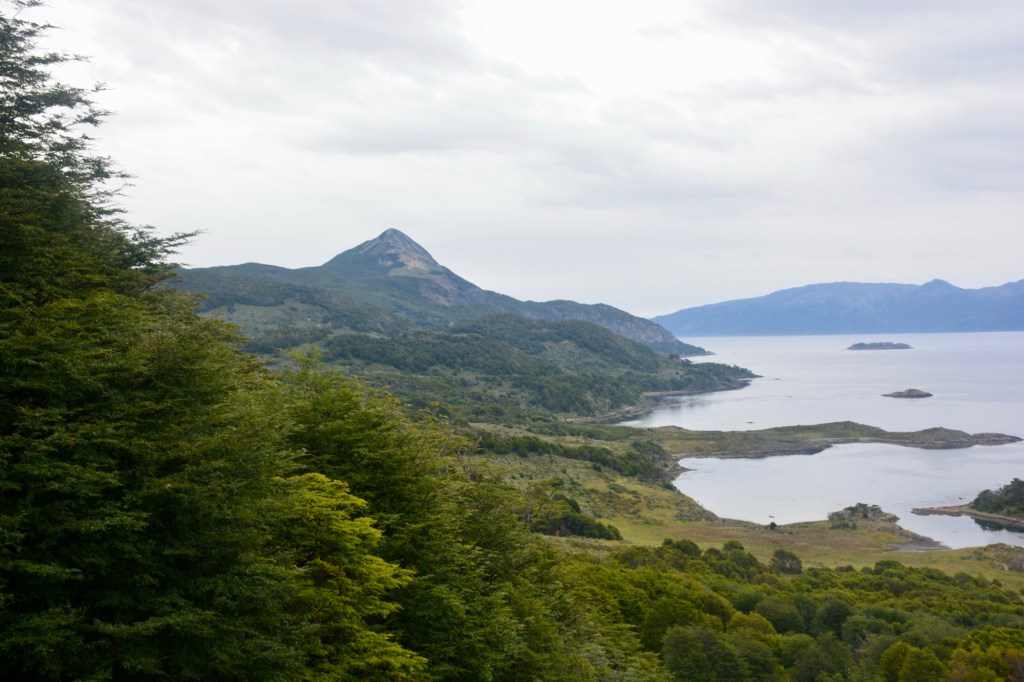
The ship’s expedition team runs all of the excursions and landings are achieved by means of zodiac boats, which are essentially pontoon-like craft with outboard motors. Once you get the hang of getting on and off the zodiacs they are a lot of fun to ride on.
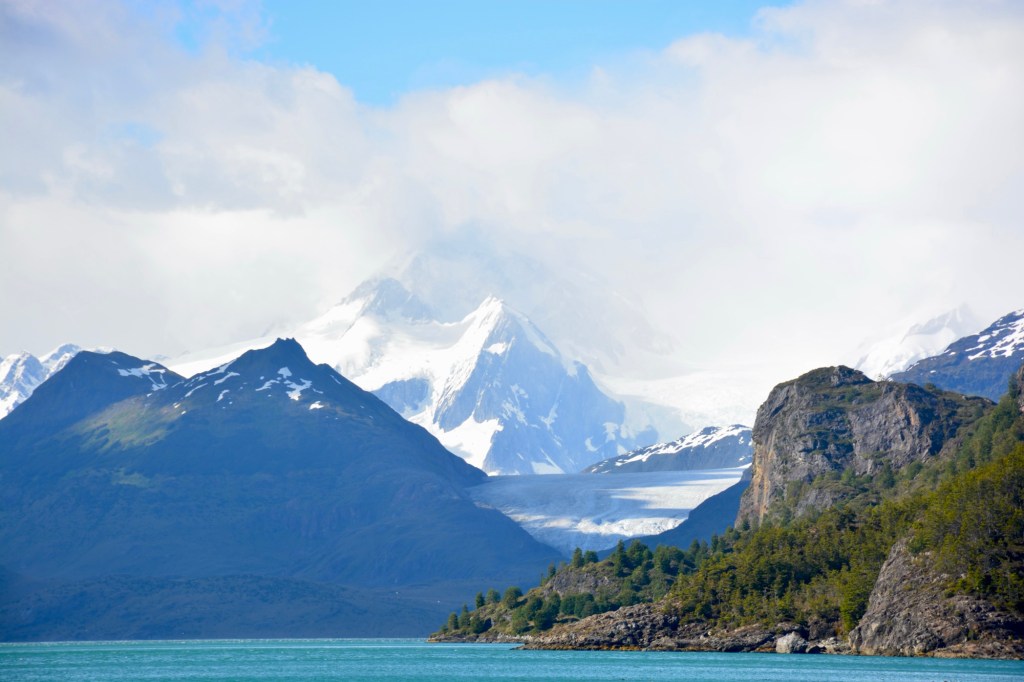
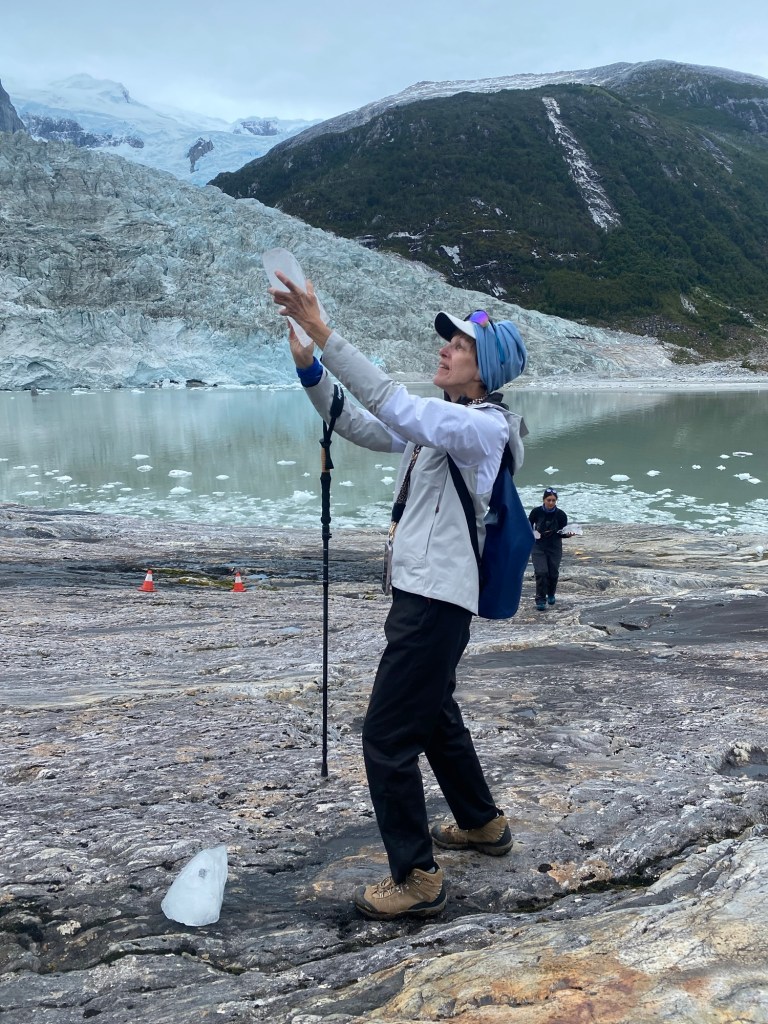
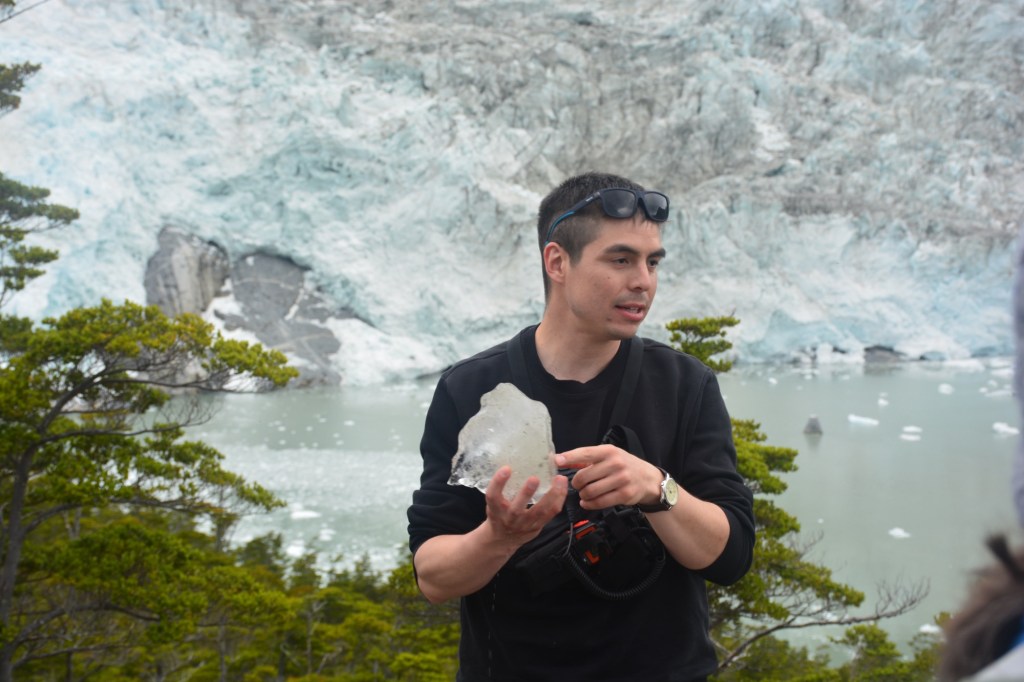
For our first excursion we anchored in Ainsworth Bay for a beach and forest walk that afforded good views of the 120-foot-tall Marinelli Glacier, named for an Italian priest who was sent to the region in the early 1900s to convert the natives to Christianity. He spent more of his time documenting the geology of the region and its numerous glaciers than he did preaching. Glaciers, as we have noted in earlier posts, dominate Patagonia. There are roughly 26,000 glaciers in Chile and 91% of them are in Patagonia. But they’re receding quickly due to climate change so we are thrilled to have seen many of them.
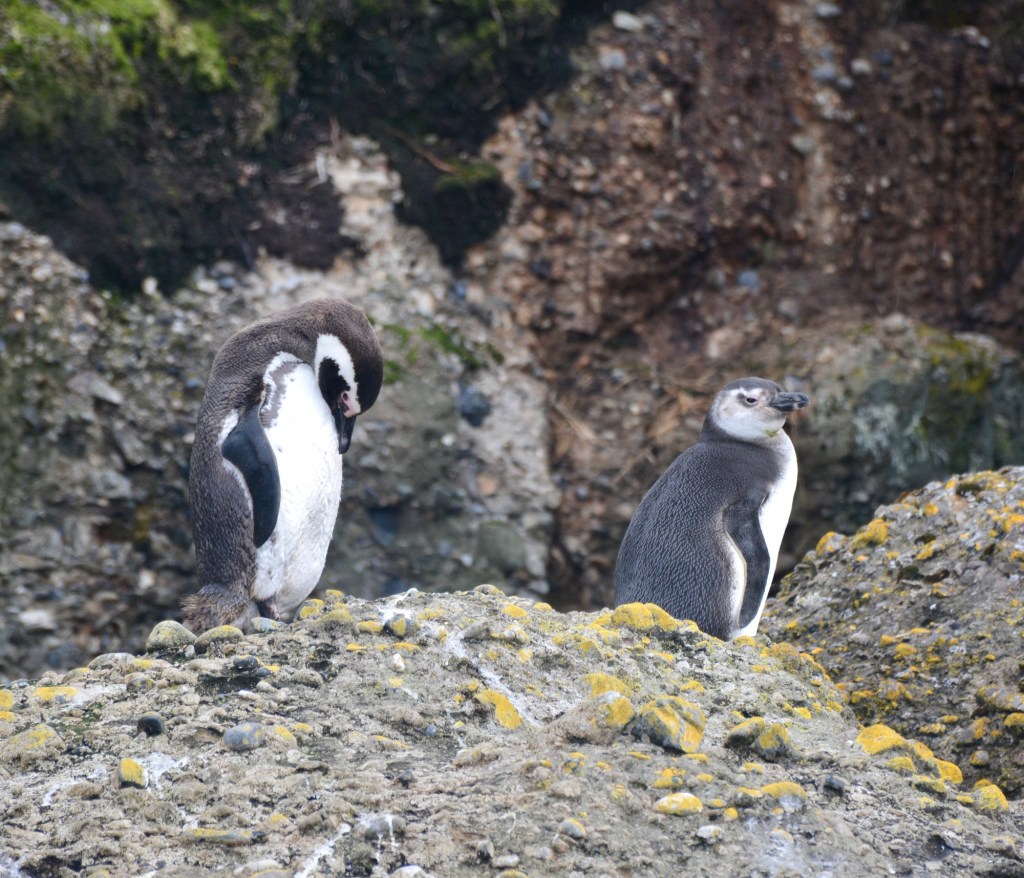
Later that afternoon we again boarded the zodiacs for a one-hour cruise around Tuckers Islets, home to Magellenic penguins and cormorants. These small penguins are migratory creatures that return to this area every spring and summer in the southern hemisphere. We were also entertained by a school of dolphins, many of which seemed to enjoy racing the zodiacs.
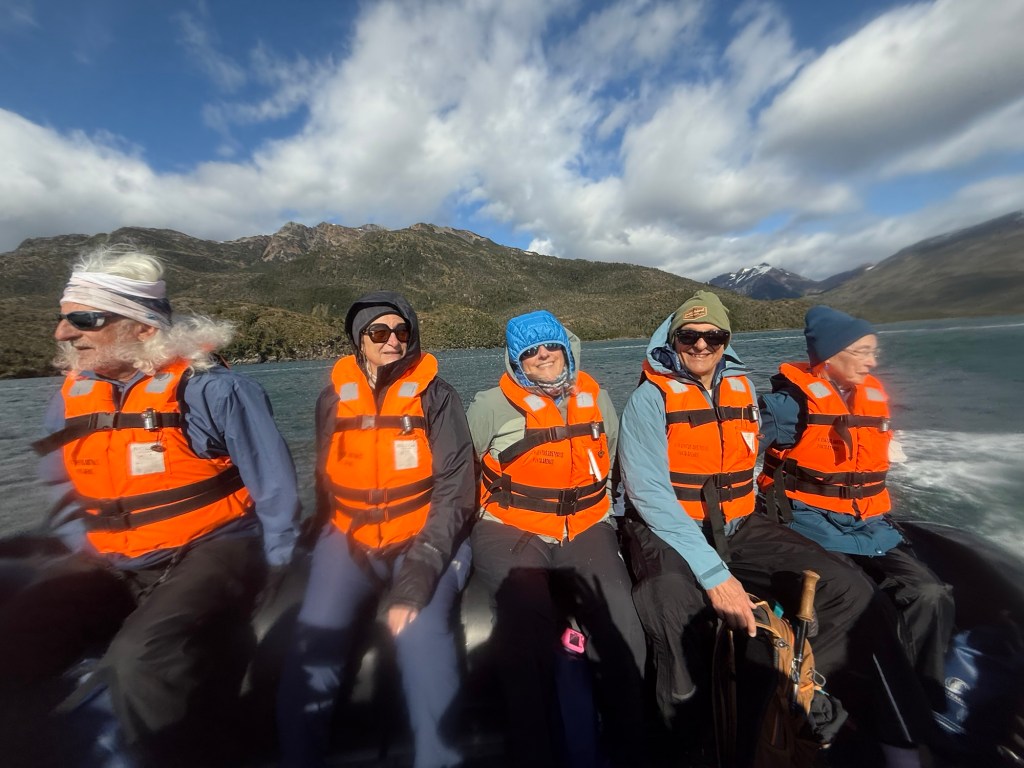
Overnight our ship briefly exited the more sheltered waters within the Tierra Del Fuego region to traverse a portion of the Pacific Ocean. At that point we were buffeted by the strong westerly winds that dominate life in this region. It happened from around 4 a.m. to 5 a.m., and the ship’s rocking actually felt quite fun as we lay in bed. Walking around might have been a little challenging at that time, however.
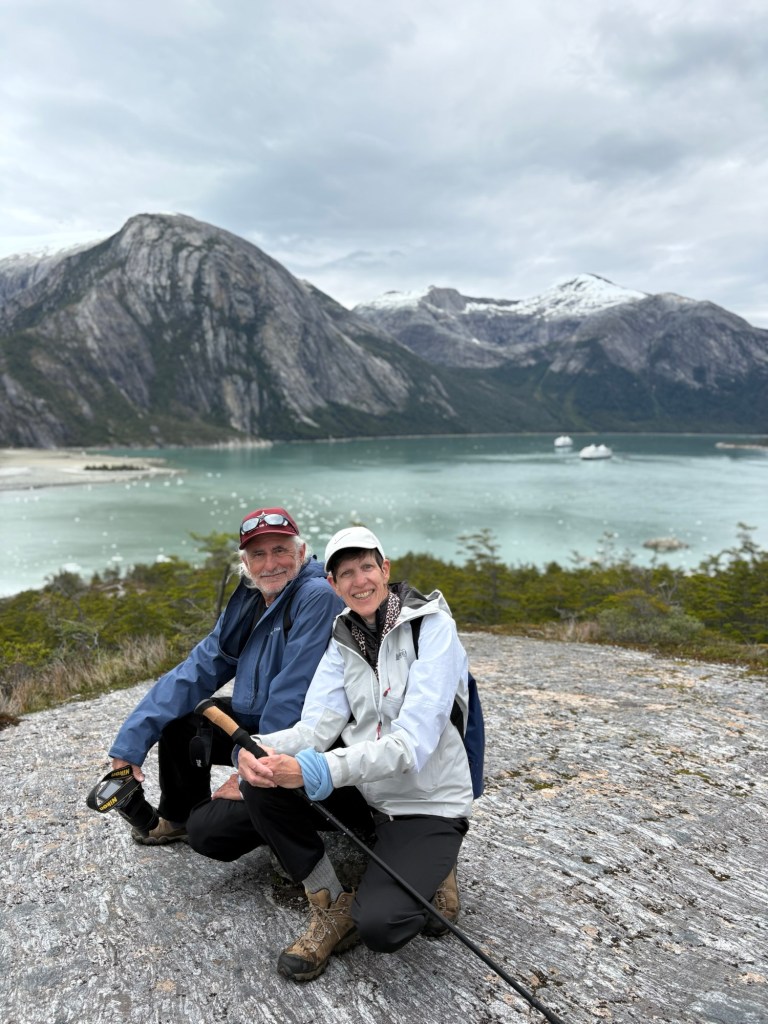
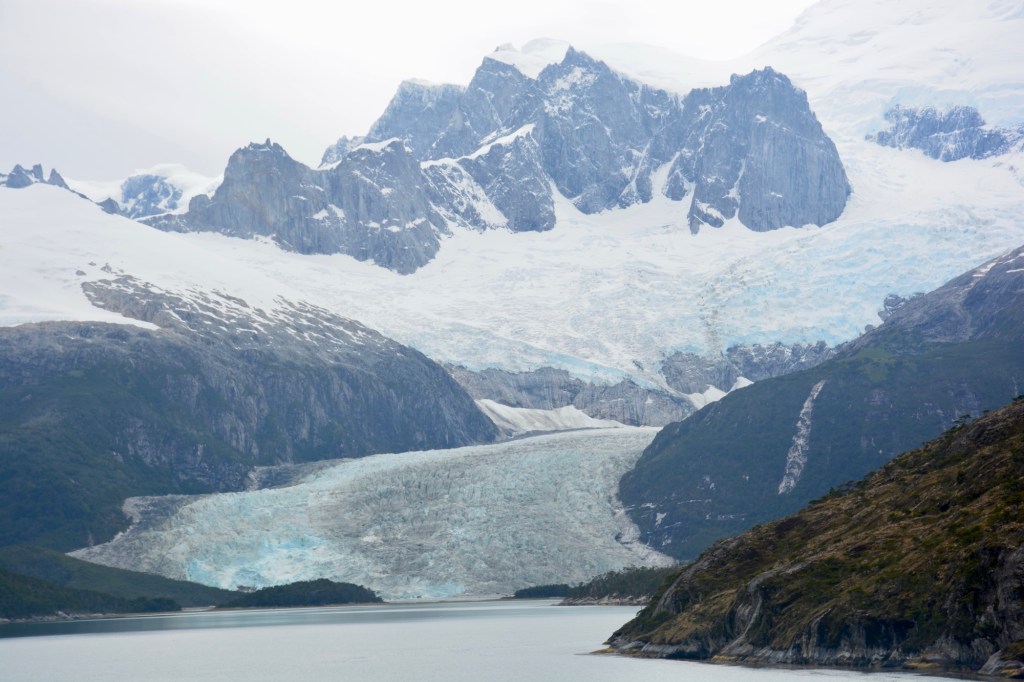
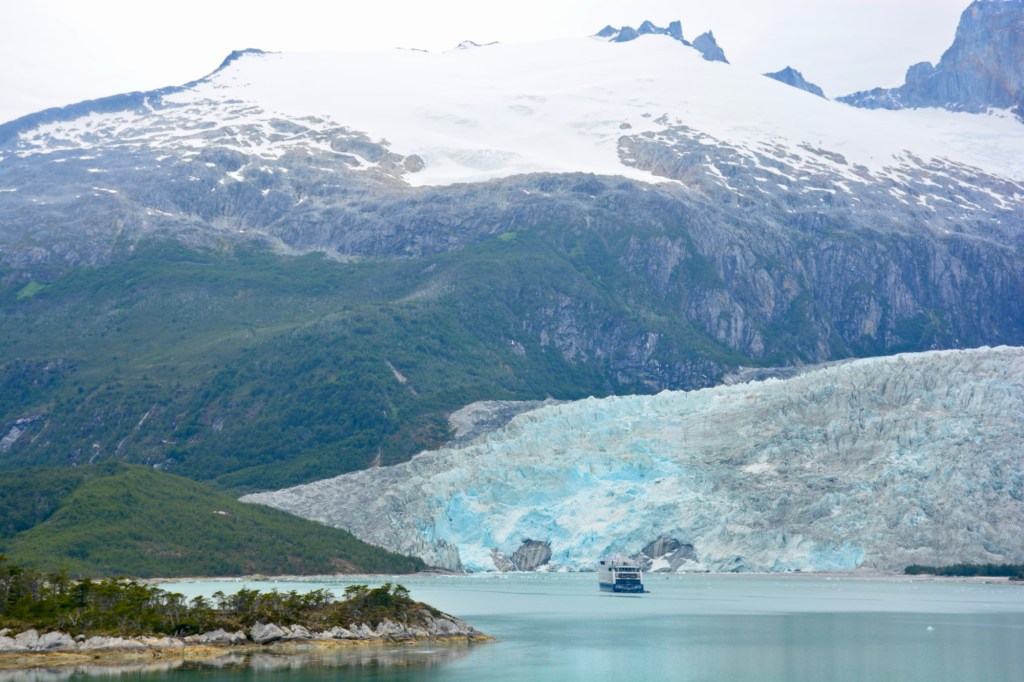
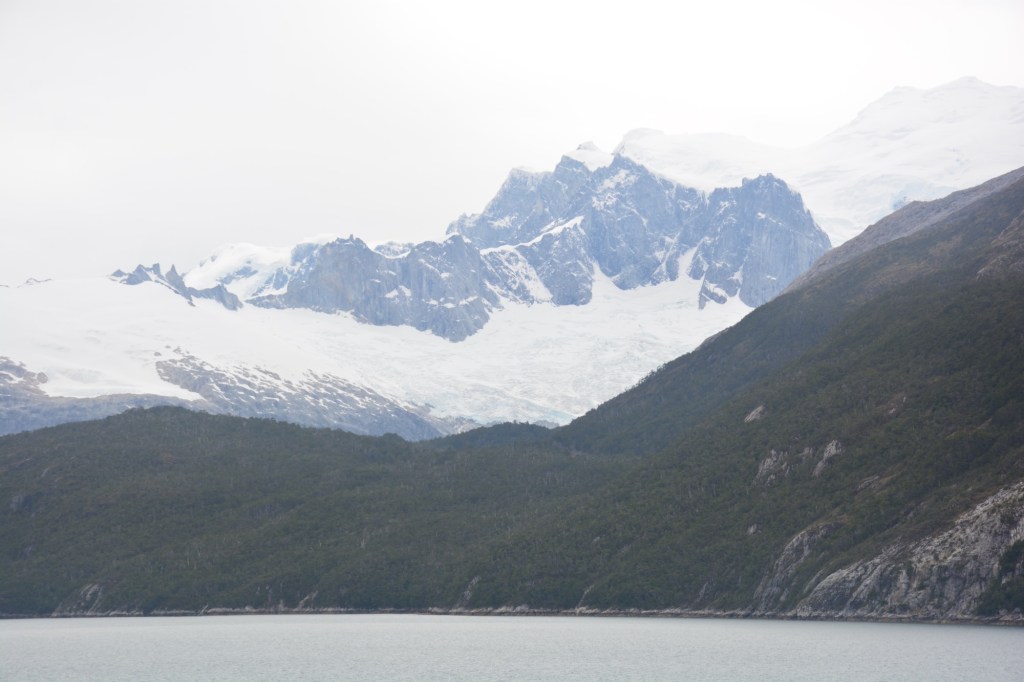
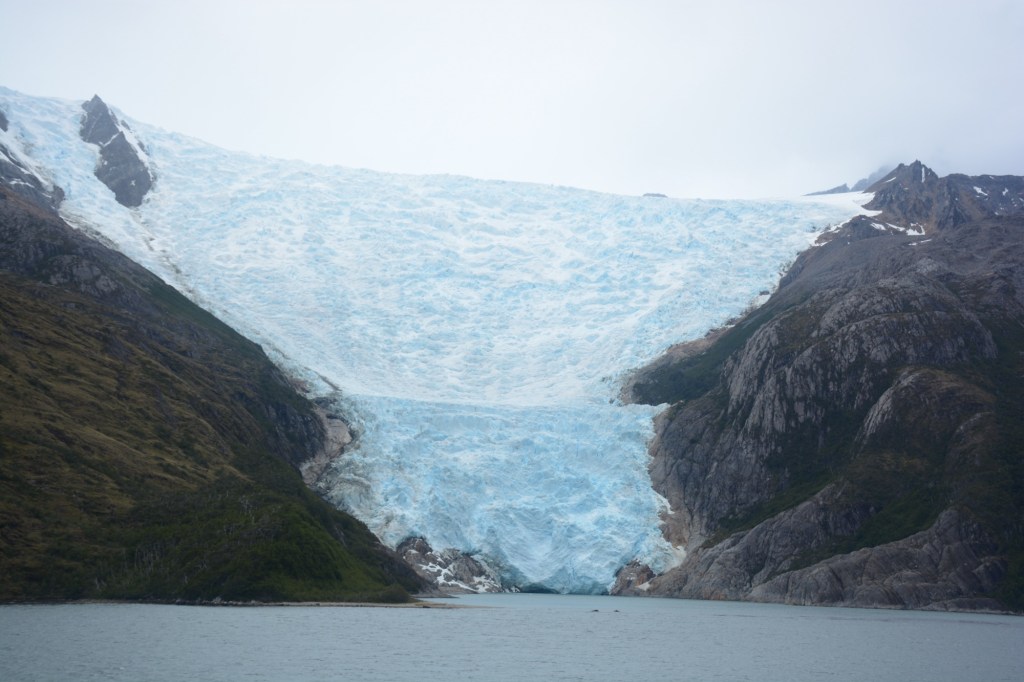
Our second full day featured a visit to the Pia Glacier, which flows from the Darwin Mountains into the sea. Approaching the glacier was a stunning scene. Later we cruised the Beagle Channel and Glacier Alley, home to four glaciers named for Holland, Germany, Italy and France. We thought the Italy glacier was the most impressive.
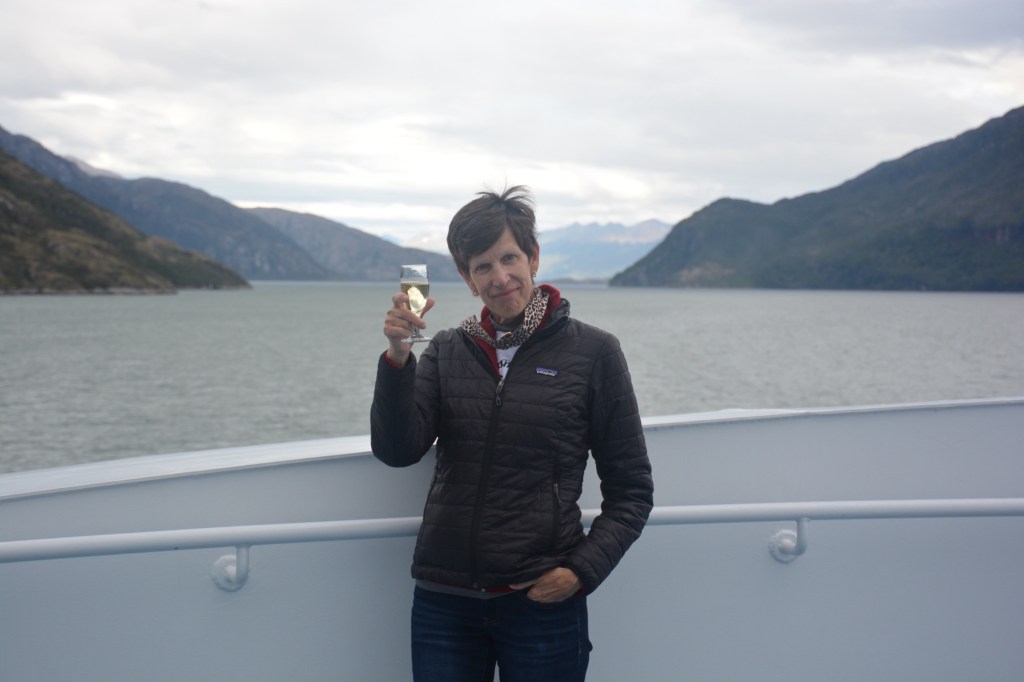
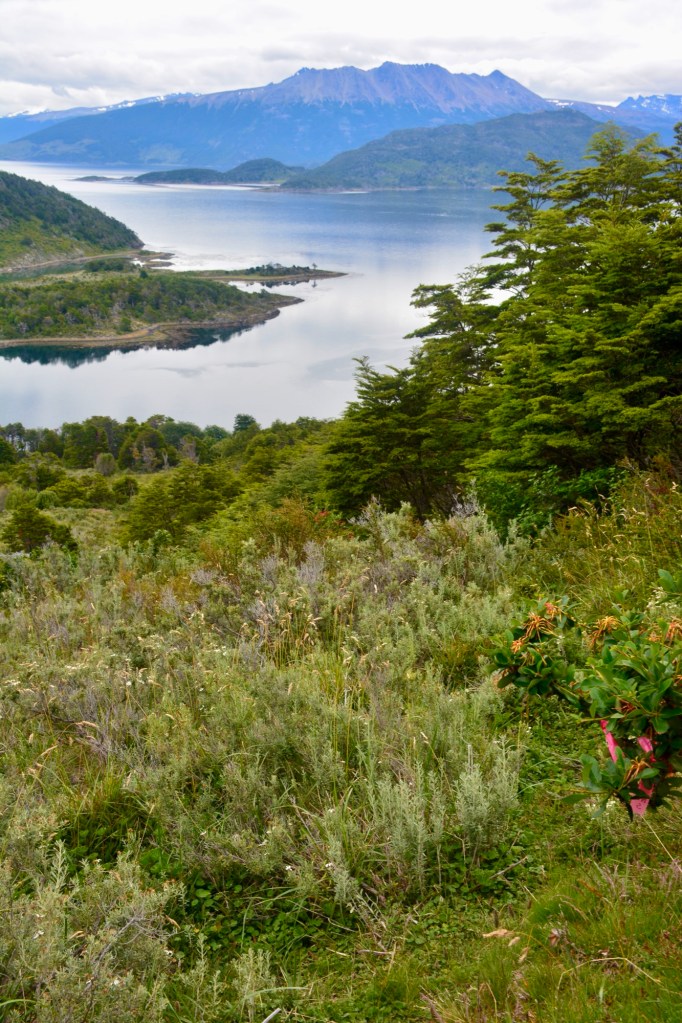
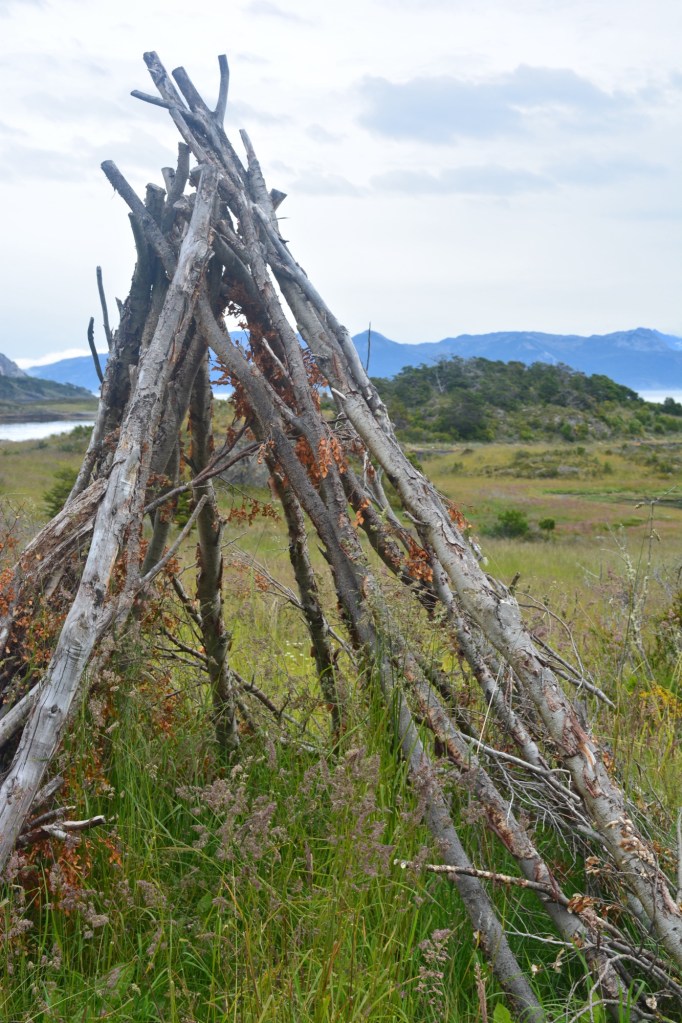
After our early morning visit to Cape Horn on day three we embarked on one last walk at Wulaia Bay, once home to one of the region’s largest concentrations of natives prior to the appearance of Europeans in Patagonia. European diseases like small pox, for which the natives had no immunity, killed many of them. There are no indigenous people in this region anymore.
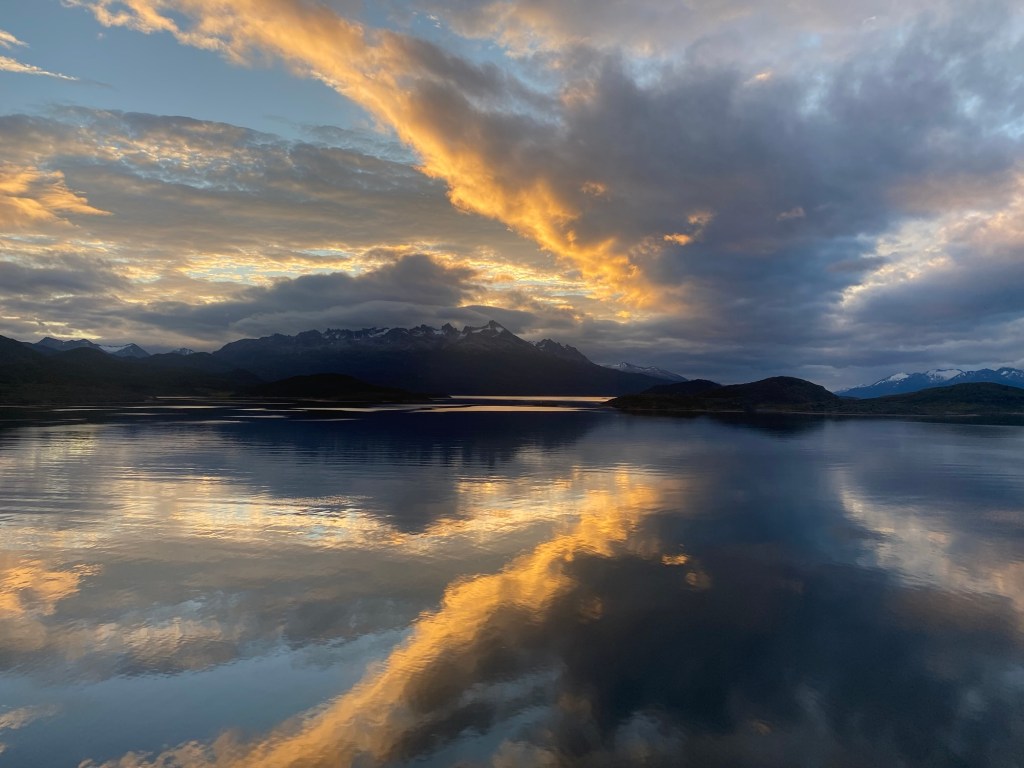
Our last night on the ship brought us back to Argentina, specifically the port city of Ushuaia, which likes to call itself the southern most city on the planet. A smaller town across the Beagle Channel in Chile, Puerto Williams along with a couple of even smaller hamlets, are actually farther south than Ushuaia. I will leave it to the Argentinians and Chileans to argue bragging rights.
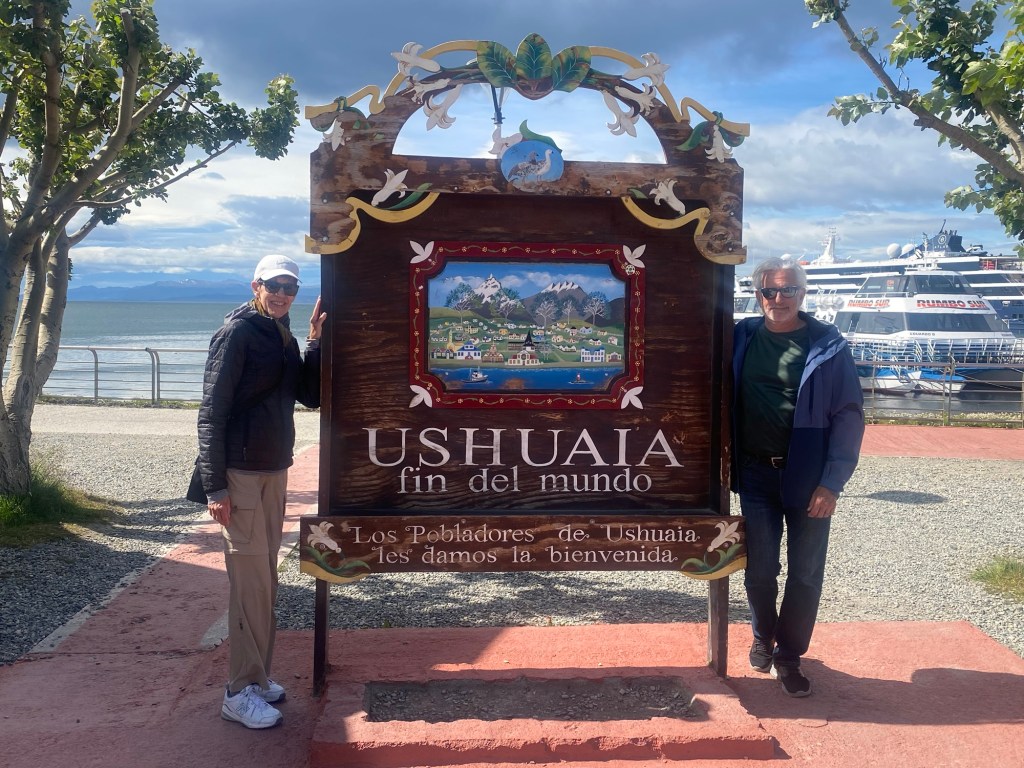
This was truly a unique experience. Australis has two sailings that operate simultaneously. One vessel starts in Punta Arenas, as ours did; the other sails from Ushuaia. We think finishing with Cape Horn is better than having that excursion being your first stop since it saves the most rugged and dramatic excursion for the end of the voyage.
 It's What We Do
even I am lost for words
Magnificent–each photo especially glaciers
we’ll need a Big bottle of wine to talk about this when you return
0x0
LikeLike
unbelievable pictures in the southern hemisphere. Gotta love the scenery and penguins
LikeLike