Although this trip was built around golf and is ending with whisky, we also love art, so we had to check out what Glasgow and Edinburgh had to offer.
One of the wonderful things about Scottish museums is that most of them are free. This is very convenient if you don’t have a lot of time and just want to to pop in for a bit, or if you aren’t sure you’re going to like the offerings. No worries! Just give it a go.
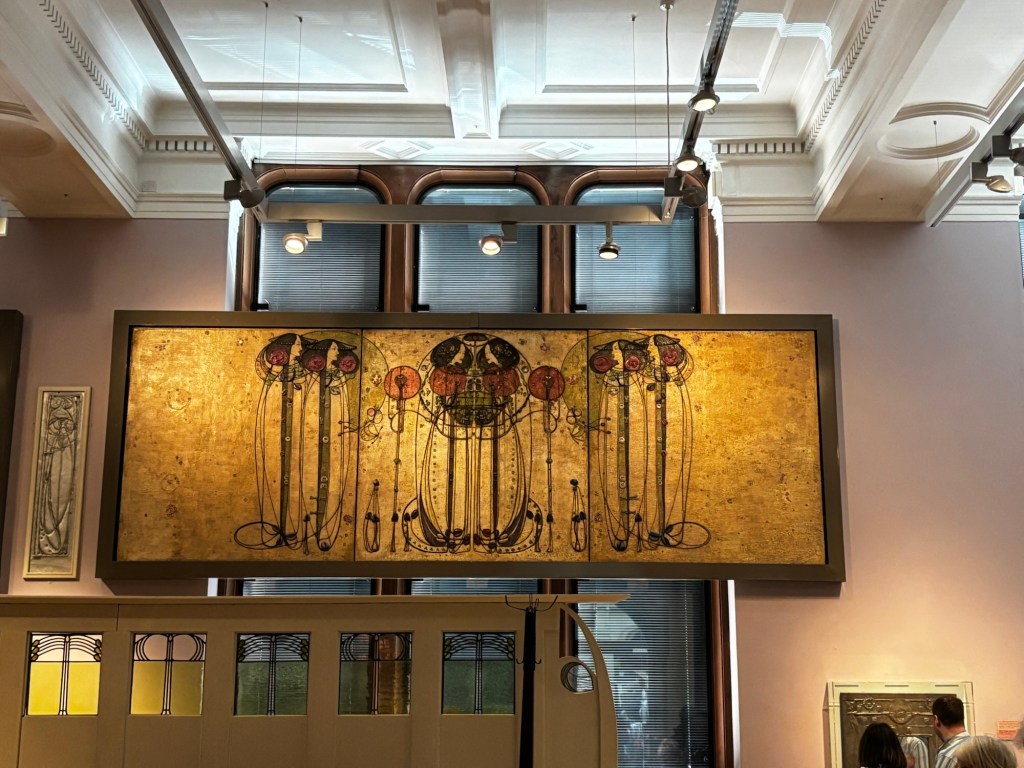
In my research, I’d come across the Glasgow architect and designer Charles Rennie Mackintosh, known as the father of Glasgow style. Working with his wife Margaret in the late 19th and early 20th centuries, he produced work in the Art Nouveau and Arts and Crafts styles that was groundbreaking.
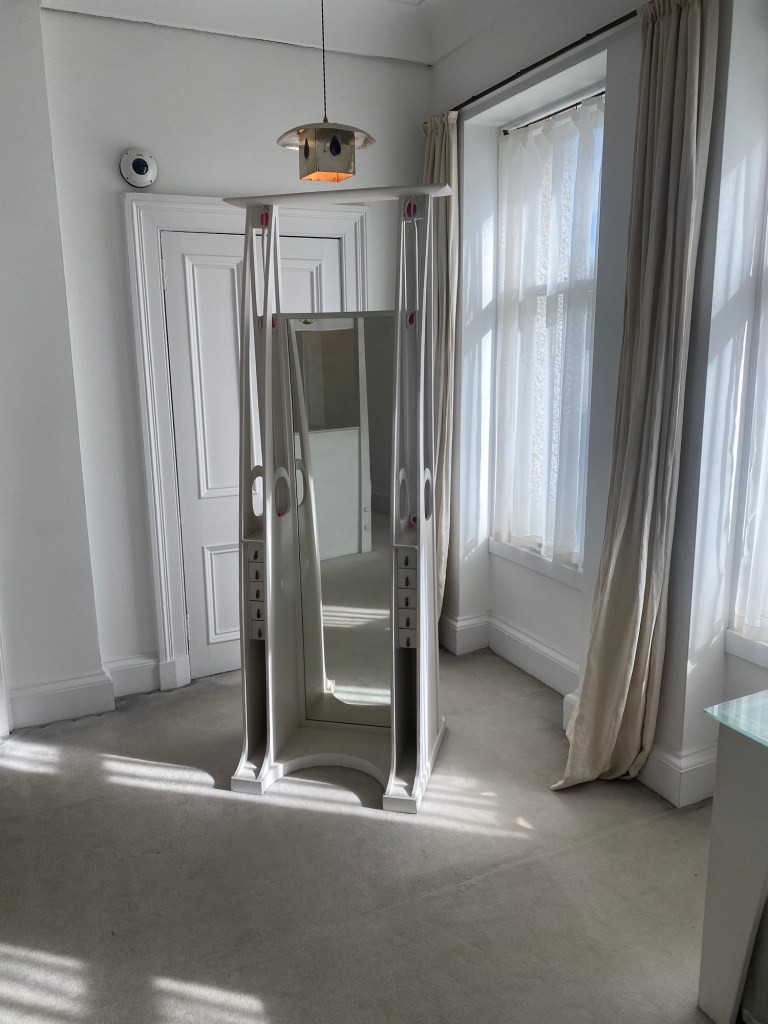
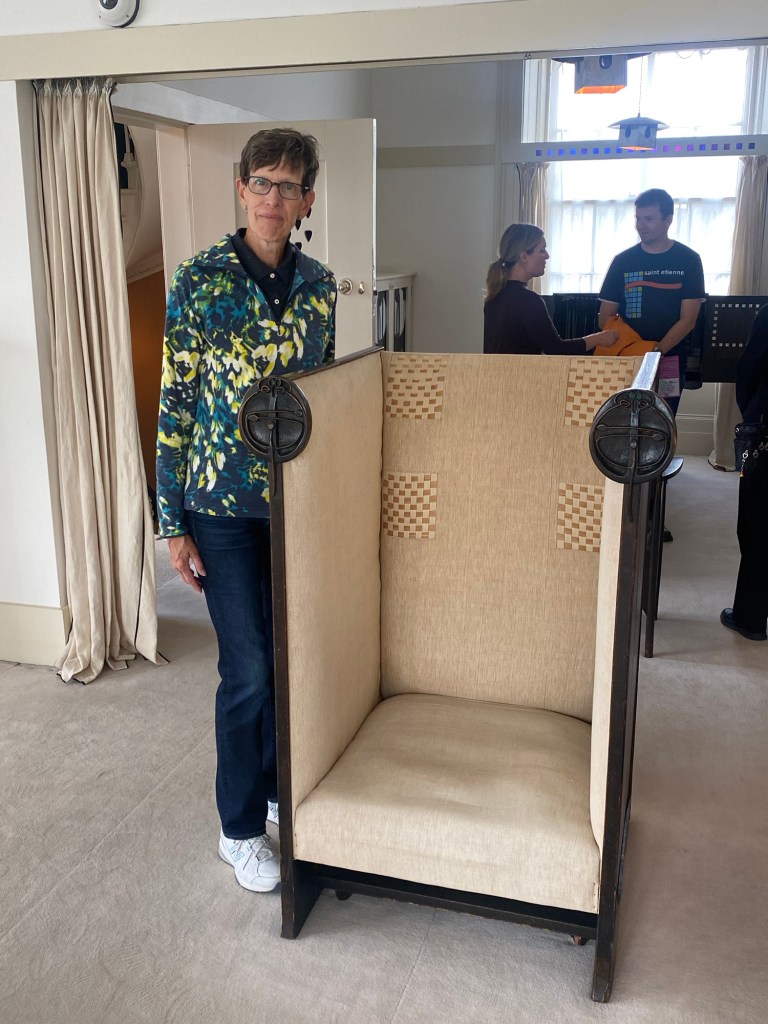
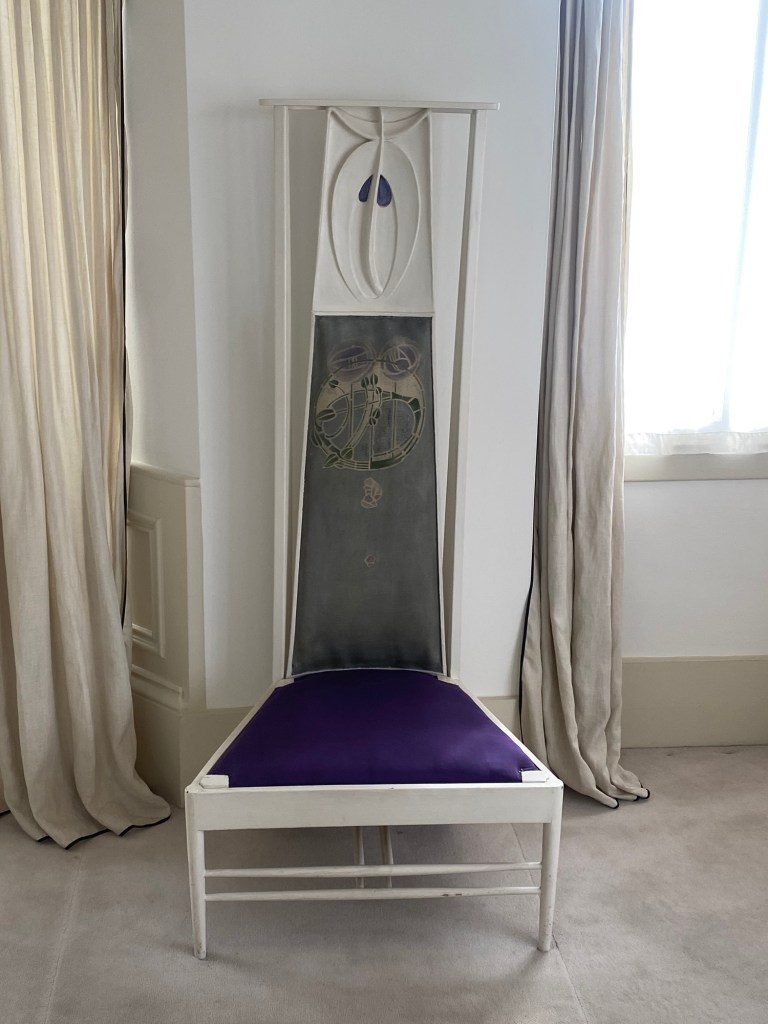
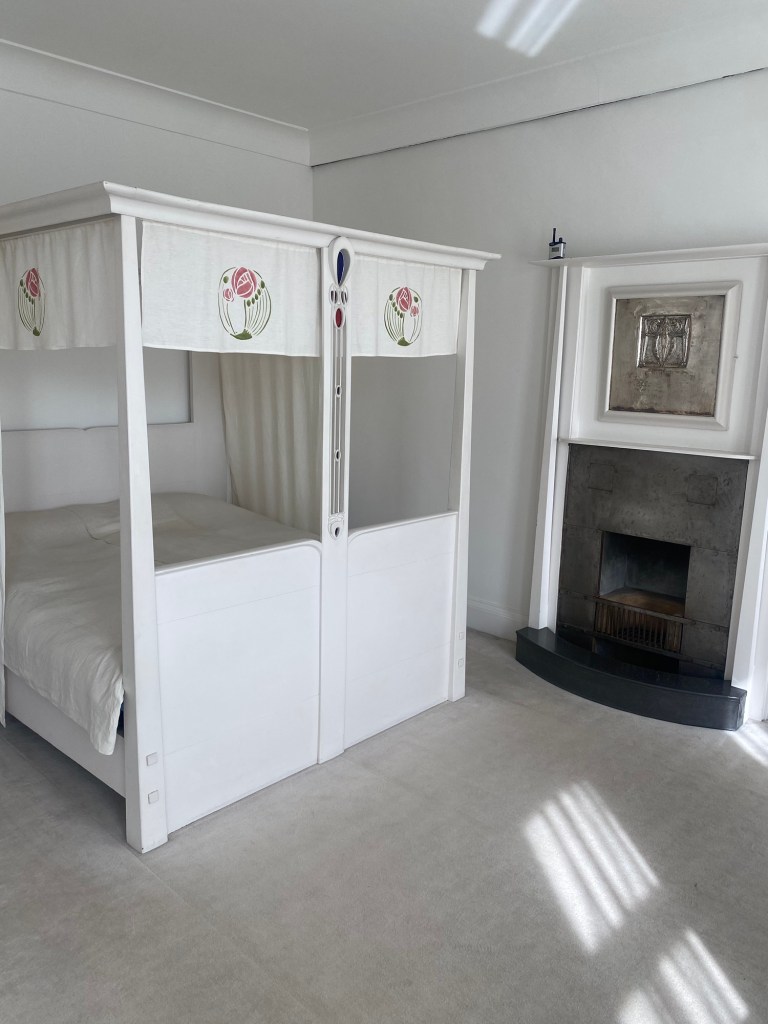

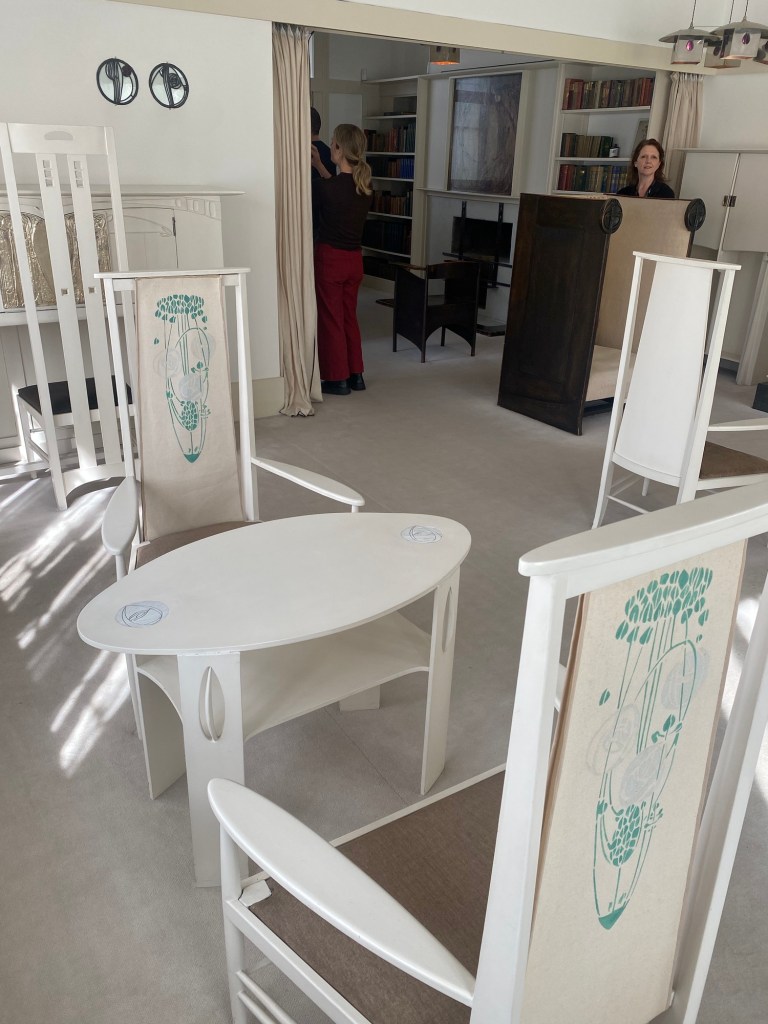
We had the opportunity to visit his restored home at the Hunterian Art Gallery, where the interior of his Glasgow home was carefully reconstructed, even down to the type of curtains in each room.
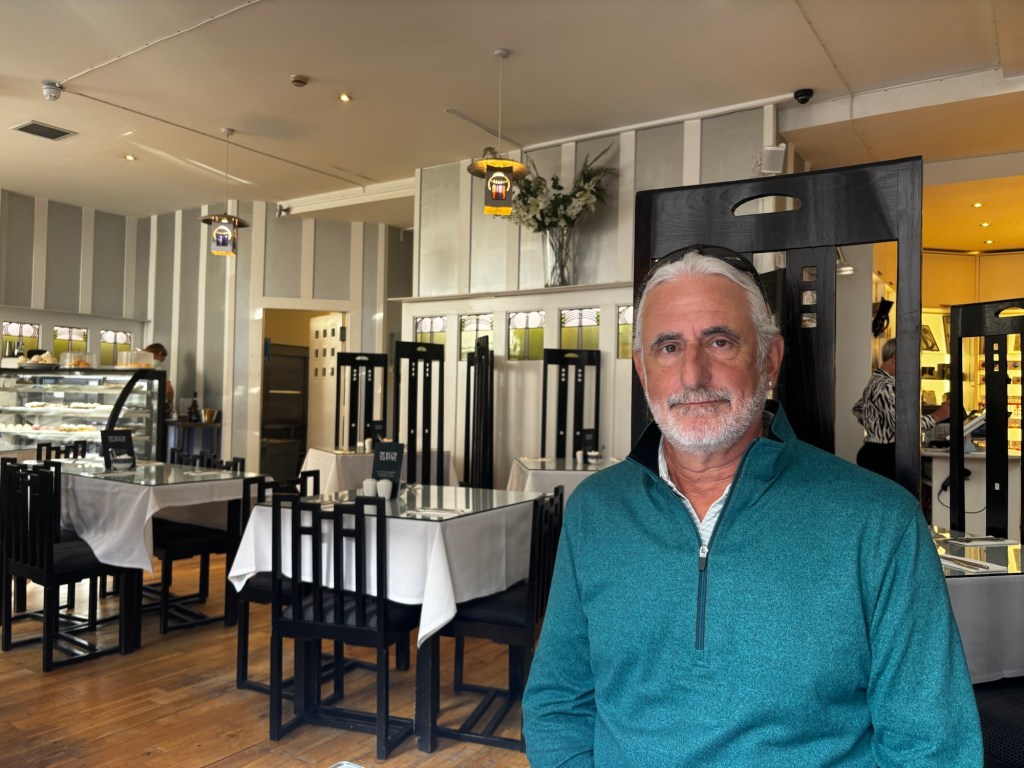
We also dined in one of the Willow Tearooms that he had designed. Thanks to preservation efforts, these beautiful tea rooms in Glasgow and Edinburgh have been restored. I’m not sure I’d want to live with this furniture all the time, but it was fun to go back in time for a meal.
We also discovered the Glasgow Boys (and some Girls) at the Hunterian. Working in the late 19th and early 20th centuries, they represented the beginning of modernism in Scottish painting. They rejected the formalism of academic painting and painted contemporary subjects, often out of doors. Sound familiar?
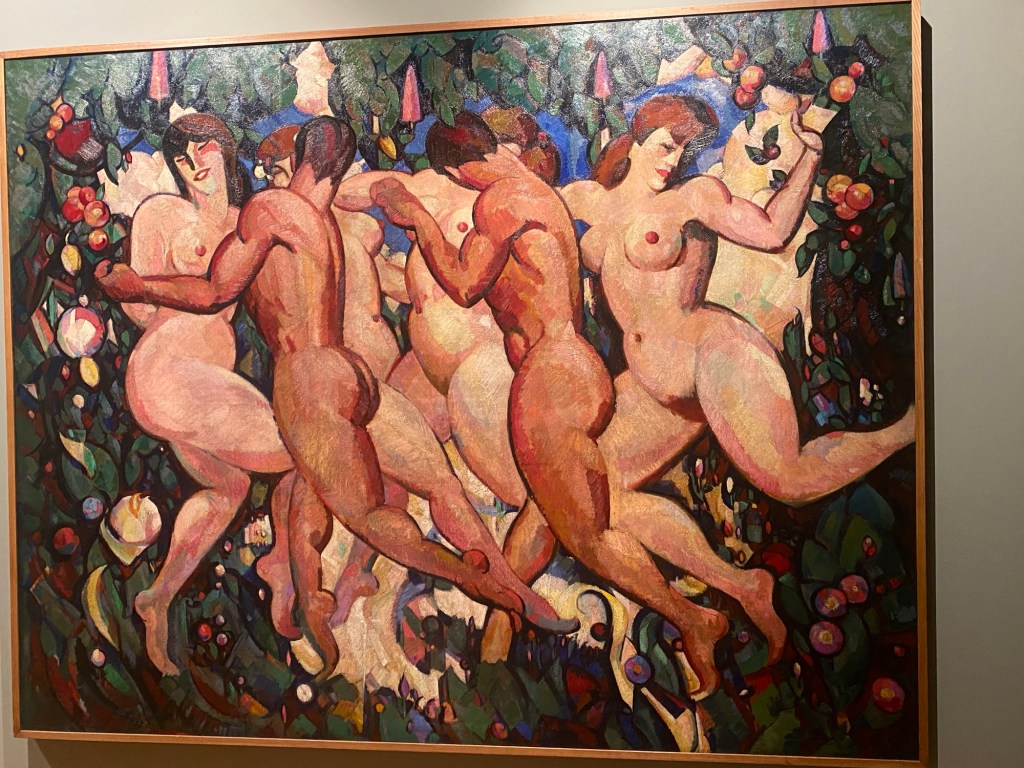
Yes, their work brings to mind French Impressionism. They were also greatly influenced by James McNeill Whistler. The Hunterian has the largest permanent collection of Whistler’s work, which was lucky for Jim, who is a big fan of Whistler.
We were both big fans of the Glasgow Boys and Girls, whose works had some of my favorite aspects of French Impressionism, yet had a unique feel of its own.
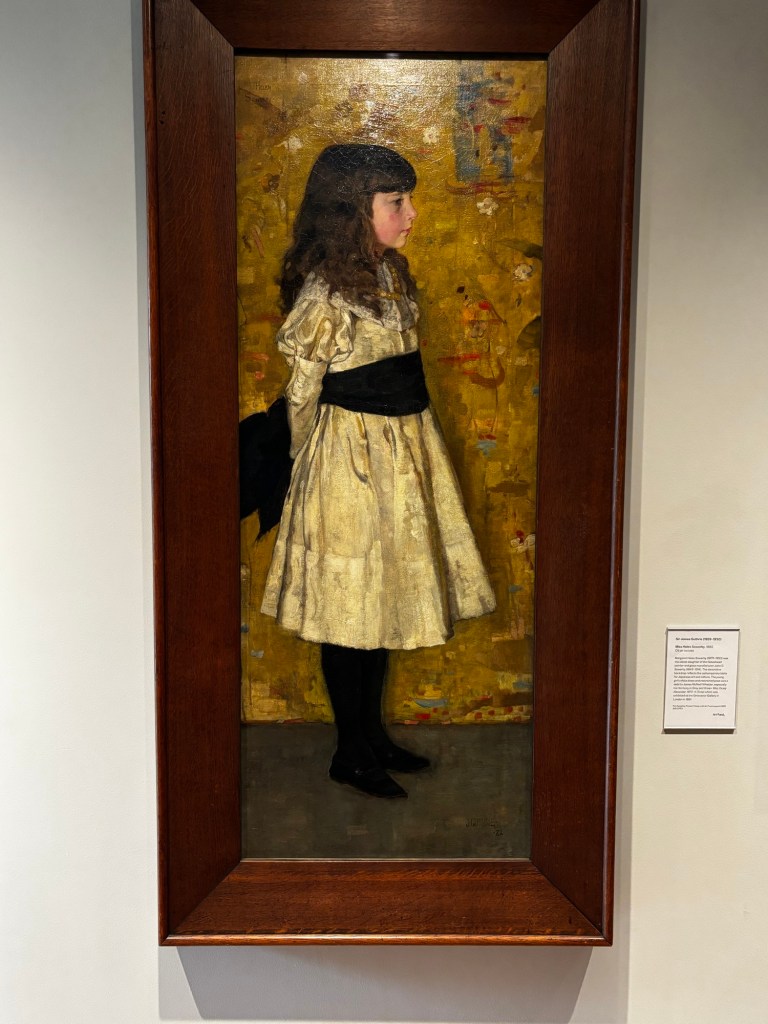
The Hunterian is owned by Glasgow University, one of the oldest universities in the world, with the feel of a real-world Hogwarts from the Harry Potter books. We passed through the University on the way to our next museum stop, the Kelvingrove.
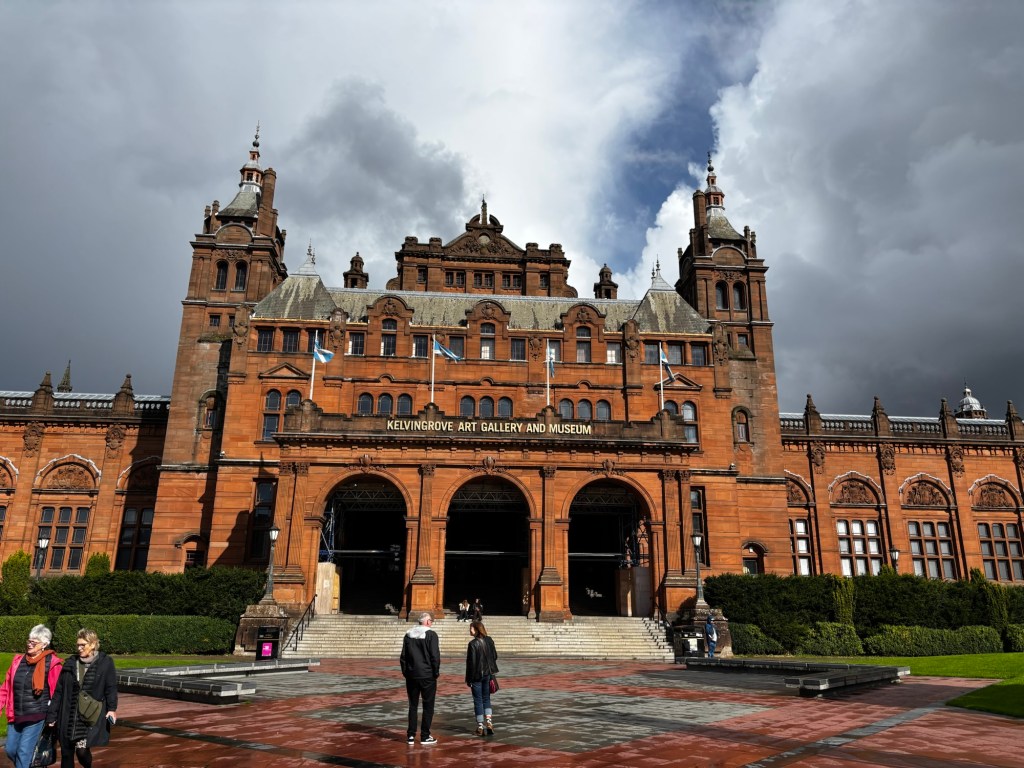
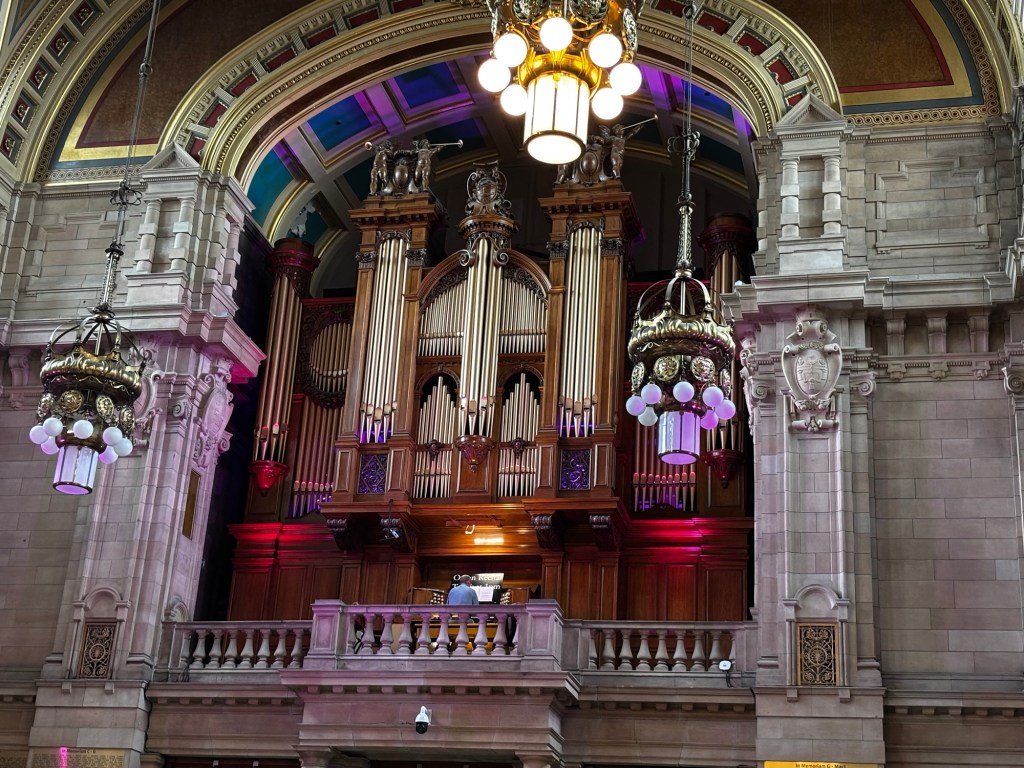
The Kelingrove is massive. We stopped at the cafe to get our bearings and realized we were just in time for a concert on the massive organ overlooking the lobby. The organist has been known to slip in contemporary covers along with the hymns.
We focused on Scottish art since we can see the French, Dutch, etc elsewhere.
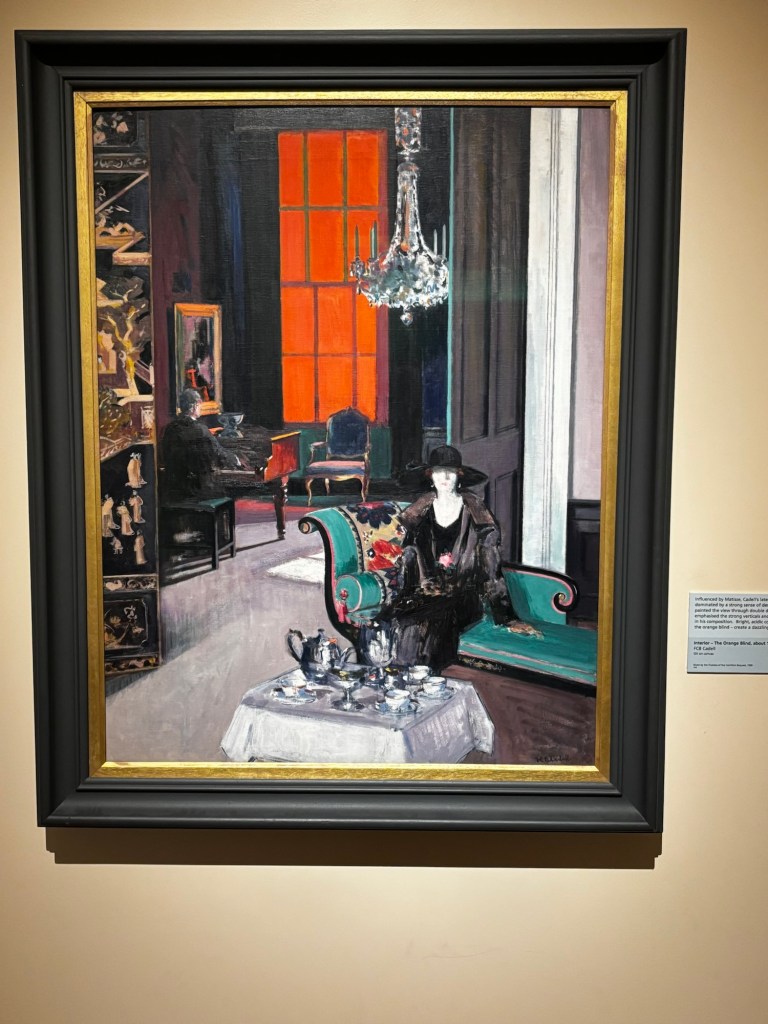
We were treated to more Mackintosh and Glasgow Boys, but also learned about the Scottish Colourists, four artists working in the early 20th century who were influenced by the French use of color and bold brushwork. Again, my favorite style of art, and we’d never heard of any of them. What a treat to discover artists new to us whose art we really enjoyed.

We did make one exception to the Scottish art only viewing. The museum owns Salvador Dali’s “Christ of St John of the Cross,” a seminal work in Dali’s ouevre, and the most famous painting in their collection (and I’m guessing the most valuable.) We’ve done a lot of traveling to see Dali’s work, so of course we stopped in this dedicated gallery.
Whew! And we left without visiting the Burrell collection, one of Europe’s largest collections situated in a lovely countryside setting. But we were spent.
Until the next day. After a short train ride back to Edinburgh, we embarked on our last museum excursion. Ellen had been excited to see there was an Andrew Goldsworthy exhibition at the Royal Scottish Academy, so we had to see what this was about.
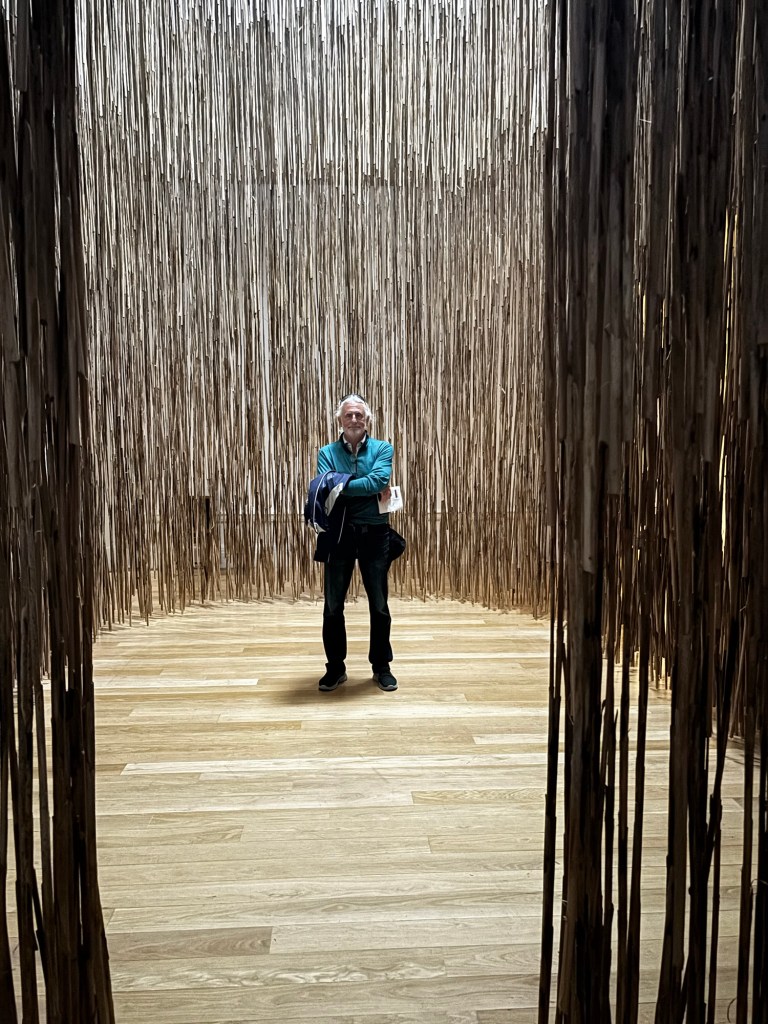
Goldsworthy is a Scot whose work is deeply tied to nature and our relationship to the land, especially from a Scottish perspective.
Not knowing what to expect, we did have a giggle at the first exhibition room, a floor covered in rocks. They were rocks displaced by burials. As we saw more and read the program, the exhibition grew on us. It was purposely built for the exhibition rooms of the Academy and was quite impressive in its scale and materials.
There was a fee for this exhibit, but the permanent collection of the Academy was free, of course, so we took in some more Scottish art. What a fun and enlightening couple of art-filled days!
But again, we heard a pub calling our name and headed out to explore more of Edinburgh.
 It's What We Do
Im speechless-yes Jim–all of this is such exciting art
LikeLike