Upon returning to Panama City, we embarked on our partial transit of the Panama Canal, which was everything I hoped for. Massive ships! Luxury yachts! Locks opening and closing. And a refreshing rain shower. How could it get any better? Oh, it could. But I’ll make you wait for that.
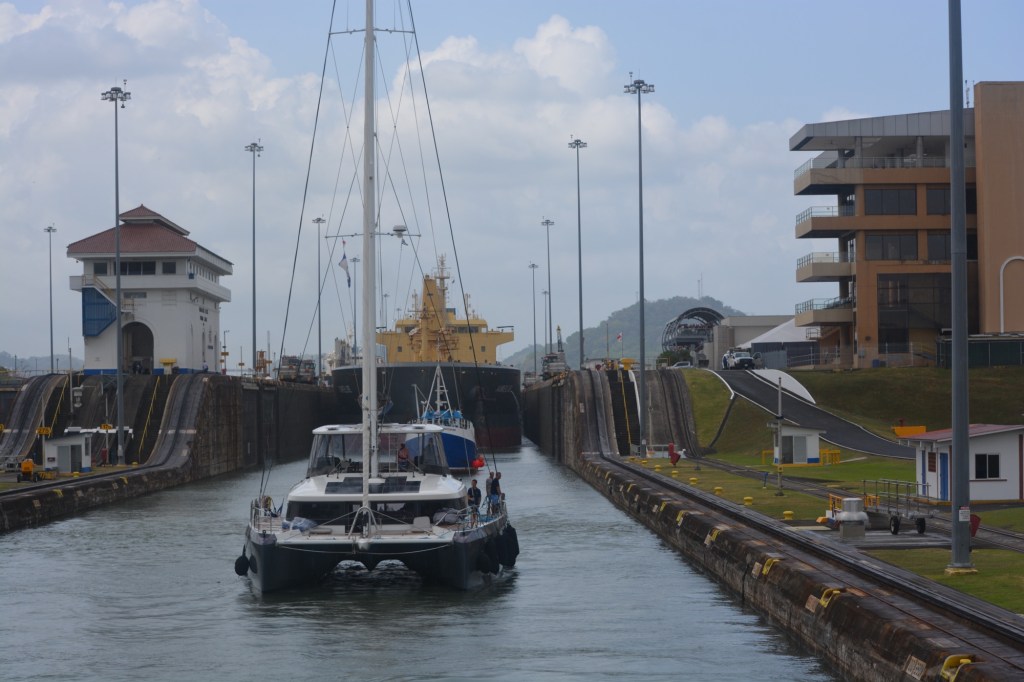
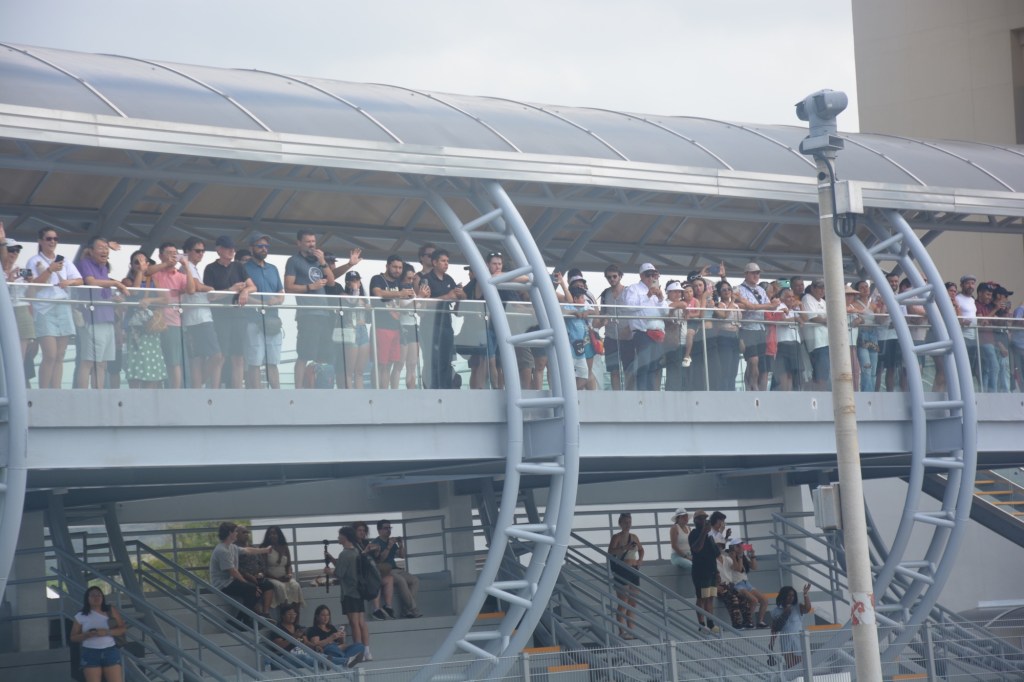
I thought it was much more impressive to experience the Canal from aboard a boat rather than just from the Miraflores Locks Visitor Center, where we started part one of our Panama City trip. While you’re on the boat you can feel and see the water level go down drastically, not to mention watch the huge ships maneuvering through the channel.


I stand by my earlier comment: I’m amazed there aren’t more cases of ships getting stuck in the Canal. It’s a testament to the skill of the Canal staff and the boat captains. (The Canal is capably managed by Panamanians, regardless of what Trump claims.)
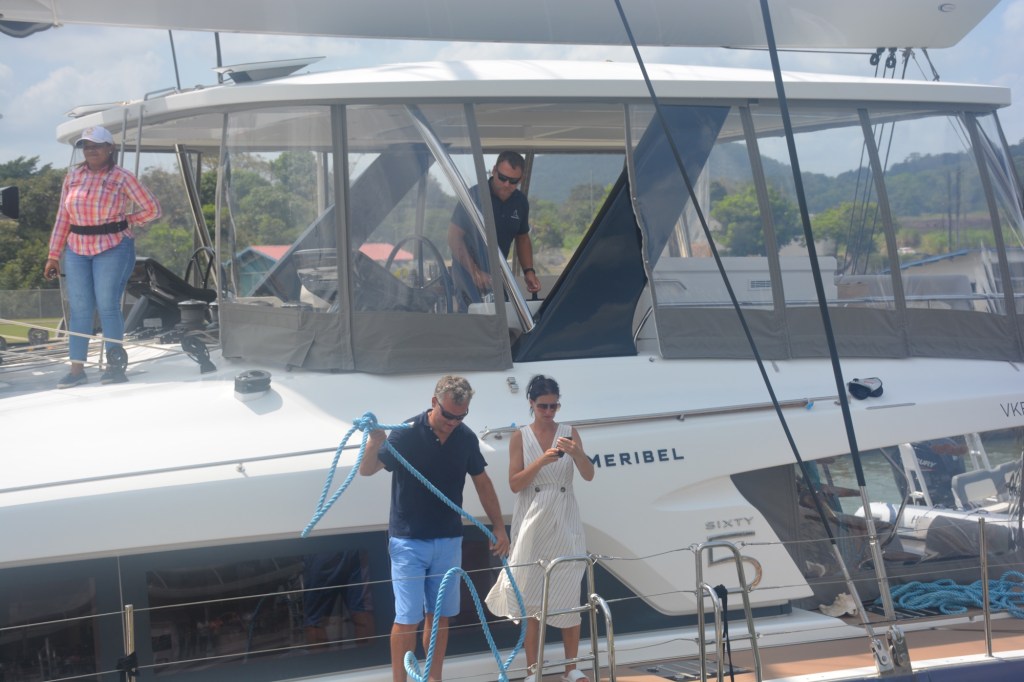
Our small ferry, a yacht that was on an around-the-world cruise, and what looked like a fishing boat all made the trip on the back of a huge bulk carrier. Again, as mentioned earlier, they won’t open the locks just for small boats, although every boat pays a fee to pass through. The owners of the yacht, amazingly, were from Tallin, Estonia.

The tanker we sailed with is apparently one of the smaller ones with quite a bit of leeway along the canal sides. It sure looked like a tight fit to me!
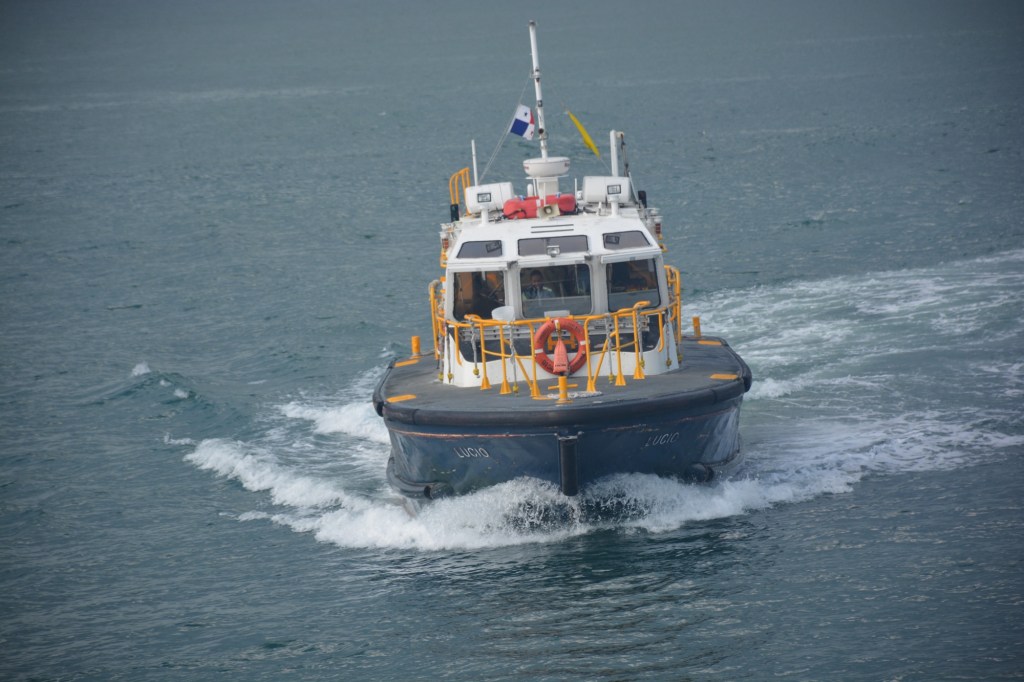
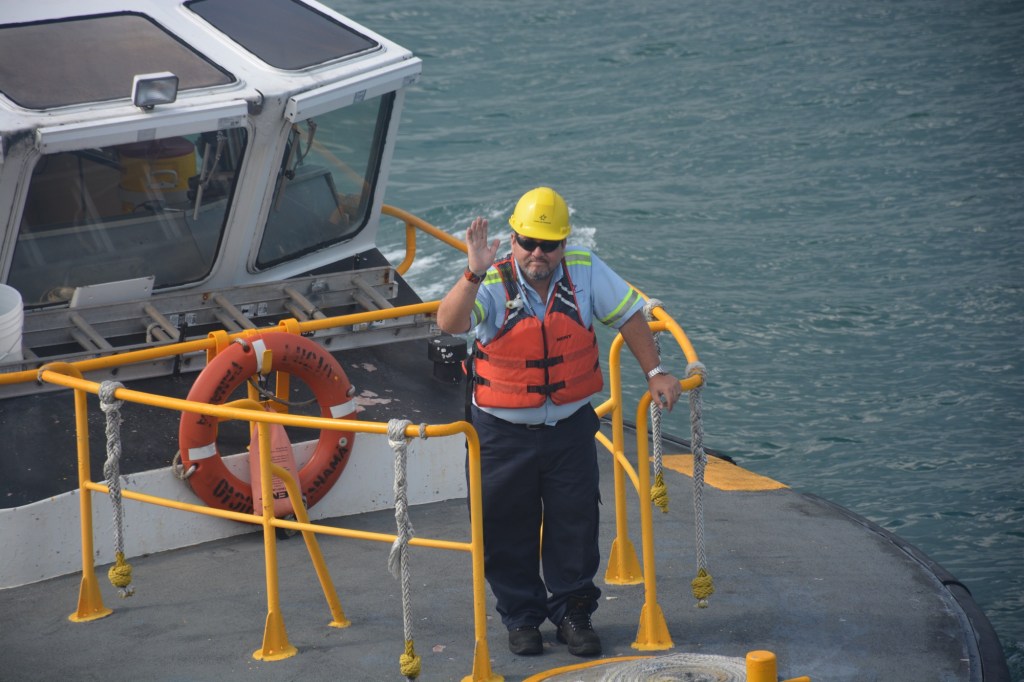
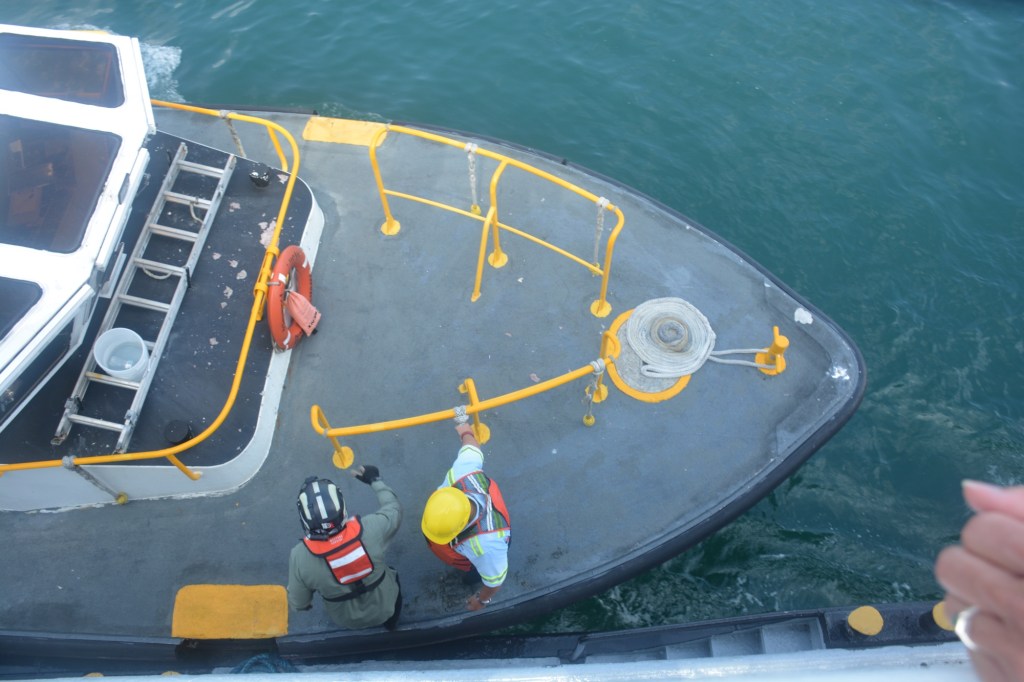
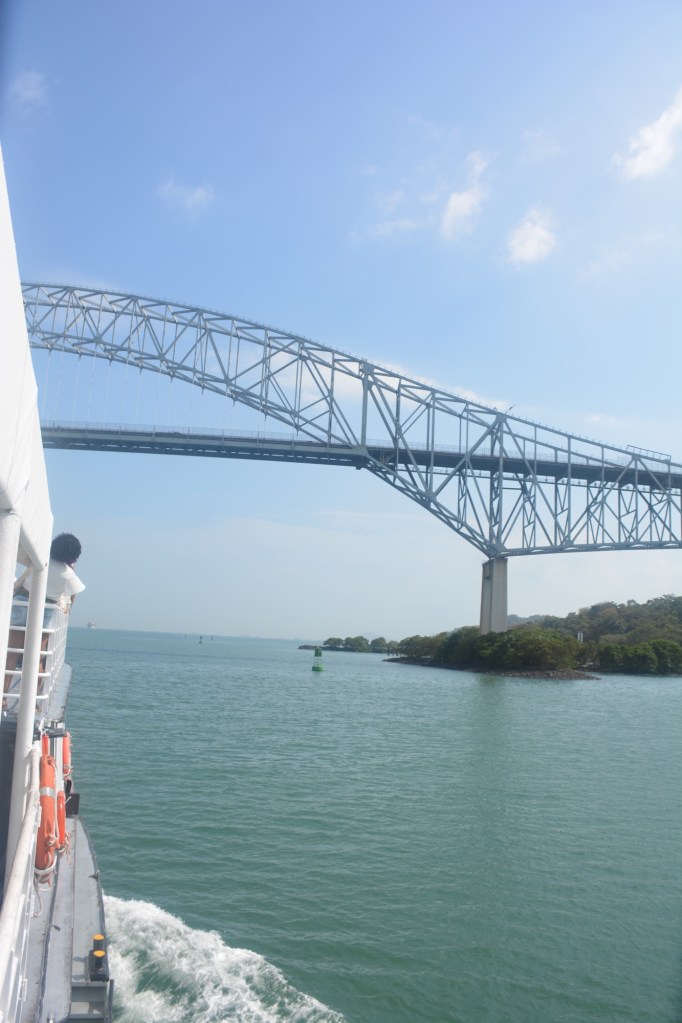
Across the way, we could see the giant Panamax ships passing through the new locks, which opened in 2016. Little did I know I’d get up close and personal with some of these behemoths.


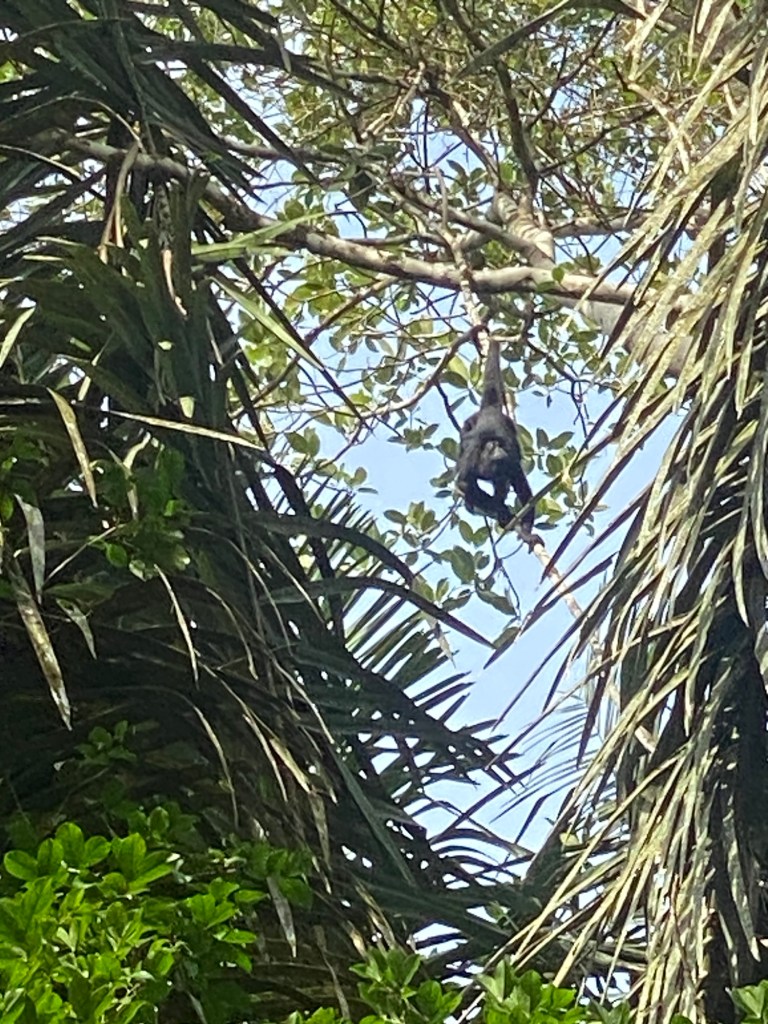
Day two was a walk through the Gamboa rainforest and another boat ride on Gatun Lake. On our hike we spotted howler monkeys, iridescent blue butterflies and a fairly active sloth, active as sloths go. The jungle itself is beautiful, and we weren’t bothered by bugs at all. I can imagine it’s different during the rainy season.
Then it was off to a small skiff that would take us across Gatun Lake. The lake was conceived by American engineers as a way to solve the Canal building puzzle. Rather than fight the Chagres River, they would dam it, create a lake and use that water power to allow ships to pass across what was formerly solid ground.
The dam took several years to build and the lake that resulted swallowed four small towns. It was sobering to think we were boating over the lost homes of many indigenous people. But such is the price of “progress” I guess.
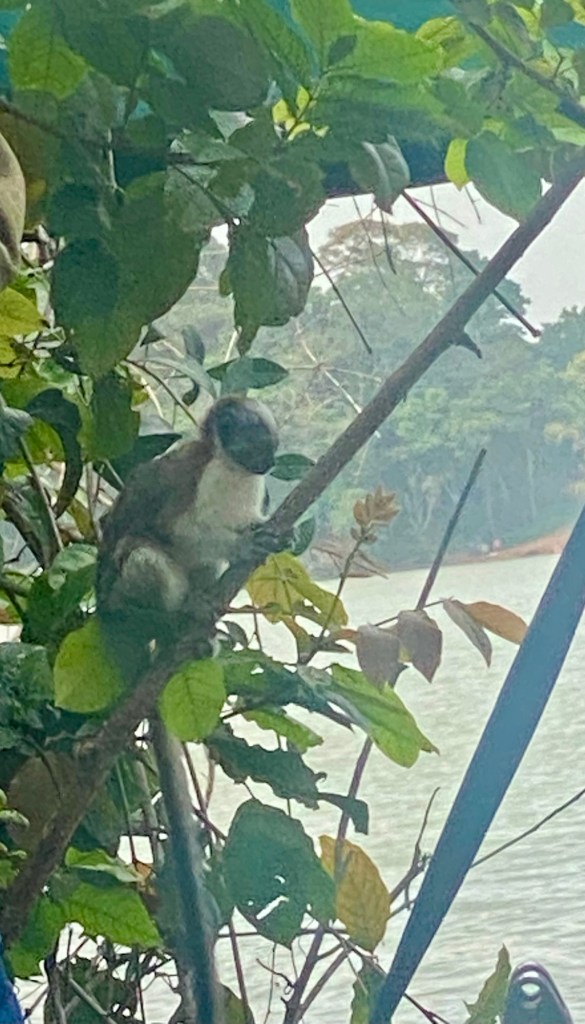
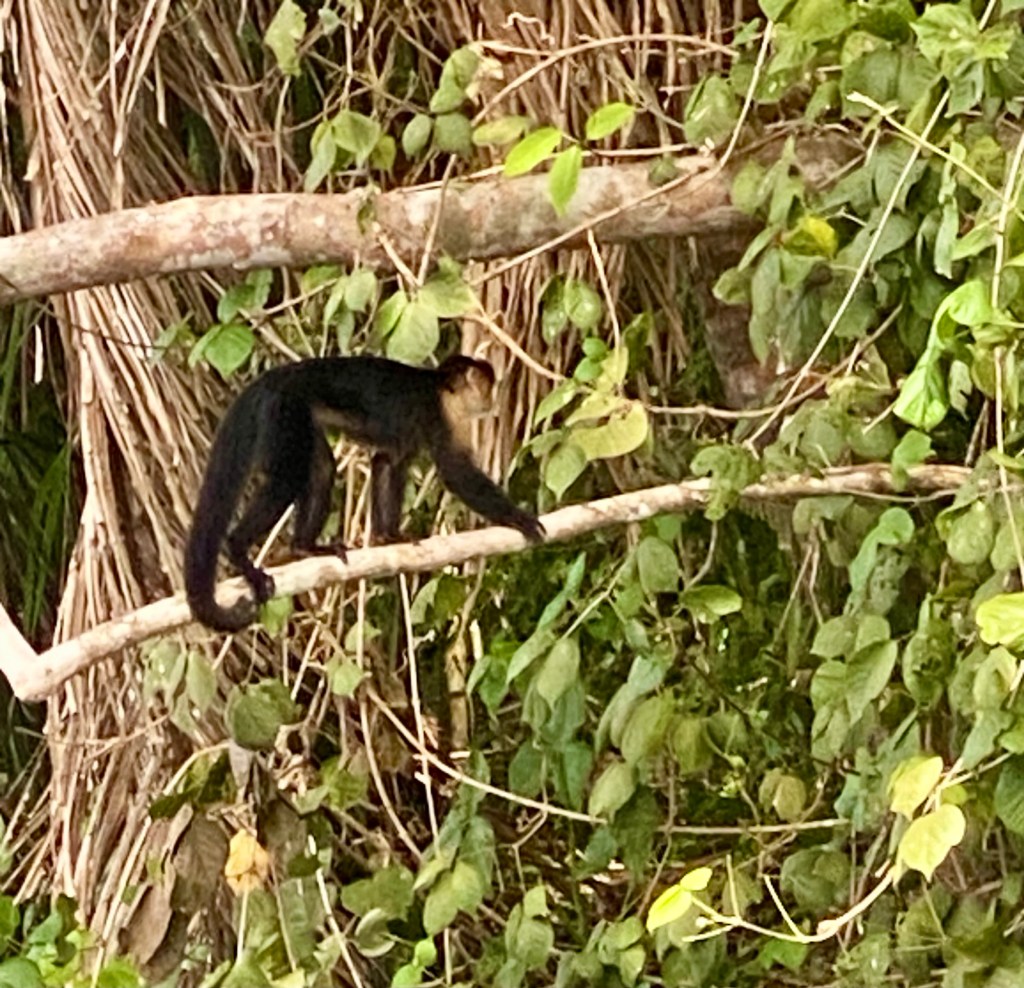
As we sailed around what is called Monkey Island we hit the trifecta after also seeing capuchin and squirrel monkeys in the jungle around the lake on top of the howlers spotted earlier.
A great day right? But there’s more!
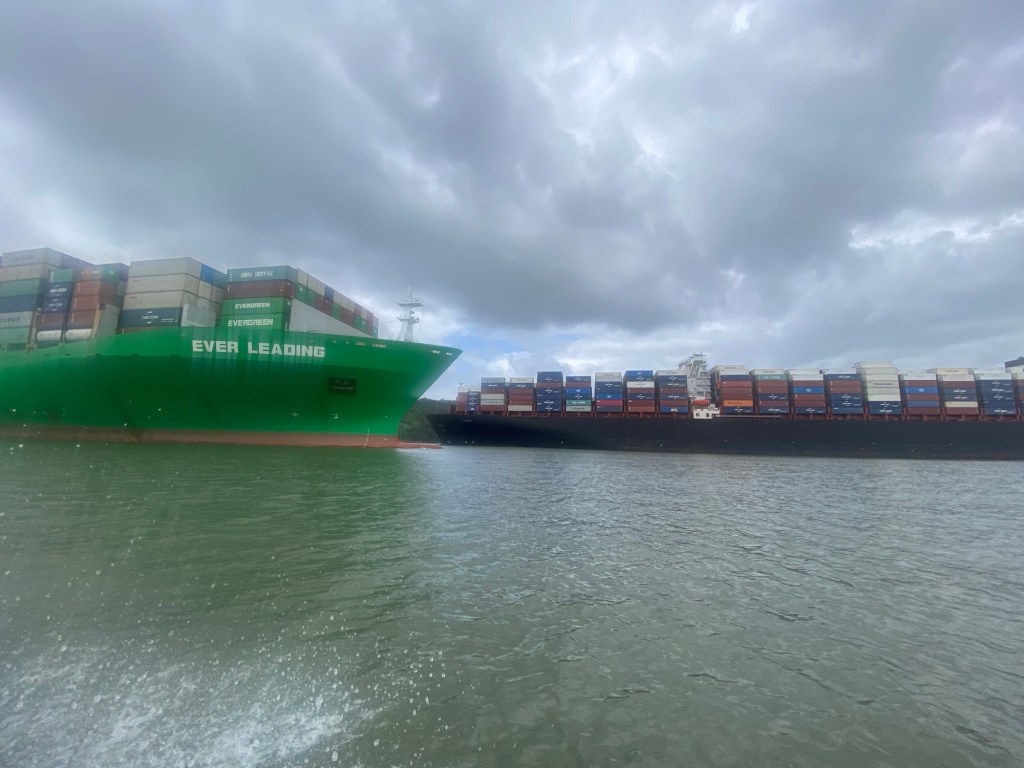
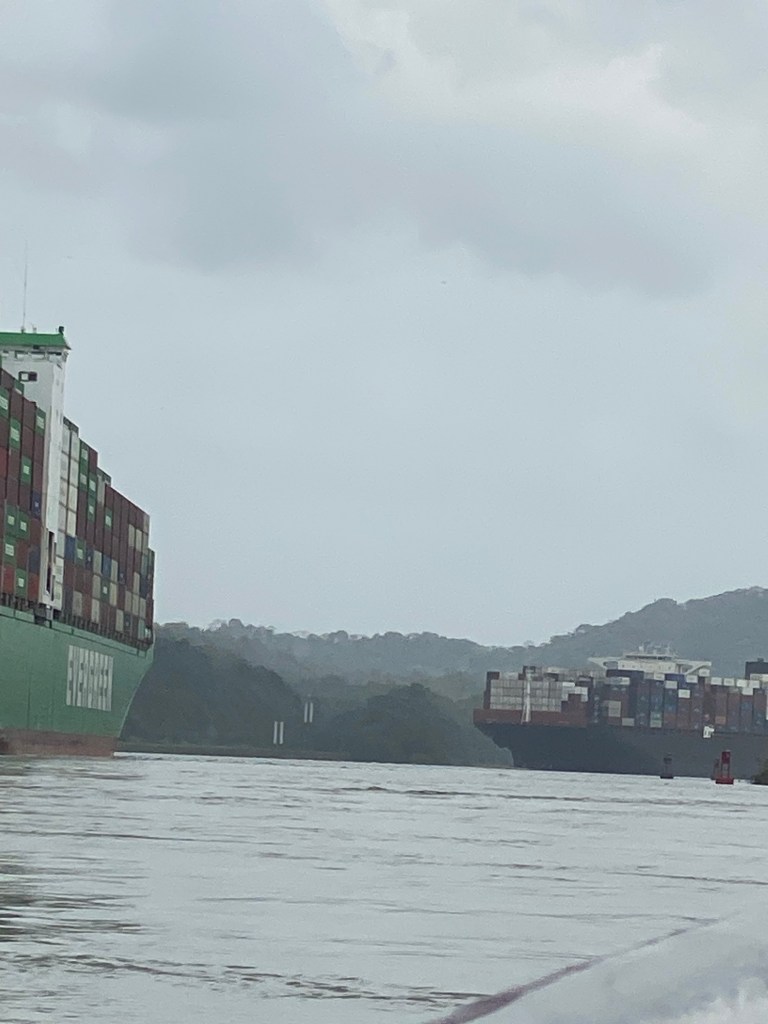
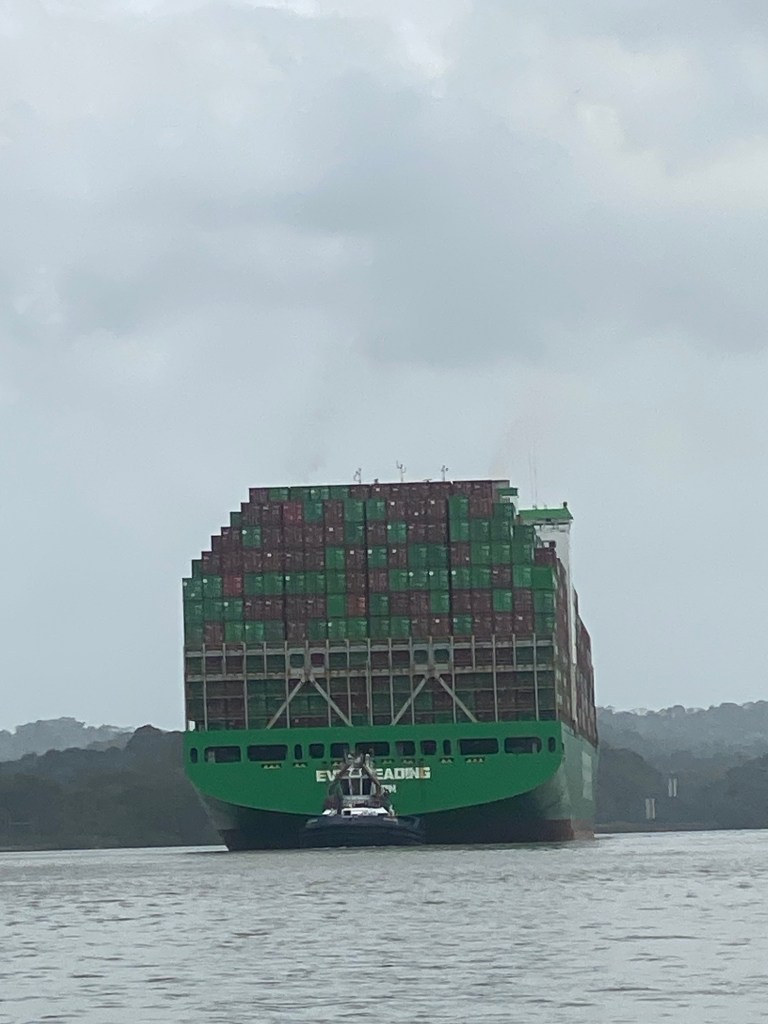
As we started the trip back, we encountered a massive Panamax ship. I think it’s the one we had seen being held in the locks yesterday. Then, coming around the corner, seemingly right out of the jungle, was another one! Then yet another. The two passed so close the crew could have shaken hands.
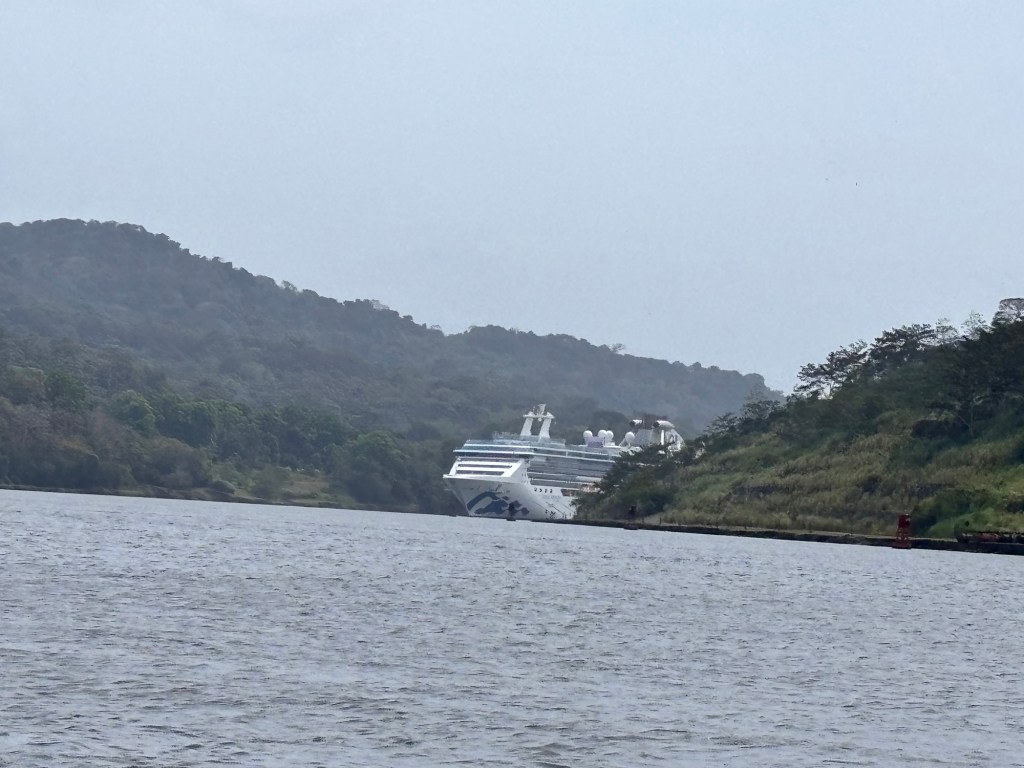
As I watched this amazing display, I heard and saw the Panama Canal Railroad to the left of the boat action. This was the railroad built by the U.S. to take miners west as part of the California gold rush. The U.S. then sold it to the French, who were the first to attempt to build a a canal across the isthmus. After the French failed trying to build a sea-level canal, the U.S. bought it back to haul away earth in their successful Canal project.
I thought my head would explode from the history and sensory experiences. But wait…
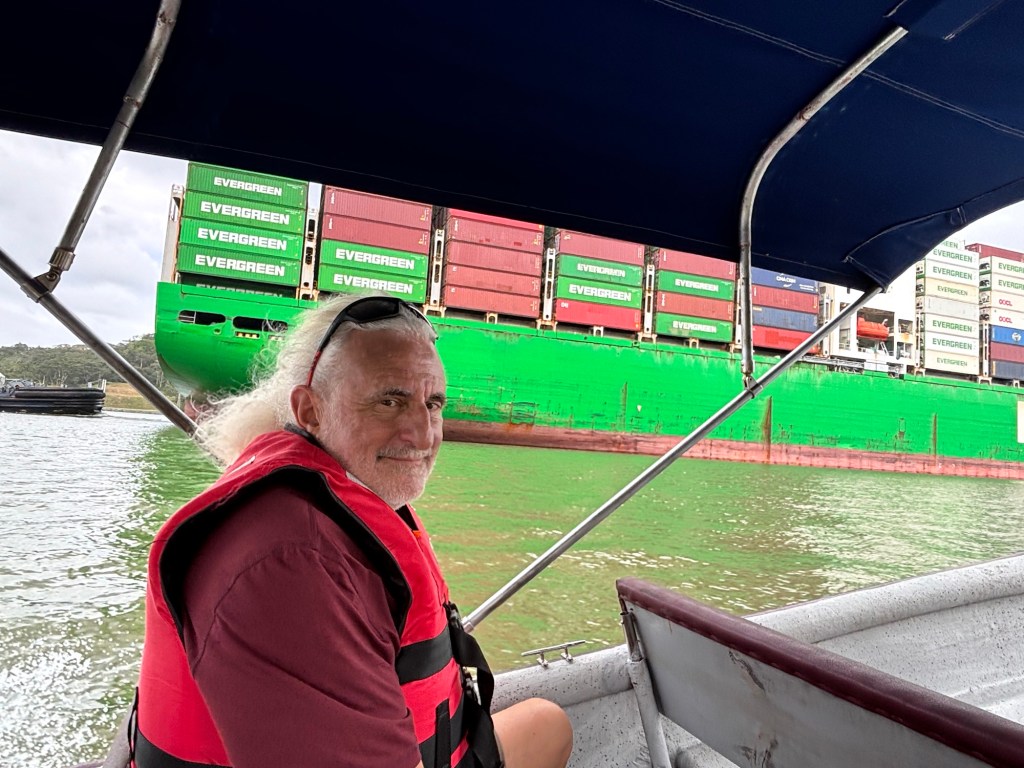

As we passed the container ships, I watched what looked like a log floating in the water. Our captain (an indigenous Embera) circled it. It was a swimming iguana, apparently a mother trying to find a place to lay her eggs safely on shore. Our guide said he’d never seen this before. So add more nature to the mix of mind-blowing experiences!
I know this must sound overblown, and if you’re chuckling at me, join Jim and our guide Victor. But it really was an awesome day.
 It's What We Do
now I’m really envious
>
LikeLike